The gate opens, the first rush arrives, and suddenly a neat site plan becomes a live movement problem. Crowd management barriers are what turn that pressure into orderly entry lanes, protected work zones, controlled queues and clear pedestrian routes. Get them right and guests barely notice the system. Get them wrong and queues spill, emergency access narrows, staff are forced into reactive decisions and the event loses control before the first announcement.
For public events, festivals, corporate activations, sporting fixtures and large weddings, barriers are not an afterthought to be added once the stage, marquee and food trucks are booked. They are part of the operational infrastructure. Their type, placement, anchoring and supervision need to match the site, audience behaviour, weather and event schedule.
What crowd management barriers need to achieve
A barrier is not automatically a crowd-control solution just because it creates a line on the ground. The job is to influence how people move without creating new hazards. That can mean slowing entry, separating pedestrians from vehicles, preventing access to a technical area, establishing a perimeter, or keeping an evacuation path free.
The best layout makes the intended route obvious. Guests should be able to see where a queue starts, where it leads and what happens when they reach the front. If they need to ask three staff members where to go, or climb around a fence to find an entrance, the layout is working against you.
There is also a presentation requirement. For a polished corporate event or wedding, barriers need to control movement without making the arrival experience feel like a construction site. For a music festival or community event, they need to withstand sustained use, changing crowd density and a longer operating day. The principle is the same, but the equipment and layout are not.
Choosing the right crowd management barriers
The appropriate barrier depends on the purpose, not simply the guest count. A low, freestanding queue barrier may suit a registration area where attendees are calm, checked in and moving steadily. It is not suitable for holding back a dense crowd near a headline stage or protecting a generator compound.
Pedestrian barriers for queues and routes
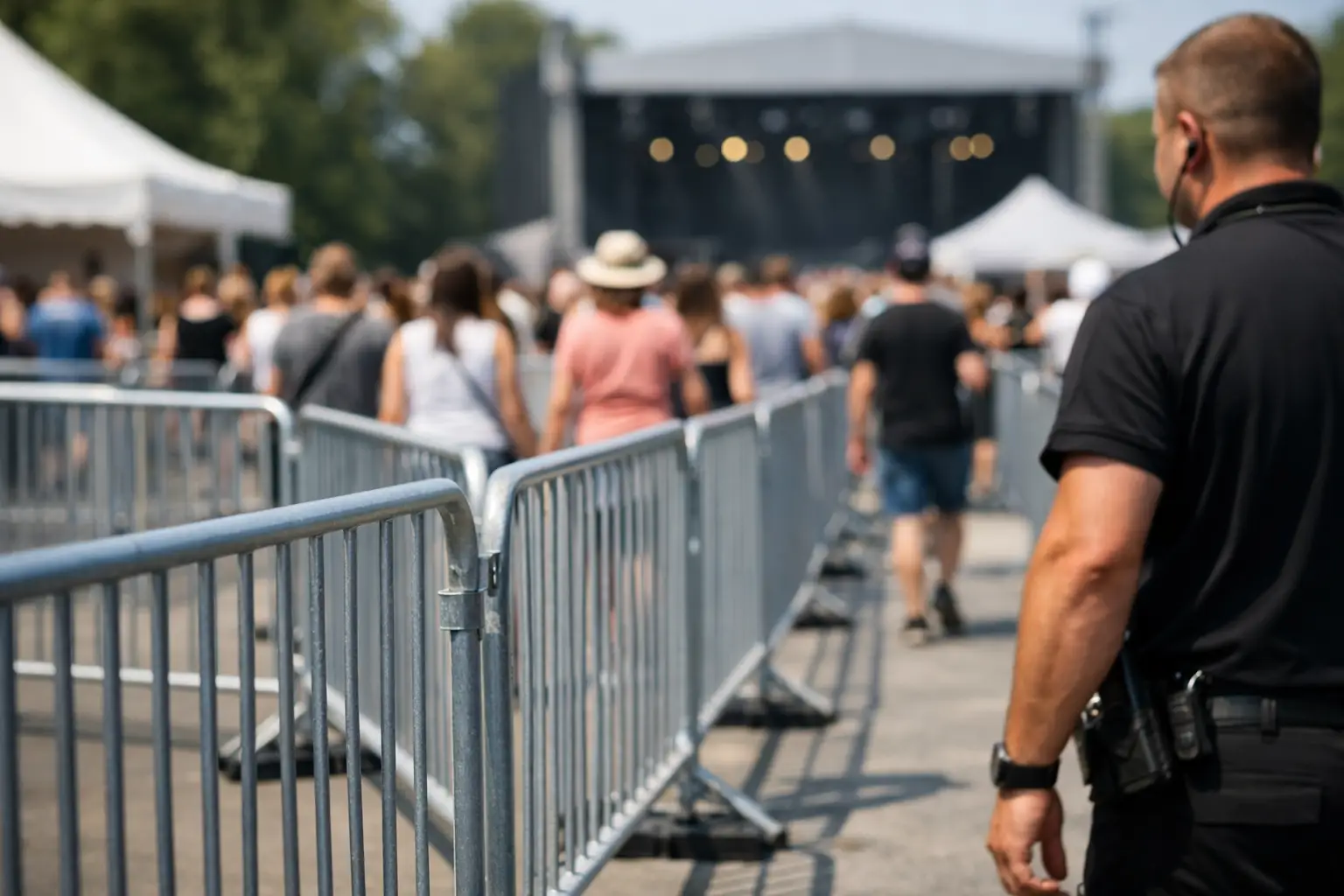
Interlocking pedestrian barriers are useful for defining entry lanes, ticket scanning areas, walkways and general public boundaries. They provide a visible physical edge while allowing crews to configure corners, runs and access points around the venue layout.
They work best when the route has enough width for the expected flow, including prams, wheelchairs and guests carrying bags. A narrow lane may look efficient on a drawing but become a bottleneck when people stop to find tickets on their mobiles. Build in space for staff to assist without blocking the path.
Temporary fencing for perimeters and restricted zones
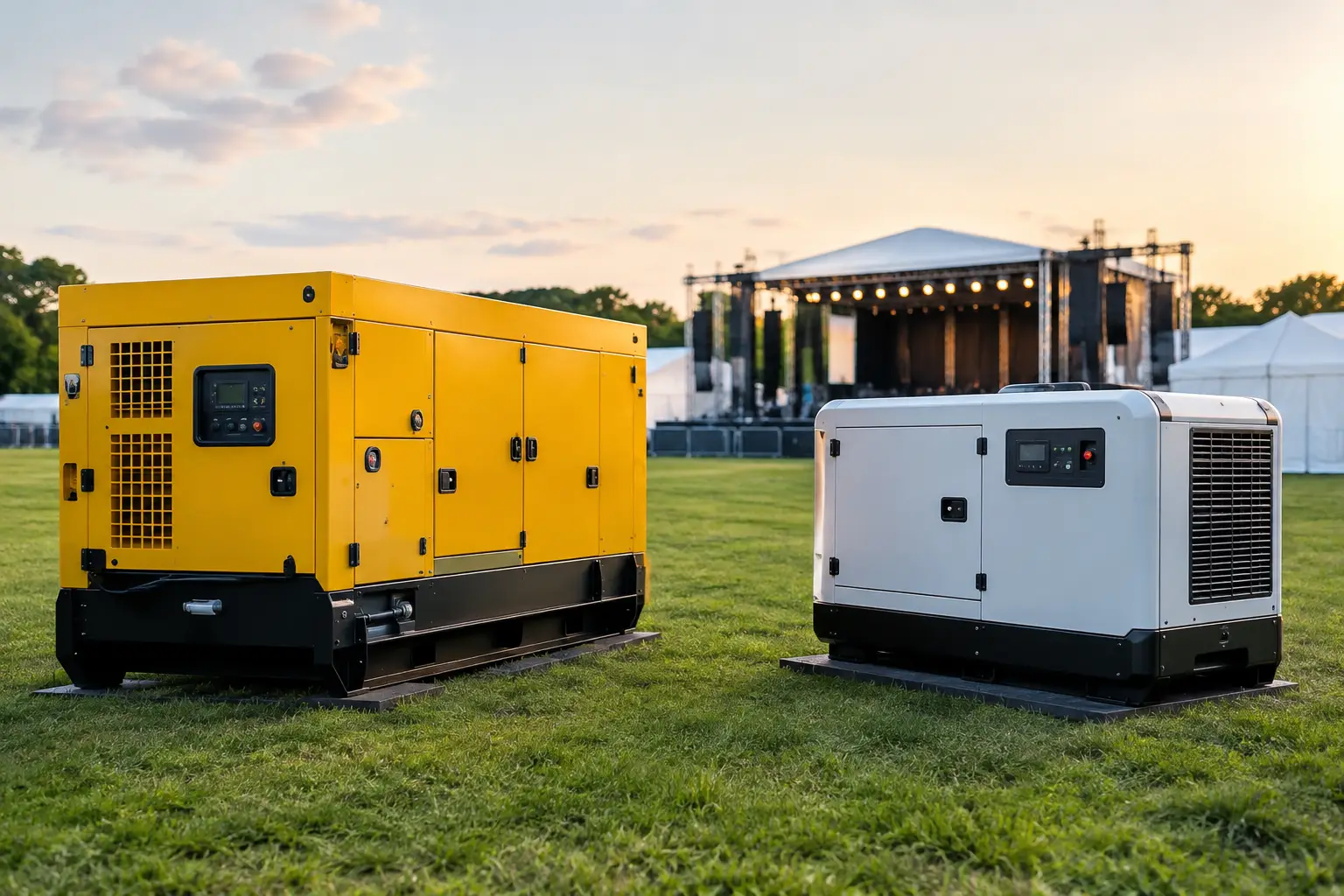
Temporary fencing is generally the better choice where access must be properly restricted. Think back-of-house areas, loading zones, generator compounds, site boundaries, storage areas and equipment locations. It creates a more defined perimeter and makes it clear that the space beyond is not public access.
Fencing must be stabilised correctly for the ground conditions and anticipated wind. On grass, hardstand, uneven surfaces or exposed sites, the fixing method and ballast requirements can change. A fence line that looks acceptable during a calm morning bump-in can become a serious problem when Melbourne weather turns during the event.
Heavy-duty crowd-control systems
High-pressure areas require a different standard of planning. Front-of-stage systems, popular bar queues, gate holds and concentrated audience zones may need heavy-duty crowd-control barriers designed for stronger forces and managed by trained event personnel.
This is where equipment alone is never enough. You need calculated capacity, controlled ingress, clear egress, radio communication and staff who understand when to slow admissions or open an alternative route. A barrier line should not become a trap because the crowd volume exceeded the operating plan.
Vehicle and work-zone separation
Events often fail to separate people from moving vehicles during delivery, pack-down or an operational changeover. Barriers can help establish pedestrian corridors and keep guests away from plant, utes, forklifts and loading activity, but they are only one part of the control measure.
Schedule vehicle movements outside public access hours where possible. Where that cannot happen, use a properly managed exclusion zone, spotters and clear site communication. A lightweight pedestrian barrier is not a substitute for a vehicle-control plan.
Start with movement, not equipment
A reliable crowd plan begins by mapping the guest journey from arrival to departure. Identify parking and drop-off points, entry gates, ticketing or registration, toilets, food and beverage areas, stages, seating, first aid, exits and transport collection points. Then look at how those routes change at peak moments.
The most demanding periods are rarely random. Gates opening, a major act finishing, a keynote break, half-time, service of meals and the final departure all create predictable surges. Your barrier layout needs to accommodate those peaks, not the quiet period in between.
Ask practical questions early. Where do people wait if gates are delayed? Can a queue remain under cover in rain or heat? Is there room for a secondary bag-check lane? How does an accessible route avoid stairs, loose cable runs and crowd pinch points? If a gate needs to close, where will the arriving guests be held safely?
For an event with multiple suppliers, someone must own these decisions. The stage provider may protect the stage edge, security may manage access and the caterer may set a service queue, but the routes intersect. A single site plan and operational lead prevent one supplier’s setup from blocking another supplier’s safe access.
Barrier placement details that matter on site
Small details decide whether barriers remain useful all day. Keep lines straight where possible and avoid sharp turns that force people to stop. Use purposeful gaps for staff access, emergency egress and equipment movement rather than leaving ad hoc openings that invite guests to bypass a queue.
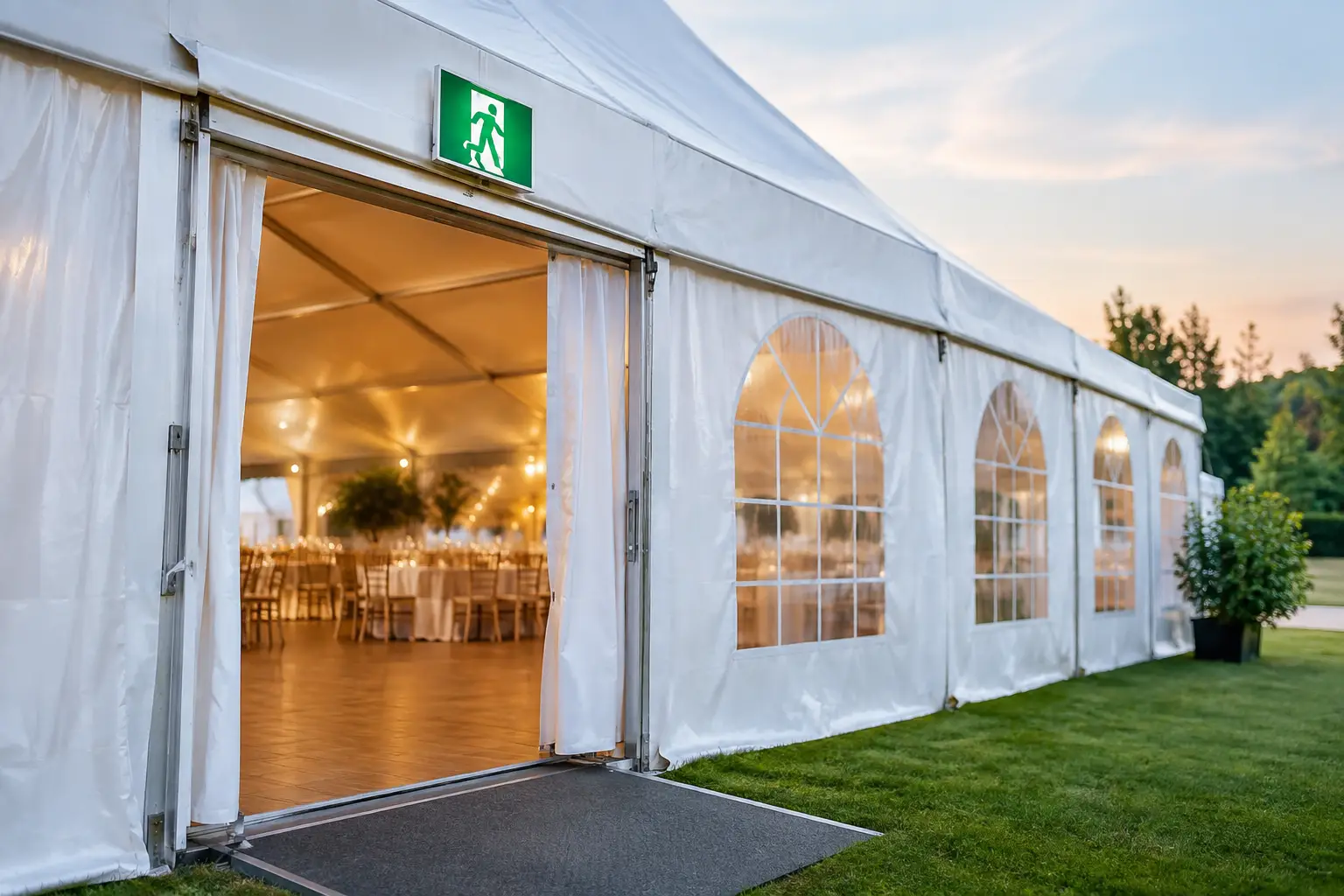
Do not place barriers across emergency exits, fire equipment access, vehicle gates or required egress paths. Emergency routes must remain obvious and free of trip hazards, signage clutter and parked equipment. If an exit route needs to change as part of a site configuration, it should be assessed and communicated before guests arrive.
Ground conditions matter too. Barrier feet can create trip risks on narrow paths, while uneven grass or sloping ground can affect stability and alignment. Cable ramps, temporary flooring, lighting positions and drainage all need to be considered together. This is why barrier planning belongs in the broader site infrastructure conversation, not on a separate last-minute checklist.
Visibility is another common miss. A barrier that is easy to see in daylight may disappear in a dim car park or after a concert finishes. Site lighting, reflective markers and clear wayfinding help guests understand the boundary without relying on security staff to repeat instructions all night.
Match supervision to the consequence of failure
A quiet afternoon queue outside a private function does not need the same monitoring as a festival gate. But every barrier plan needs an owner who can inspect it before opening, monitor changes during the event and act when conditions move away from plan.
That person should know who can alter the layout, where spare panels or ballast are held, how to report damage and what triggers a response. High winds, crowd surges, a medical incident, an unexpected vehicle arrival or a blocked exit can all require fast changes. Improvised adjustments made by well-meaning staff can introduce more risk if they are not coordinated.
Documentation is equally practical. Depending on the event and venue, this may include site plans, risk assessments, emergency procedures, traffic management arrangements, engineering information for temporary structures and insurer or council requirements. The paperwork should reflect what is actually installed on site. A compliant plan on paper is of little use if a late supplier move has changed the public route.
Build barriers into the production plan
When barriers are scoped alongside staging, marquees, power, lighting and site access, the whole event works better. The production crew can position equipment compounds, protect cable routes, preserve emergency access and keep public movement separate from technical operations from the start.
Zero Three Event Hire approaches these decisions as part of the working event site, not as a pile of panels dropped at the gate. The right outcome comes from an itemised scope, a considered site layout, trained crew and one team accountable through operation and pack-down.
A good barrier line does more than hold people back. It gives guests confidence about where to go, gives staff room to do their job and gives your event the control to keep moving until the last note drops.