A public event can look perfectly controlled right up until weather rolls in, a generator trips, a crowd movement changes or a medical incident stops the run sheet. Public event emergency planning is what keeps those moments from becoming disorder, delay or danger. It is not a document written to satisfy an approval process. It is the operational plan your crew, suppliers and event leaders can act on when there is no time to debate who owns the next decision.
For a Melbourne festival, school fair, sporting fixture, community activation or ticketed public gathering, the plan must match the site, attendance, infrastructure and genuine risks of the day. A 300-person outdoor food event does not need the same response model as a 5,000-person music event. Both, however, need clear authority, reliable communications, safe egress and people who know their job before gates open.
Public event emergency planning starts before bump-in
Most emergency plans fail for a simple reason: they are developed separately from the actual event build. The plan says there is an emergency access lane, but a catering truck, temporary fencing or a queue has taken it over. The plan identifies an assembly area, but no-one checks whether it remains usable once marquees, stages, toilets and sponsor activations are installed.
Planning needs to happen alongside site design, production scheduling and supplier coordination. Start by mapping how people will enter, move, gather and leave. Then identify what changes when the site is under pressure: a sudden downpour, high wind, lost power, a missing child, a fire alarm, an aggressive patron, an overloaded entrance or an ambulance requiring access.
The point is not to predict every scenario. It is to remove avoidable uncertainty. When a real incident occurs, a good team does not begin by hunting for a key, a site map, a contact number or a person authorised to make the call.
Build the plan around decisions, not paperwork
A useful plan gives named people the authority to act. It should establish who can pause entertainment, stop entry, shut down power, call emergency services, begin an evacuation and speak to the public. If those decisions require five phone calls and a committee discussion, the plan is already too slow.
Your emergency procedures should also be specific about thresholds. For example, what wind conditions require a pause to a performance or a structural inspection? Who receives severe-weather alerts? What triggers the closure of a gate or the diversion of a queue? What happens if a generator fails during a live programme?
Local permit conditions, venue requirements and event risk assessments will shape the detail. The operational test remains the same: could an unfamiliar crew member understand the immediate action from the information available on site?
Design the site for a safe response
Emergency response is heavily influenced by physical layout. A well-run public event leaves room to move, room to communicate and room for emergency services to work. These are not details to solve after all infrastructure arrives.
Keep emergency vehicle routes protected from bump-in through to pack-down. Mark them clearly and assign someone to keep them clear, particularly where delivery vehicles, rideshare drop-offs and public queues share space. Confirm gate widths, turning areas and access points with the venue or relevant authorities before the event, not during a callout.
Assembly areas need the same practical thinking. They must be large enough for the likely crowd, accessible from multiple parts of the site and away from hazards such as traffic, power distribution, fuel storage, kitchens or unstable structures. If weather is the reason for evacuation, an exposed grass area may not be the safest option.
Temporary infrastructure matters here. Stages, clearspan marquees, fencing, grandstands, towers and lighting rigs affect sightlines, crowd flow and exit paths. They also introduce structural, electrical and weather considerations. Engineering documentation, installation checks and correct ballast are part of the emergency picture, not separate production admin.
Plan for the pressure points
The highest-risk area is often not the main stage. It may be the gate at opening time, the bar at interval, the food precinct during a weather delay or the narrow pathway between a car park and venue entry. Observe where people naturally bunch up and redesign before it becomes a crowd-management problem.
Use barriers and signage to guide rather than simply block. Give patrons enough information to make good decisions: where to enter, where to queue, where to find first aid and which exits to use. Clear public messaging prevents the uncertainty that creates frustration and unsafe movement.
Protect the systems the event relies on
An emergency plan that overlooks power, audio and communications is incomplete. When these systems fail, your ability to manage the crowd can fail with them.
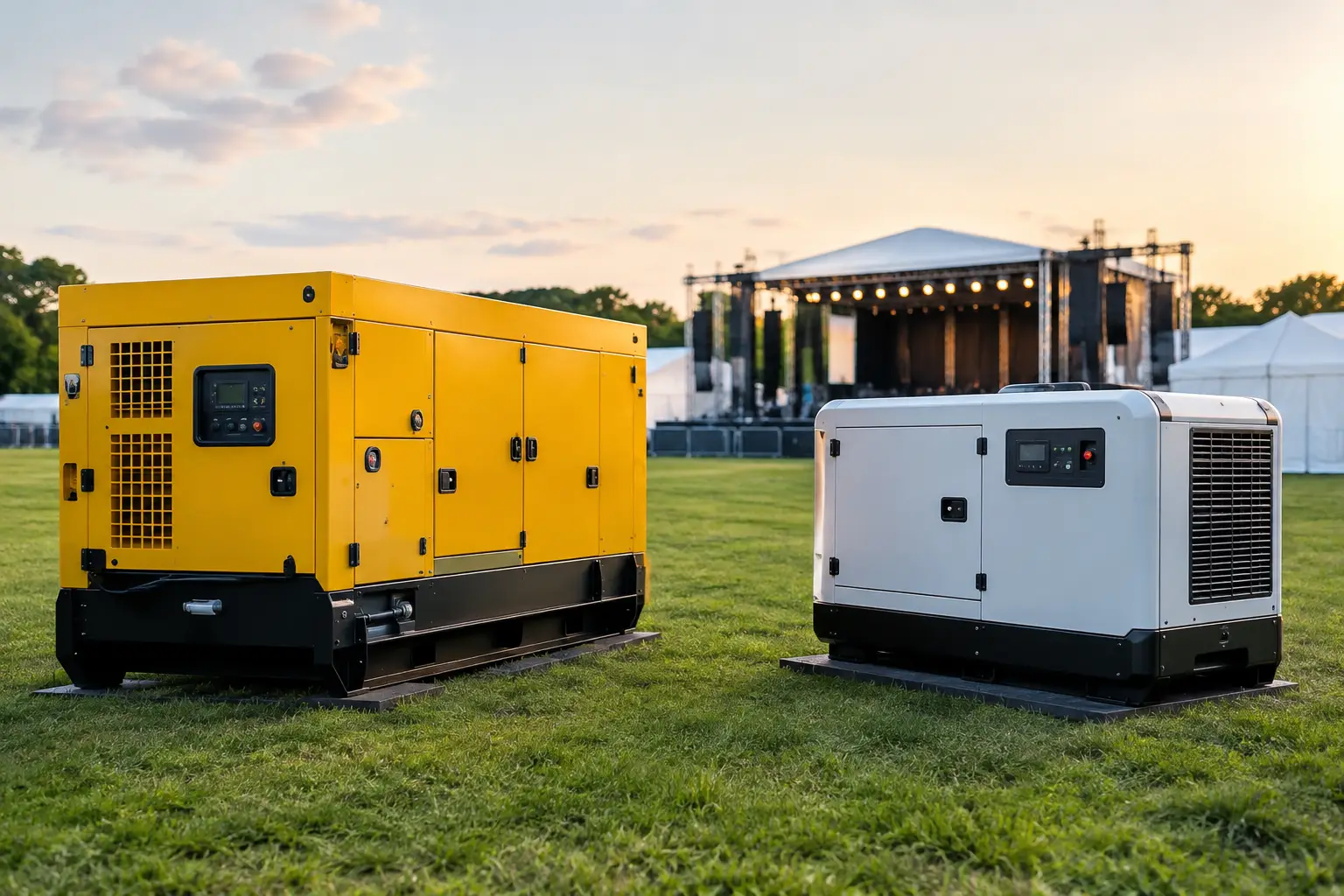
Start with event power. Load calculations, correctly sized generators, compliant distribution, protected cable runs and qualified installation reduce the risk of an outage. But planning must go further: identify essential circuits, emergency lighting requirements, backup options and the shutdown sequence if a fault occurs. A full site blackout is very different from losing decorative lighting or one non-critical food vendor circuit.
Public-address coverage is equally critical. Can everyone in the event footprint hear an instruction, including patrons at amenities, bars, entry points and outdoor overflow areas? Music-grade sound systems are not automatically suitable for emergency messaging. Test intelligibility with the site operating as it will on event day, including crowd noise, wind and competing activity.
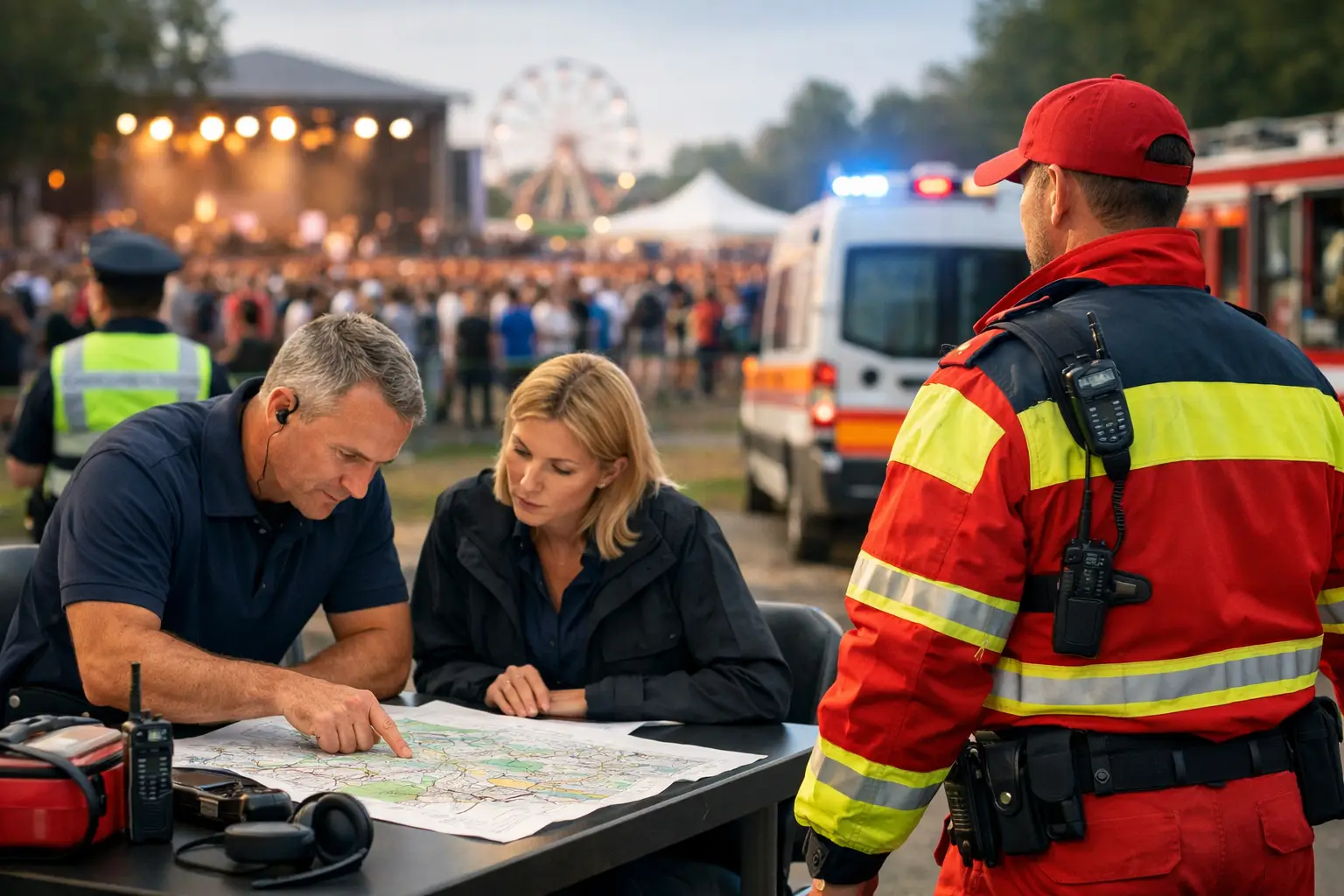
Your communications plan needs more than a group chat. Allocate radio channels, call signs and escalation rules. Event control, security, first aid, production, gate staff and key suppliers need a reliable way to reach each other. Establish a plain-language emergency call process and ensure everyone knows that radio traffic must stay clear when an incident is active.
The critical systems to verify before gates open are:
- primary and backup power for essential services
- public-address coverage and emergency messaging capability
- radios, spare batteries and a communications hierarchy
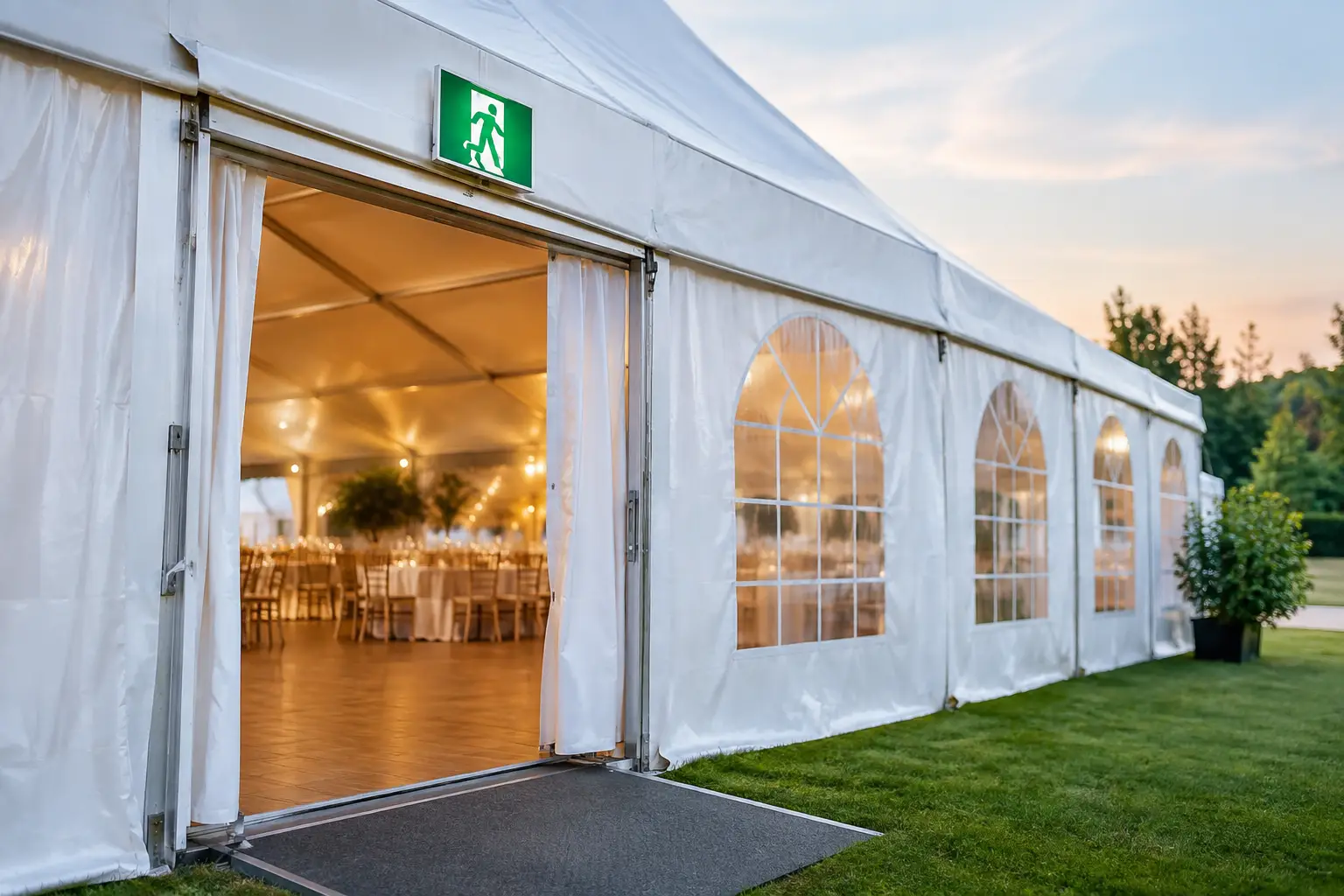
- emergency lighting, exit signs and clear egress routes
- first-aid locations, emergency access and event control contact details
Rehearse the response with the people on site
A plan becomes useful when the people delivering the event have walked through it. Conduct a pre-opening briefing that includes production crew, security, first aid, front-of-house staff, vendors and any volunteers with operational responsibilities. Keep it practical. Show people the emergency exits, assembly areas, fire equipment, first-aid post, event control point and emergency vehicle access route.
Then run short scenarios. Ask what happens if lightning is nearby during a headline act, if a child is reported missing at a gate, or if a lighting tower loses power. The goal is not theatre. It is to find unclear handovers, missing equipment and assumptions before the public arrives.
For larger events, schedule a formal pre-event walkthrough with relevant stakeholders. Update the plan if the build, weather forecast, attendance profile or site access changes. A last-minute layout adjustment can create a new hazard or remove a route that the original plan relied on.
Keep the plan live through pack-down
Emergency planning does not end when the final act leaves the stage. Egress, transport queues, alcohol service, reduced lighting and fatigued crew can make the end of an event its own risk period. Maintain event control until patrons have cleared, emergency access remains available and site operations have returned to a safe state.
During pack-down, the risk shifts again. Public access may be reduced, but heavy vehicles, forklifts, elevated work, electrical disconnection and changing structural loads need active management. Brief the crew on vehicle movements, exclusion zones and the order in which infrastructure is made safe.
After the event, record incidents, near misses and operational lessons while details are fresh. If a gate became congested, a radio channel was unclear or a generator backup took too long to activate, capture it. The best emergency plans improve event by event because they are built from what actually happened, not what looked good on paper.
When infrastructure, power, AV, structures and on-site crew are coordinated under one accountable production team, emergency decisions become faster and cleaner. Zero Three Event Hire approaches planning that way: from the first site conversation through to the last vehicle leaving. Give your team a plan they can use under pressure, because the calmest events are usually the ones that prepared hardest.