A festival site can look perfect on a site plan and still fail before gates open. The stage arrives late, the generator is undersized, pedestrian routes cross delivery lanes, or a supplier leaves without anyone qualified to respond when the PA trips. Essential festival site infrastructure is the system that prevents those moments – the physical, electrical and operational foundation that lets every artist, trader, crew member and guest do their job safely.
For organisers, the goal is not to hire the most equipment. It is to build a site that works under real conditions: changing weather, peak crowd movement, demanding changeovers, long operating hours and strict public-event obligations. That takes proper scoping, competent installation and one team accountable from first delivery through to the last note drops.
Start With the Site, Not the Equipment List
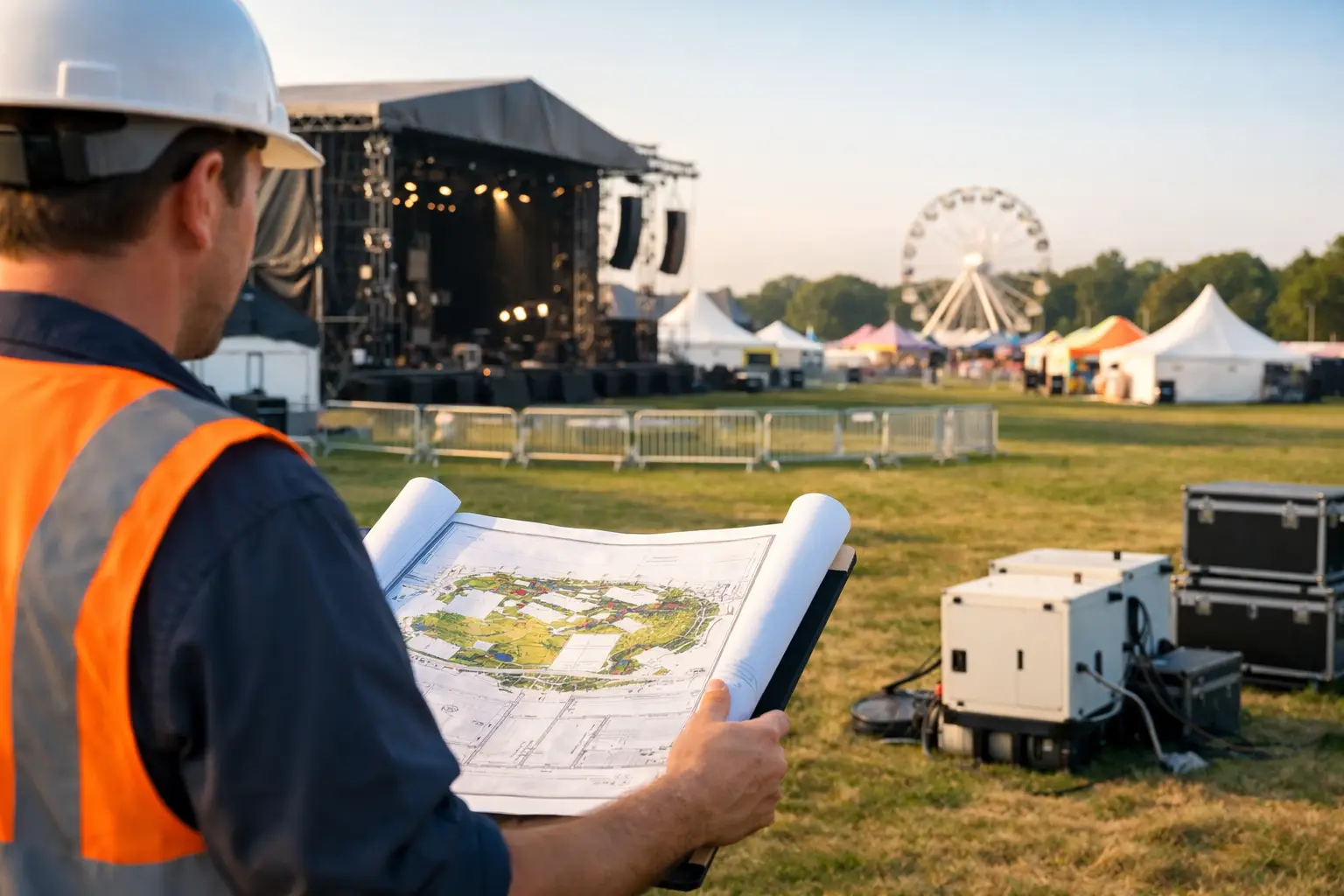
Infrastructure planning should begin with a site walk, a scaled layout and an honest assessment of how the event will operate. A flat oval, a laneway activation and a regional paddock each create different access, drainage, ground-bearing, noise and power challenges. There is no sensible one-size-fits-all package.
Map the audience areas, stages, back-of-house compounds, food traders, bars, amenities, emergency access, production offices and vehicle routes before deciding on equipment. This exposes the dependencies early. A main stage needs more than a deck and roof: it needs truck access, crew space, cable paths, generator placement, lighting positions, backstage security and a safe audience barrier line.
The same applies to traders and activations. A coffee van may need a modest connection; a run of caterers with refrigeration, cooking equipment and EFTPOS will create a very different electrical demand. Put every load on the schedule, including the items people forget: site offices, radios, security lighting, cleaning facilities, gate scanners and temporary toilets with pumps.
Essential Festival Site Infrastructure That Carries the Show
Staging and certified structures
The stage is the most visible piece of festival infrastructure, but it is also a structural workplace. Its size, height, loading capacity and roof design must suit the performance programme, production design and site conditions. A DJ platform, community performance stage and touring band stage are not interchangeable.
Temporary roofs, clearspan marquees, grandstands, towers, video-wall support and entry structures need to be engineered and installed to the relevant requirements. Certification is not paperwork to chase at the end. It informs what can be built, where it can sit and how it must be anchored or ballasted.
Wind is the major consideration many first-time organisers underestimate. Your weather plan needs defined monitoring, trigger points and authority to pause activity, evacuate an area or secure structures. A crew that understands the installation should remain available to act on that plan, rather than leaving site once the build is complete.
Event power designed for peak load
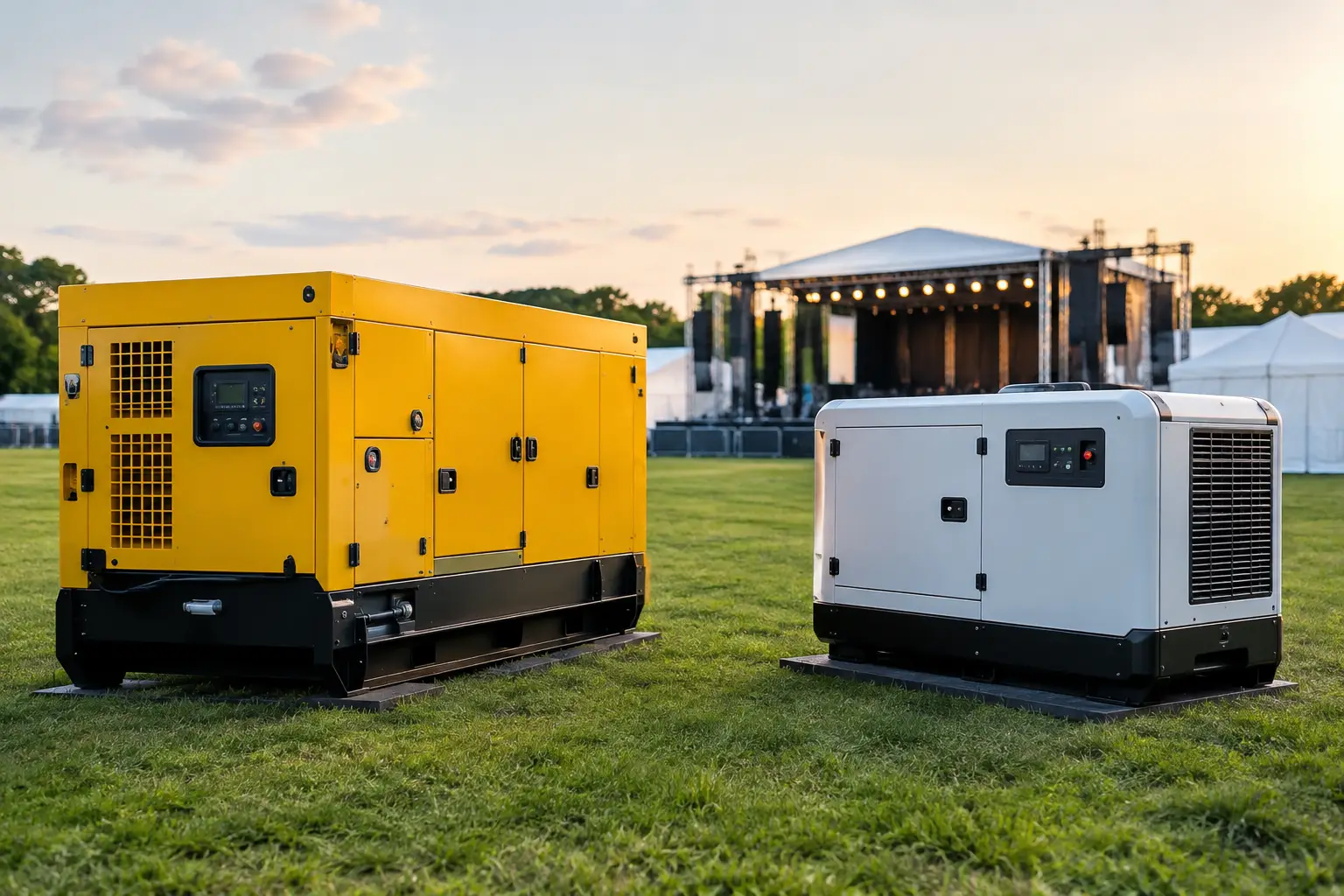
Festival power is a calculated system, not a generator parked behind a fence. The generator capacity must account for starting currents, phase balancing, cable distance, voltage drop, critical loads and a practical contingency margin. One generator may be appropriate for a small event; separating production power from traders, site services or emergency-critical systems can be the safer choice on a larger site.
Distribution boards, protected cable runs, test-and-tagged equipment and weather-appropriate connections all matter. Cables must be routed away from public pinch points where possible, protected at crossings and clearly managed so they do not become a trip hazard or a late-night fault-finding exercise.
Backup capacity is a commercial decision as much as a technical one. If a brief outage would stop headline entertainment, interrupt food service or create a crowd-management problem, redundancy is worth discussing before event day. The right level depends on the programme, attendance, budget and consequences of downtime.
Audio, lighting and communications
A professional festival sound system is designed around audience area, genre, stage size, noise limits and the number of performance zones. Line arrays, front fills, delay speakers, monitors and control positions should be planned as a single coverage system. Throwing more speakers at a difficult site rarely fixes poor design.
Lighting must serve both show presentation and safe operation. Stage lighting, pathway illumination, egress lighting, compound lighting and car-park lighting have different purposes. By the time a crowd is leaving after dark, functional lighting matters as much as the hero look on stage.
Reliable site communications are equally practical. Production, security, first aid, traffic management and key event staff need agreed channels, call signs and escalation procedures. A radio plan may sound minor next to a stage roof, but it becomes essential when vehicles, weather or crowd movement require an immediate response.
Design Access Around People, Vehicles and Emergencies
A well-run festival separates public movement from build activity and service traffic wherever practical. Establish delivery windows, vehicle holding areas and a controlled route to each unloading point. If trucks cannot get to the stage, marquee or bar without cutting through a crowd zone, the site design needs work.
Public access needs the same discipline. Guests should be able to find gates, amenities, bars and exits without being pushed into dead ends, narrow corridors or production areas. Crowd barriers are not decorative fencing. They shape queues, protect equipment, manage side-stage access and maintain emergency paths.
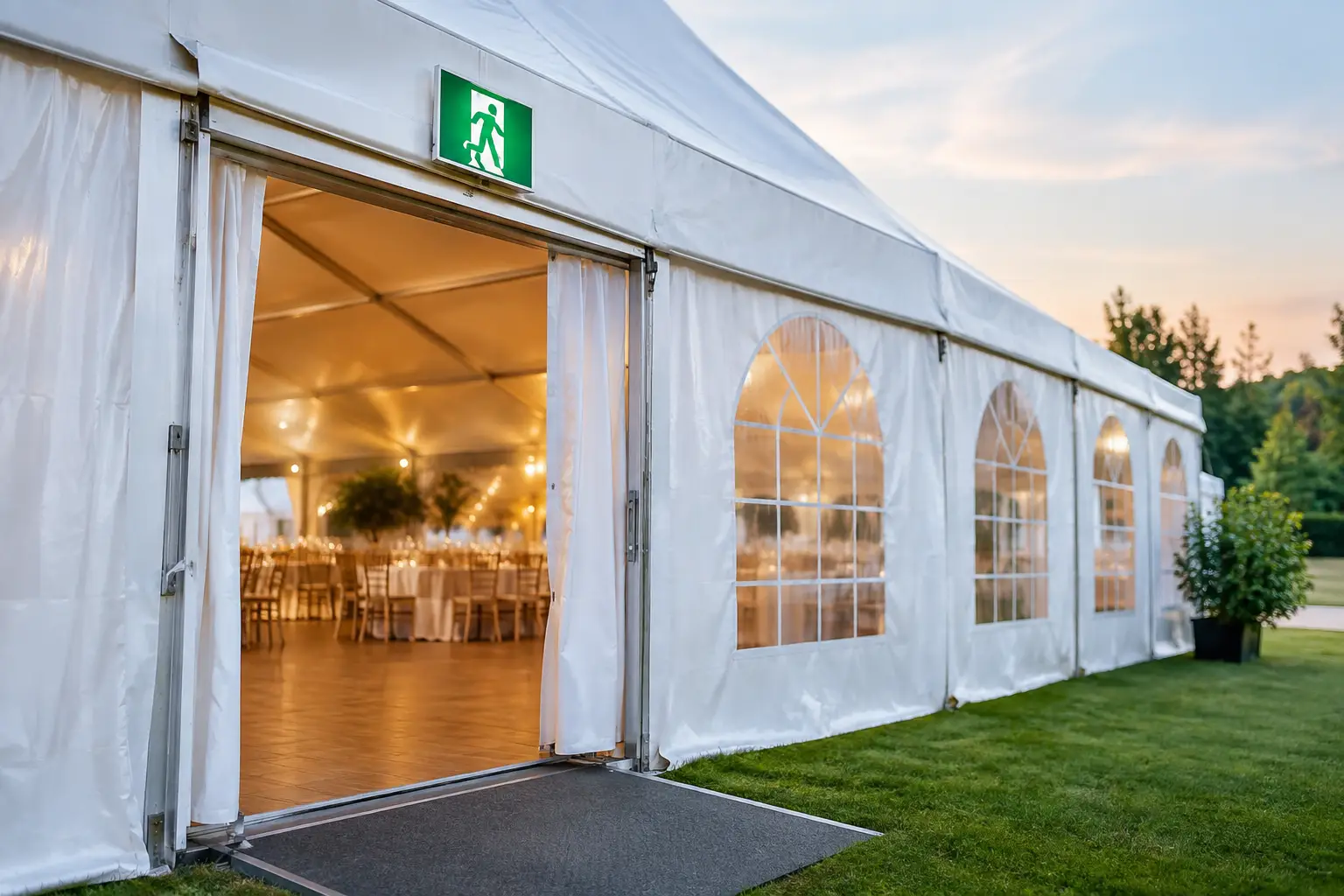
Keep emergency access clear from the first peg in the ground to final pack-down. Mark it on all site documents, brief every contractor and resist the temptation to use it as overflow storage. A late delivery pallet, food truck or generator cable can compromise an emergency route faster than most teams expect.
Build Compliance Into the Production Schedule
Event compliance is easier when it is treated as part of the build, not a separate admin task. Depending on the event, organisers may need structural documentation, electrical test records, public liability details, site plans, emergency management plans, traffic management arrangements, noise controls and permits from the relevant authority or land manager.
The exact requirements depend on venue, council, attendance and event type. A ticketed music festival has different risks from a school fair or sporting presentation, but both need clearly allocated responsibilities. Someone must know who is checking structures, approving electrical connections, monitoring weather, managing contractor inductions and signing off the site before gates open.
Allow time for inspections and corrections. A schedule with no float assumes every truck arrives on time, every surface is ready and every service route is clear. That is not a production plan. It is a gamble.
Why One Accountable Production Partner Matters
Festival infrastructure is full of handovers: stage to audio, generator to distribution, structure to lighting rig, site plan to crowd-management operation. When each element is hired from a separate supplier, the organiser often becomes the person expected to resolve the gaps.
An integrated production partner scopes the dependencies before equipment is allocated. They can coordinate engineering, transport, power calculations, installation order, technical operation and pack-down through a named team. That means a lighting truss is not delivered before its support structure, a generator is not selected without its distribution plan, and a fault has an on-site owner.
This approach is not always the cheapest line-item option. Dry hire can make sense for experienced teams with qualified crew, established suppliers and clear technical responsibility. But where the organiser needs confidence, compliance support and live-event coverage, a full-service model reduces the risk that savings made in the quote turn into expensive disruption on site.
Put the Critical Decisions in the Brief
A useful infrastructure brief states the expected attendance, site address, operating hours, performance schedule, stage acts, trader numbers, vehicle access restrictions, noise conditions and any known venue rules. Include the things that may change the job: uneven ground, nearby residences, heritage surfaces, limited bump-in hours, overnight security requirements and wet-weather contingencies.
From there, request an itemised scope that makes responsibilities visible. It should identify supplied equipment, crew coverage, delivery timing, installation, operational support, compliance documentation and pack-down. Transparent detail gives organisers a basis for comparing proposals without guessing what has been excluded.
A festival is remembered for the music, food, atmosphere and people. None of that happens reliably unless the site underneath it has been planned with the same care. Zero Three Event Hire approaches infrastructure as a live operational system: properly specified, professionally installed and supported by a team that stays accountable until the last truck leaves site.