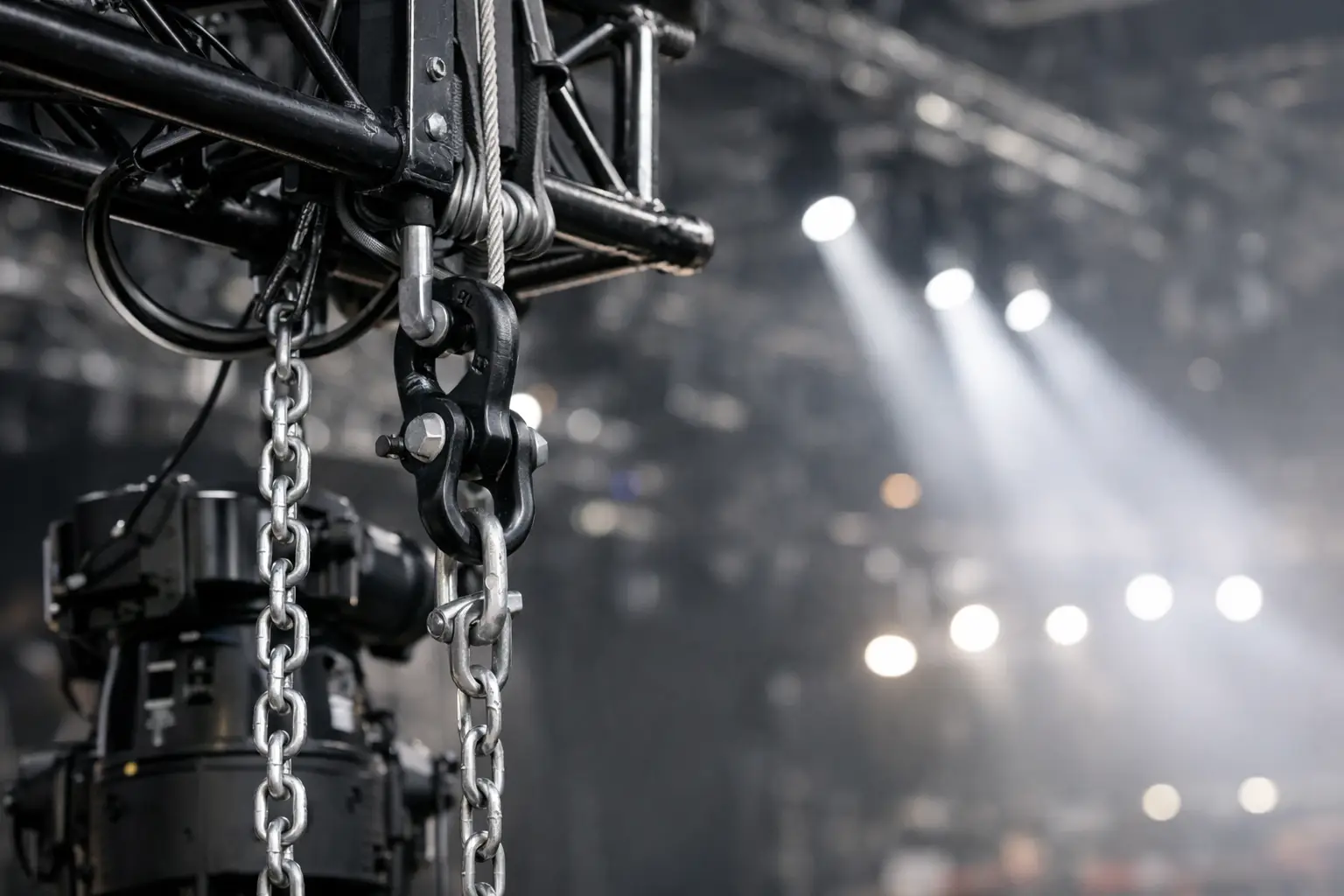
A lighting bar above a stage, a line array beside it, branded signage over an entry, a projector in a ballroom – event rigging is what puts critical production elements exactly where they need to be. It is also one of the fastest ways an otherwise well-planned event can become unsafe, delayed or visually compromised when it is treated as an afterthought.
Rigging is not simply a matter of getting equipment into the air. It is a controlled system of structure, load, location, access, safety and accountability. Whether you are producing a corporate launch, wedding reception, church service, festival stage or public activation, the rigging plan must work with the venue, the schedule and the people working underneath it.
What event rigging actually covers
Event rigging is the safe suspension, support or positioning of production equipment and decorative elements. Depending on the event, that may include lighting fixtures, speakers, LED screens, truss, banners, drapes, projection equipment, scenic pieces and flown stage effects.
The right method depends on the available support point and the loads involved. In a venue with rated roof points, equipment may be suspended from the building structure under venue-approved conditions. At an outdoor site, a ground-support system, truss goalpost, tower system or self-supporting structure may be the better answer. A marquee or clearspan structure may have specific engineered options and restrictions of its own.
That distinction matters. A piece of equipment being physically able to hang somewhere does not mean it is appropriate or approved to do so. Loads need to be understood, points need to be suitable, and the final system needs to match the event’s operational conditions – including wind, weather, audience access and bump-in constraints.
Start with the event, not the equipment list
The strongest rigging plans begin before the hire list is locked in. A production partner needs to understand what the audience must see and hear, where performers and presenters will stand, how cameras will frame the room, where guests will move, and what needs to happen during changeovers.
For a corporate event, that could mean getting the screen high enough for guests at the back while keeping sightlines clear from banquet tables. For a music event, it may mean positioning PA hangs and lighting to cover the crowd without blocking stage access or compromising a festival’s schedule. For a wedding, the goal might be more subtle: clean lighting and suspended styling that looks effortless in photos without cluttering the room.
There is always a trade-off. Bigger screens, brighter lighting and heavier audio systems can improve impact, but they increase load, space and power requirements. A lower trim height may simplify access but affect sightlines. Existing venue rigging can reduce ground footprint, but only where the points, documentation and access arrangements are suitable.
The answer is not to force a preferred package into every room. It is to scope the show around the site, the guest experience and the production outcome.
The questions that prevent expensive surprises
Before rigging is confirmed, the production team should establish a practical set of facts: What structure is available? Are there rated rigging points, and what documentation does the venue require? What equipment is being flown, and what is its combined weight? How high can it be installed? Is there clear access for lifts, ladders or personnel? Who controls the roof points and approves the final plan?
Outdoor events add further questions. What are the expected wind conditions? Is the ground suitable for towers or ballast? Can vehicles access the site before the public arrives? Is the structure required to carry only lighting, or are speakers, screens and signage also part of the load? These decisions cannot be made confidently from a few photos and a rough stage sketch.
A proper site inspection is often the point where a vague concept becomes a workable production plan. It identifies restricted access, low ceilings, sprinkler locations, heritage surfaces, uneven ground, limited loading docks and venue rules before crew and equipment arrive on event day.
Compliance is part of the build, not paperwork for later
Rigging work requires disciplined planning because the consequences of getting it wrong are immediate. The people beneath a flown system include your guests, performers, crew and venue staff. Safety systems, rated hardware, suitable attachment methods and competent installation are not upgrades to add when the budget allows.
The documentation required will vary with the site and structure. It may involve venue approvals, engineering information, installation plans, equipment records, load details, safety documentation and sign-off processes. For larger public events, organisers may also need to coordinate those requirements with broader event permits, site plans and risk controls.
The practical value of this work is simple: it prevents a last-minute refusal to install, an unplanned redesign, or a show held up while everyone asks who approved what. It also gives organisers a clear chain of responsibility. When multiple suppliers are bringing in separate screens, speakers, lighting and truss, the interfaces between those systems can become the real risk.
One accountable production team can coordinate the structure, equipment, crew and documentation as a single system. That means fewer assumptions and fewer calls between suppliers when the clock is running.
Why crew capability changes the outcome
A rigging plan is only as good as its installation and operation. Experienced crew members understand that the job is not complete when a fixture is hung or a speaker is lifted. Cables need to be managed cleanly and safely. Safety bonds and hardware need to be checked. Equipment needs to be aimed, tested and integrated with power, audio and lighting systems. Access equipment needs to be removed before doors open, and the work area needs to be handed back ready for the event.
Timing matters just as much. Some venues offer narrow bump-in windows. A ballroom may need to remain operational until late afternoon. A festival site may require structures completed before other contractors can move in. If the rigging sits on the critical path, a delayed install can hold up staging, AV commissioning, rehearsals and styling.
That is why dry hire can be a false economy for technically demanding events. Hiring truss or lighting fixtures alone may appear cheaper, but it leaves the organiser to coordinate transport, installation, approvals, troubleshooting and pack-down. If an issue arises during doors open, the person who supplied the equipment may not be the person available to solve it.
Zero Three Event Hire approaches the job as live-event infrastructure, not a pile of parts. The crew, technical systems and operational support need to arrive with the equipment and stay accountable until the last note drops.
Rigging that supports the show design
Good rigging should improve the audience experience without drawing attention to itself. It creates the height, symmetry and clean lines that make a stage feel intentional. It gets speakers into positions that improve coverage. It keeps lighting out of eyelines while giving designers the angles they need. It can also reduce clutter on the floor, leaving room for guests, cameras, catering, performers and safe access routes.
This is especially valuable in Melbourne venues where rooms vary widely in ceiling height, loading access and built-in infrastructure. A heritage hall, warehouse, hotel ballroom and outdoor sporting reserve all demand a different approach. The equipment may be familiar, but the installation method and production sequence should never be assumed.
Sometimes the best decision is not to fly an item at all. A ground-stacked screen, floor-mounted lighting tower or self-supporting branding solution may be faster, safer or more cost-effective for the venue. The right recommendation is the one that delivers the visual and technical result without creating unnecessary complexity.
A controlled path from brief to pack-down
For organisers, the process should feel clear. Start with the event brief, venue information, audience size, schedule and desired production outcome. From there, the production scope can identify the right stage, structures, AV, power and crew requirements, with itemised costs that show what is included.
Once the plan is confirmed, the focus shifts to site coordination, compliance preparation, delivery timing and installation. On event day, technical crew test and operate the systems, respond to changes and keep the production moving. After the final guest leaves, the same team manages a safe, orderly pack-down.
The most useful rigging solution is not necessarily the biggest truss system or the most elaborate overhead design. It is the one that gives your event the presence it needs, keeps people safe, meets venue requirements and leaves you free to run the room with confidence. Build the infrastructure properly, and the show has somewhere dependable to stand.