A generator arriving on a ute is not a power plan. Event generator hire needs to account for every circuit, cable run, connection point and changeover before guests arrive. Get it wrong and the consequence is not just a dark stage – it can mean tripped equipment, interrupted catering, failed ticketing, unhappy clients and a production team trying to fix a live problem in front of a crowd.
For a wedding reception, corporate launch, community event or festival, temporary power should be designed around what the event needs to do, not simply the biggest generator available. The right solution gives your suppliers clean, stable power, keeps the public protected and gives the event team one accountable crew when conditions change.
Event Generator Hire Is More Than a Machine
A generator is only one part of a temporary power system. The full job includes load calculations, generator selection, distribution boards, cabling, earthing, protection devices, cable management, testing and a qualified team to operate the system. If the event is public-facing or technically complex, documentation, site requirements and contingency planning need to be settled well before bump-in.
This matters because different equipment behaves differently. A string of festoon lighting has a very different demand from a line-array PA, commercial kitchen equipment, refrigeration, LED wall or motor-driven ride. Some equipment draws a higher current as it starts. Others are sensitive to voltage variation. A generator that appears sufficient on paper can struggle if those loads are not considered together.
The aim is controlled power from first connection until the last note drops. That means knowing what is connected, where it is connected and what capacity remains if the running order changes.
Start With the Load, Not the Generator Size
The first question should not be, “How many kVA do we need?” It should be, “What will be running, when, and from where?” A proper event brief maps the full power demand across the site.
Your production partner should ask about sound and lighting, staging, bars and caterers, cool rooms, coffee machines, site offices, security, ticketing, vendor stalls, marquees and toilets. It should also account for infrastructure that may be supplied by others. That includes DJ equipment, band backline, food vans and branded activations, which are often added late and can materially change the load.
Generator capacity is then selected with room for realistic operating demand and a sensible allowance for additions. Oversizing is not always the answer. An oversized generator can operate inefficiently at very low load, while an undersized unit leaves no margin when equipment starts or a supplier plugs in something unexpected. The right size depends on the event profile, the equipment connected and the backup requirement.
Power needs change across the day
A site rarely runs at maximum draw from doors open to pack-down. Soundcheck, food preparation, guest arrival, the main performance and post-event clean-up each create different demand. Knowing the schedule helps a technical crew manage circuits properly and spot potential pressure points before they become failures.
For example, a catering team may need heavy power well before the band begins soundcheck. If both are supplied from the same limited section of distribution, a small oversight can interrupt two critical parts of the event. Separating loads and planning the sequence is a practical way to protect the programme.
Distribution Is Where Reliability Is Won
A good generator cannot compensate for poor distribution. Power needs to reach each outlet safely, with appropriate protection and circuits that are clearly allocated to their intended use.
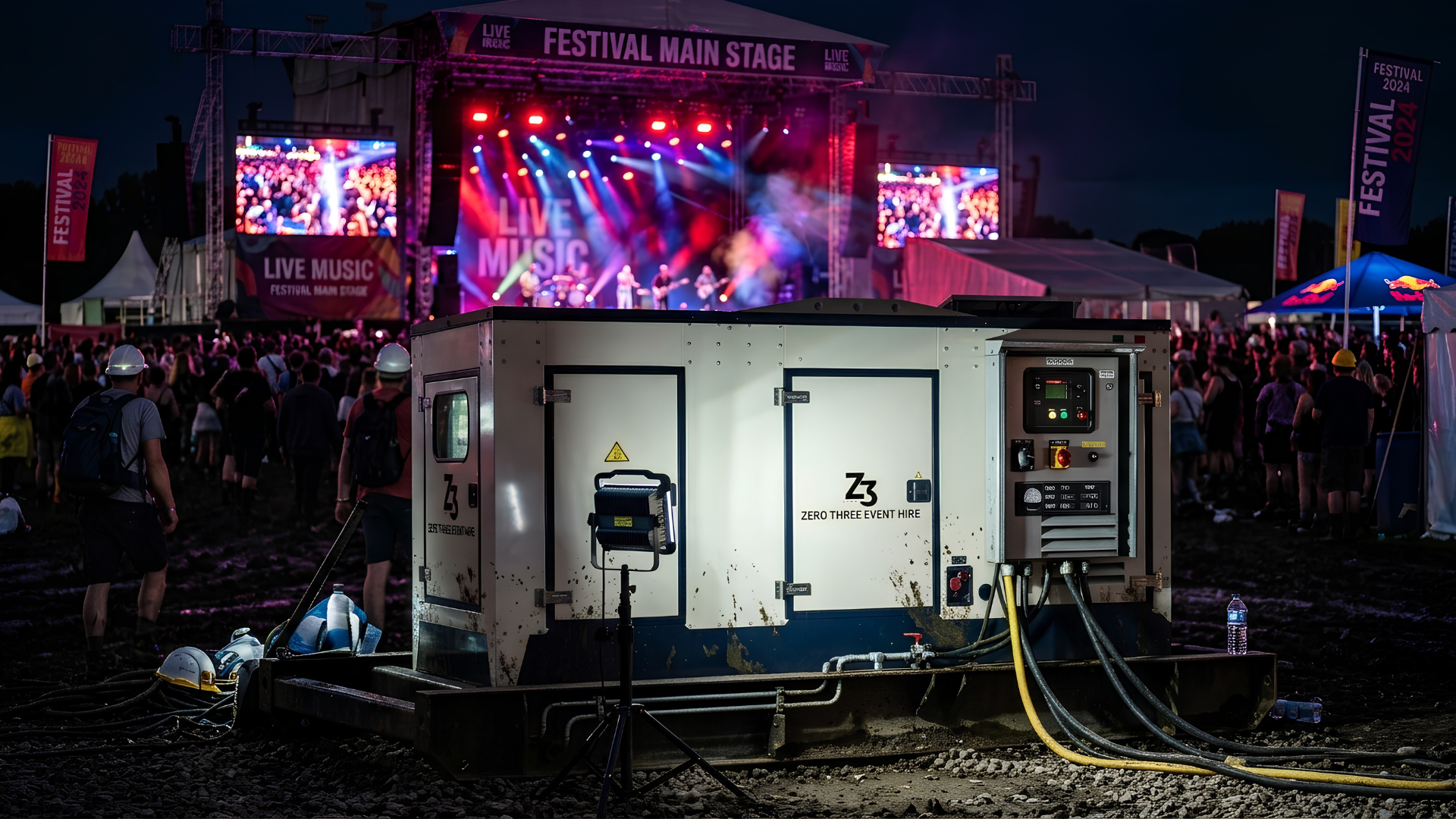
This is particularly important on festival grounds, sports fields and large outdoor sites, where cable runs can be long and conditions can be uneven. Cables crossing public areas need suitable ramps or protection. Distribution boards must be located where technicians can access them without creating a public hazard. Wet-weather exposure, vehicle access, pedestrian traffic and emergency routes all need to be considered in the site plan.
It is also good operational practice to keep essential systems separate from convenience loads. Emergency lighting, critical AV, communications, ticketing or refrigeration may need dedicated circuits rather than sharing capacity with general vendor power. When an issue occurs, that separation allows technicians to isolate the fault without shutting down the whole event.
Build Backup Into the Brief
Not every event requires a second generator, but every event should have a response plan. The decision depends on guest numbers, programme consequences, venue access, operating hours and the criticality of the equipment being powered.
A small private party with modest lighting and a DJ has a different risk profile to a public event with amplified entertainment, vendor stalls, multiple payment terminals and a fixed finish time. At a high-attendance event, a loss of power can affect crowd management, safety systems, scheduled entertainment and contractual obligations at once.
Backup can take several forms: a standby generator, a generator with sufficient reserve capacity, spare distribution equipment, a managed changeover approach, or an on-site technician who can act immediately. The right option is the one that matches the actual consequence of downtime. The cheapest quote is rarely the cheapest outcome if it leaves a major event without support after hours.
Site Access, Noise and Weather Need Planning Too
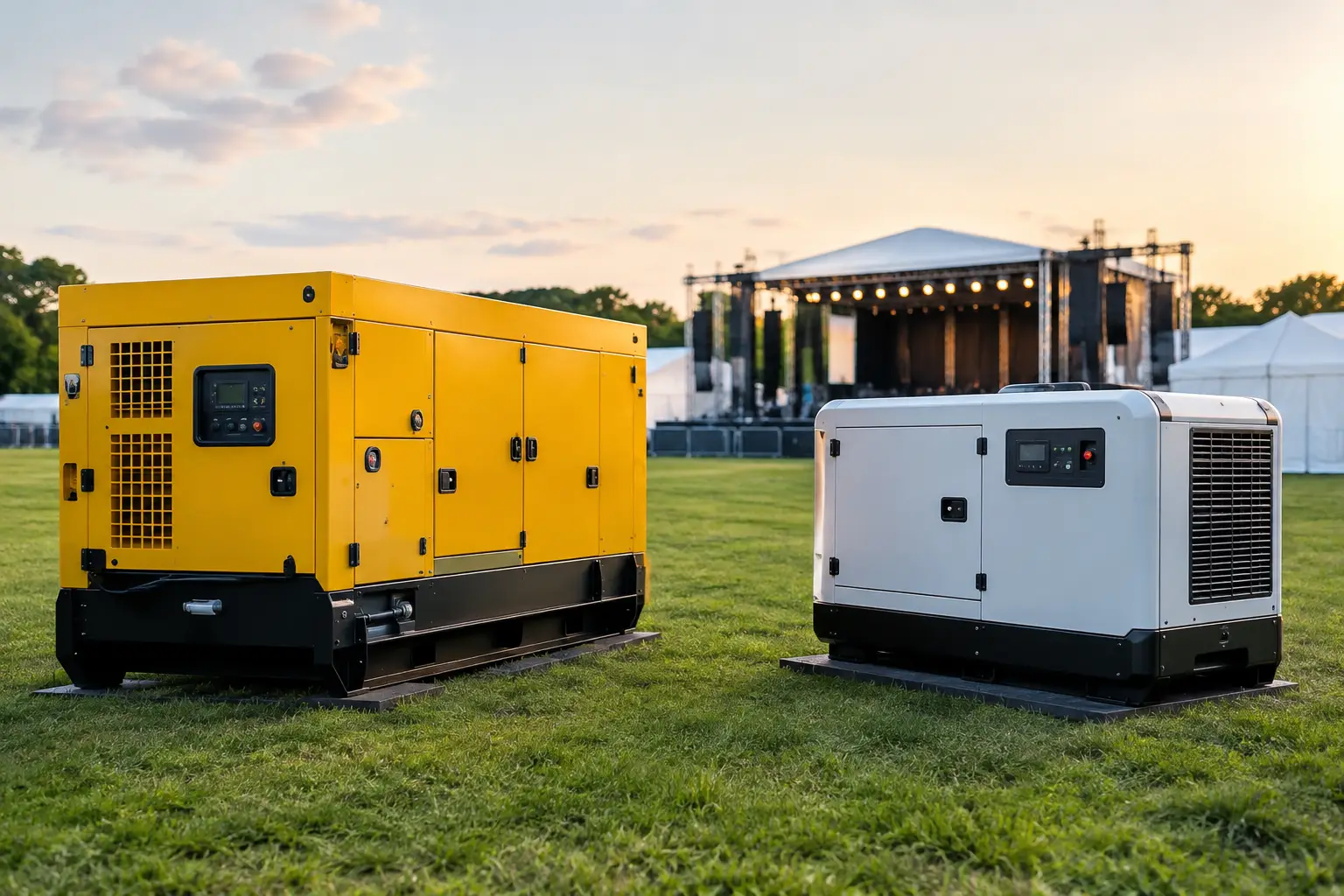
Generators are heavy, require safe positioning and need space around them for ventilation and service access. They cannot simply be placed wherever there is a spare corner. Before delivery, confirm vehicle access, ground conditions, distance to the event footprint, available space and any venue restrictions.
Noise is another consideration. A generator positioned too close to a ceremony, acoustic performance or premium dining space can undermine the experience it is there to support. Placement, cable routing and, where appropriate, suitable acoustic treatment should form part of the planning conversation.
For Melbourne outdoor events, weather planning deserves particular attention. Rain, wind and soft ground can affect cable routes, equipment access and the safe placement of temporary infrastructure. A crew that has assessed the site can make practical adjustments before conditions tighten, rather than reacting after doors open.
What Professionally Managed Generator Hire Should Include
Dry hire can suit experienced crews with their own electrical capability and a simple, controlled site. For most public events, however, professionally managed event power removes the gaps between supplier, electrician, venue and organiser.
A complete service should cover the event from brief to pack-down, including:
- load assessment and generator sizing based on the actual equipment list
- distribution boards, tested cabling, protection and safe cable routing
- delivery, installation, testing and coordination with other production suppliers
- required compliance documentation and site-specific safety planning
- trained technicians, live-event support and a clear response path if something changes
- pack-down once the site is safely offline.
This approach is especially valuable when power is supporting staging, lighting, AV, marquees and structures supplied as part of the same production package. One team can coordinate placement, timing and connection requirements rather than leaving each contractor to solve their own piece of the site.
Questions to Ask Before You Confirm a Quote
Ask whether the quote is based on a confirmed load calculation or a rough generator estimate. Check what distribution, cable protection, fuel, delivery, installation and operator time are included. Clarify who manages any fault during the event and whether there is a named coordinator or technician available after the generator has been delivered.
You should also confirm what has been allowed for suppliers that are not yet finalised. Food vendors, AV upgrades and additional lighting are common late additions. A transparent, itemised quote makes it easier to see what can be added without compromising the power design or creating unwelcome costs on event week.
Zero Three Event Hire treats temporary power as live event infrastructure, not a box to tick. That means scoping the real demand, supplying the right equipment and crew, and staying accountable while the event is underway.
The strongest power plan is usually the one nobody notices. Your guests hear the speeches, see the stage and enjoy the night exactly as intended, while the technical work stays where it belongs – behind the scenes, controlled and ready.