A stage that arrives late, a generator that cannot carry the load or a PA with nobody assigned to run it can change the entire tone of an event in minutes. Event hire Melbourne is not just about putting equipment on a ute. It is about building the infrastructure your guests, performers, staff and suppliers rely on, then keeping it working until the last note drops.
For a wedding of 80, a corporate launch, a community celebration or a festival crowd of 5,000, the equipment list is only one part of the job. Access times, site conditions, weather, public safety, electrical distribution, structural sign-off and crew coverage all need to be resolved before doors open. The right hire partner owns those details rather than leaving you to coordinate a string of disconnected suppliers.
What professional event hire in Melbourne should cover
A properly managed production package starts with the event brief, not a catalogue. The venue, audience size, running order, artist or presenter requirements, bump-in window and site access determine what is needed. So do the less glamorous details: where the power source sits, whether cables cross public paths, how utes access the site, and what happens if rain or wind changes the plan.
For many events, staging, power, sound, lighting, marquees and crew need to operate as one system. A stage height affects sightlines and access. The PA design depends on room dimensions, crowd size and local noise limits. Lighting requires both the right fixtures and safe rigging points or supporting structures. Power must be calculated around actual demand, start-up loads and a sensible margin, not guessed from a list of appliance labels.
That is why dry hire can be a false economy for events with moving parts. It may suit a straightforward indoor presentation where an experienced in-house team is ready to install and operate the gear. It is less suitable when the event is outdoors, public-facing, time-critical or dependent on multiple technical systems. In those cases, the value is in having one accountable production team on site.
Staging and structures that suit the site
A stage needs to do more than look right in event photos. It must carry the intended load, provide practical performer access, accommodate equipment, and meet the relevant structural requirements. Small presentation decks, ceremony platforms, band stages, catwalks, covered stages and elevated viewing areas all require different thinking.
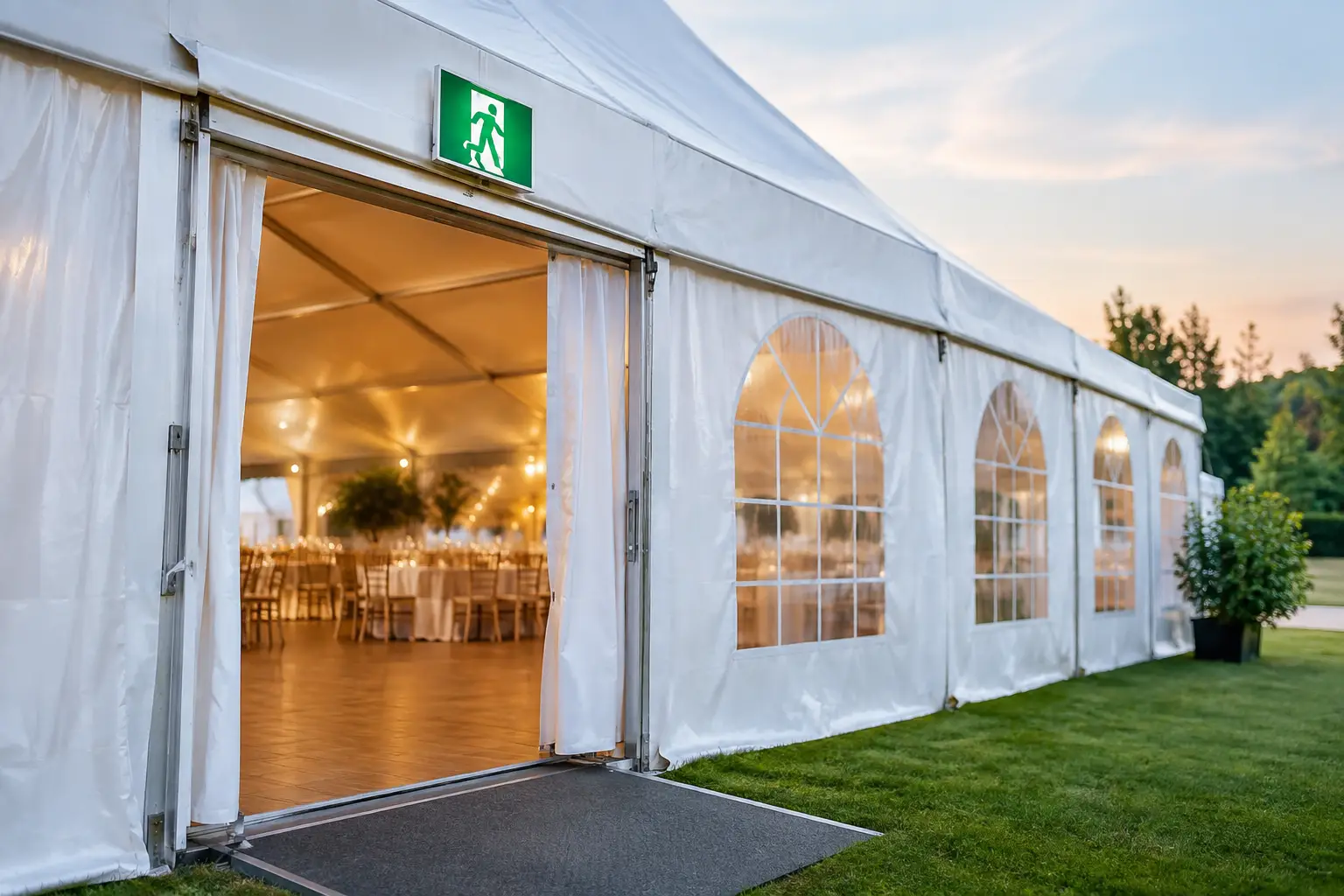
Site-specific design matters. A clearspan marquee may be the right solution for an exposed lawn, while a venue with restricted loading access may need modular staging built through a narrow doorway. If a structure is subject to engineering certification or permit conditions, that paperwork should be planned early, not chased on the eve of the event.
The same principle applies to temporary fencing, ballast, ramps, handrails, stairs and accessible pathways. These items are often treated as extras until a site inspection reveals they are essential. Good event infrastructure makes access feel natural for guests while quietly handling the risks underneath.
Event power is a production decision
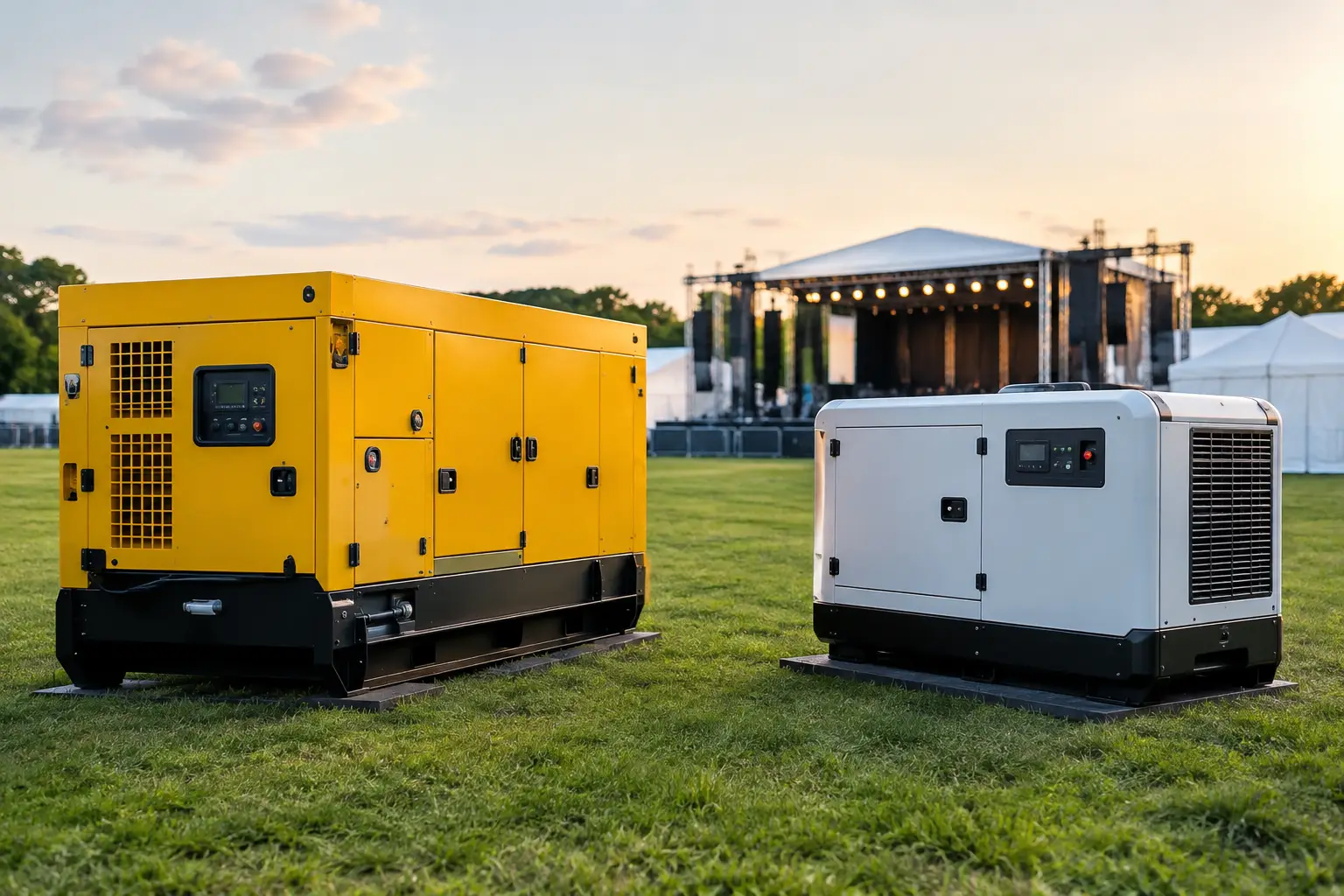
Power failures are rarely random. They usually start with an undersized generator, an incomplete load schedule, poorly planned distribution or equipment added after the original calculation. A coffee cart, catering equipment, LED wall, refrigeration, stage lighting and audio system can add up quickly, particularly when multiple suppliers are working from one temporary supply.
Professional power planning begins with a load calculation and a clear map of what is being powered, where it is located and how it will be distributed. Generator capacity is selected for the real-world demand, with appropriate protection and contingency. Cables are routed and protected to keep public areas safe and the site presentable, rather than becoming a trip hazard across a footpath or entry point.
For a high-attendance event, backup arrangements deserve a direct conversation. The right level of redundancy depends on the consequences of downtime. A short private speech may not require the same backup provision as a ticketed concert, live broadcast or major public activation. What matters is that the decision is deliberate, documented and priced clearly.
Event hire Melbourne for sound, lighting and vision
AV works when guests do not have to think about it. They can hear the speaker at the back of the room, see the presentation in daylight and feel the impact of the performance without feedback, dark corners or frantic adjustments from behind the stage.
Sound system design should reflect the event, not just the number of speakers available. A panel discussion needs speech clarity and dependable microphones. A band or DJ needs coverage, headroom and monitoring. A school presentation needs simple operation and clear handover. A festival requires system control, crew communication and the ability to respond if the program changes.
Lighting is equally practical. It directs attention, gives cameras enough usable light and makes a stage feel intentional. The required rig might be modest for a dinner presentation or more involved for a concert, awards night or branded activation. In each case, fixtures, truss, control, power and operator support should be scoped as a complete package.
Vision systems bring their own constraints. Screen size, projector output, LED wall configuration and camera positions depend on ambient light, viewing distances and content format. A screen that looks excellent in a dim ballroom can be unreadable at a sunny outdoor event. It is better to solve that in the proposal stage than have a crowd squinting at slides once the program begins.
Crews are part of the hire, not an afterthought
A case of equipment delivered to site is not the same as an event-ready system. Equipment must be unloaded safely, installed to plan, tested, operated and packed down within agreed access windows. If a presenter changes their laptop connection, a performer brings an unexpected input list or wind conditions shift, somebody capable needs to be there to deal with it.
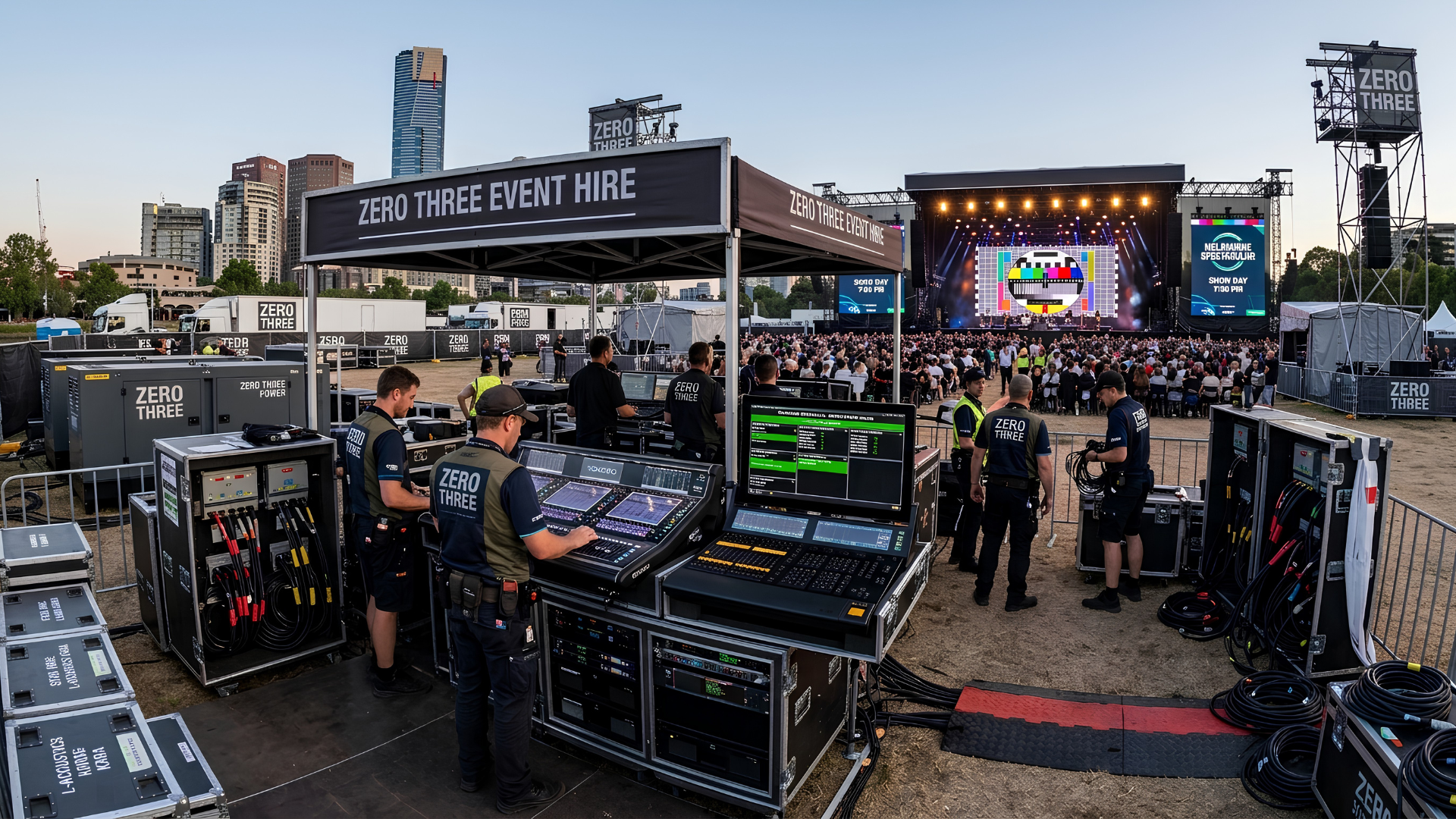
Experienced technicians and crew provide more than labour. They recognise a cable route that will not survive guest traffic, a microphone frequency issue before it reaches the stage, or a power demand that needs to be isolated before it affects the wider site. They also keep communication clear between venue staff, organisers, talent and suppliers when schedules tighten.
At Zero Three Event Hire, that means sending a team, with defined responsibility from the first site discussion through to final pack-down. A named coordinator and transparent itemised quote give organisers a clear point of contact and a practical view of where the budget is going.
Build the brief before requesting a quote
You do not need to be a production manager to provide a useful brief. Start with the date, venue or site, guest numbers, event format and the times available for bump-in, event operation and bump-out. Explain who is speaking or performing, whether there are screens or presentations, and whether other suppliers need power or access to the stage.
Photos, site plans and a running sheet are valuable where available, especially for outdoor events or unfamiliar venues. Flag constraints early: stairs, tight loading docks, noise restrictions, overhead trees, soft ground, public access, restricted parking and curfews. A good supplier will ask further questions because the aim is not to sell the biggest package. It is to supply the right system for the actual conditions.
The quote should make inclusions visible. Look for equipment, delivery, installation, crew hours, transport, compliance requirements, operating support and pack-down. If something may change, such as final audience numbers, entertainment requirements or site access, identify it as an assumption. Clarity upfront prevents awkward conversations when utes and crew are already on site.
The controlled path from brief to pack-down
The strongest event builds follow a controlled process. First comes a practical scope and itemised quote. Next, site checks, equipment selection, production scheduling and compliance documentation are handled before the build date. Then the crew delivers, installs, tests and operates the systems according to the event plan. After guests leave, the same team packs down and returns the site in order.
This approach gives organisers room to focus on guests, program and outcomes rather than chasing generator suppliers, AV operators and staging contractors across different mobile numbers. It also creates a better response when conditions change. A single production lead can make a decision across the whole setup instead of waiting for separate vendors to agree on whose job it is.
Your event should not be remembered for the recovery plan. Give the technical brief enough attention early, choose partners who will stand behind their work on site, and let the experience in front of the stage be exactly what your guests came for.