A lighting rig can make a modest room feel intentional, give a keynote the authority it needs, or turn a festival stage into the focal point of the site. But event lighting rig hire is not just a matter of choosing a few moving heads and hoping the colours look good. It is a live production system with weight above people, power demands below the stage, control positions, access requirements and a schedule that rarely has spare time.
For organisers, the difference between a polished show and a stressful one often comes down to who owns those details. The right lighting package should be designed around the event, installed by people who understand the rig, operated through the final cue, and packed down without leaving the venue team to solve the leftovers.
Start With What the Lighting Has to Do
The first question is not, “How many lights do we need?” It is, “What does the event need lighting to achieve?” A corporate awards night may need clean key light for presenters, stage colour for visual impact and controlled room lighting for tables. A wedding reception may need flattering ambient light, dancefloor energy and a warm look that works in photographs. A music event needs a rig that supports the artist, the set times and the pace of the show.
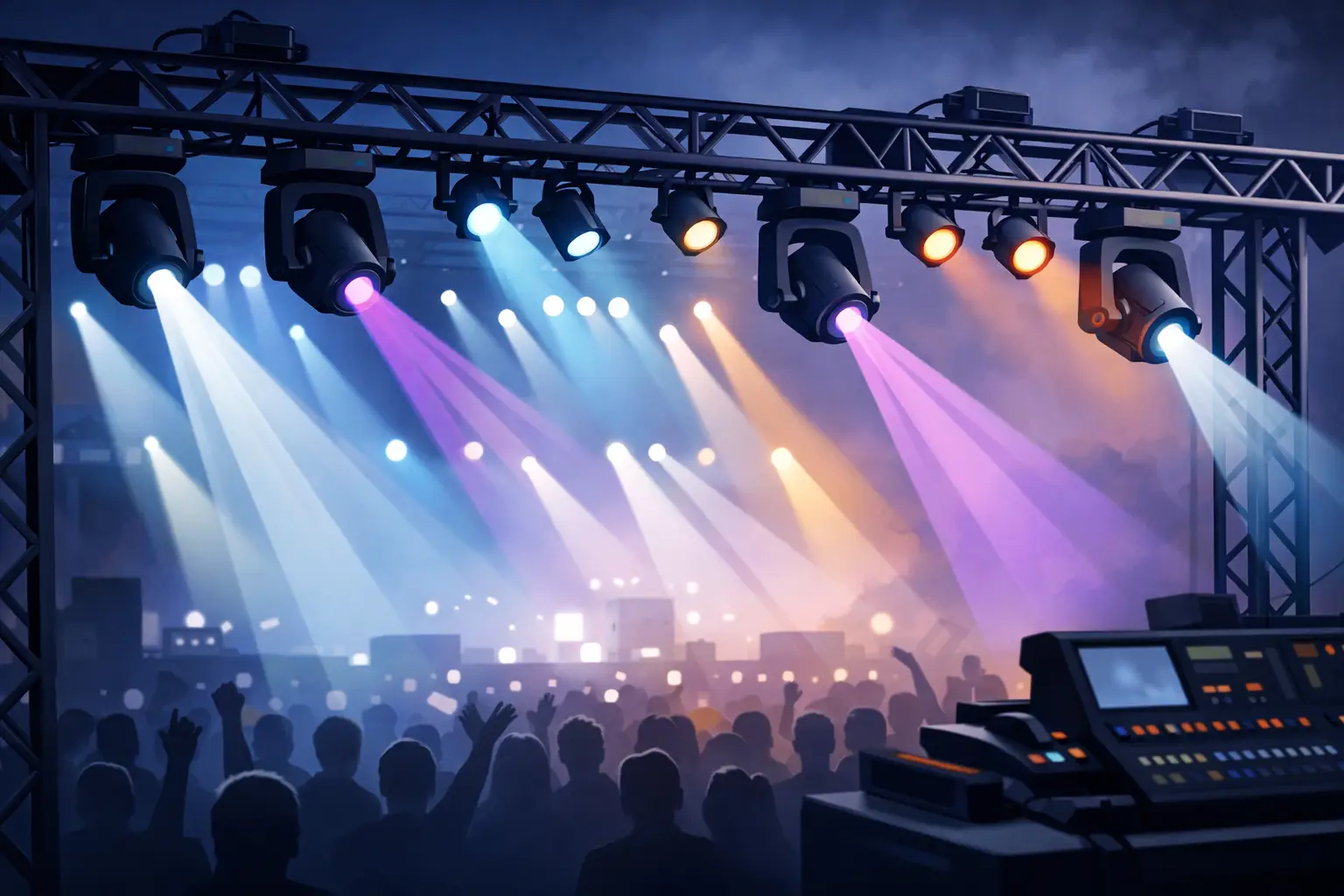
That brief determines the fixtures, placement and control required. Wash lights provide broad, even colour across a stage or room. Profile fixtures can isolate a speaker, lectern or performance area. Moving lights create movement, beams and changing looks. LED battens, uplights and festoon can shape a space that has no natural character of its own.
More fixtures do not automatically mean better production. An overloaded rig can distract from the event, while an underpowered setup can leave faces in shadow and a stage looking flat. Good lighting design is measured against sightlines, camera needs, room size, ceiling height and the run sheet, not a generic equipment list.
What Professional Event Lighting Rig Hire Includes
A professionally managed lighting hire package starts before equipment leaves the warehouse. It should account for the venue, stage layout, structural capacity, power source, audience area and access route. If the event is outdoors, weather exposure, ground conditions and wind ratings also affect the plan.
The equipment itself may include truss, base plates, lifting equipment, rated rigging hardware, lighting fixtures, dimming or distribution, consoles, data cabling and control equipment. Just as importantly, it includes the people to install and operate it safely. A rig above a dancefloor, audience or stage is not a place for guesswork, improvised hardware or an untrained operator.
At Zero Three Event Hire, that means treating lighting as part of the wider production system. The stage, power, AV, structures and crew are considered together, so a lighting plan is not created in isolation and then forced into an unsuitable space on event day.
The rig is only as good as its support structure
Truss and rigging need to suit the load, span and venue conditions. In some venues, approved overhead rigging points may be available. In others, a ground-supported goalpost or box truss system is the practical option. Outdoor events may require ballast, engineered structural plans and stricter weather planning.
This is where the trade-offs matter. A suspended rig can keep the floor clear and create a strong visual result, but it requires suitable points, approvals and adequate installation time. Ground-supported truss can work where overhead rigging is not possible, but it takes up floor space and needs careful placement around guests, performers and emergency access.
The right answer depends on the site. It should never depend on what happens to be quickest to unload.
Power, Data and Control Need Their Own Plan
Lighting often exposes weak event power planning. Fixtures, consoles, video systems, audio, catering and temporary site services may all be drawing from the same supply. Without proper load calculations and distribution, nuisance tripping can quickly become a show-stopping failure.
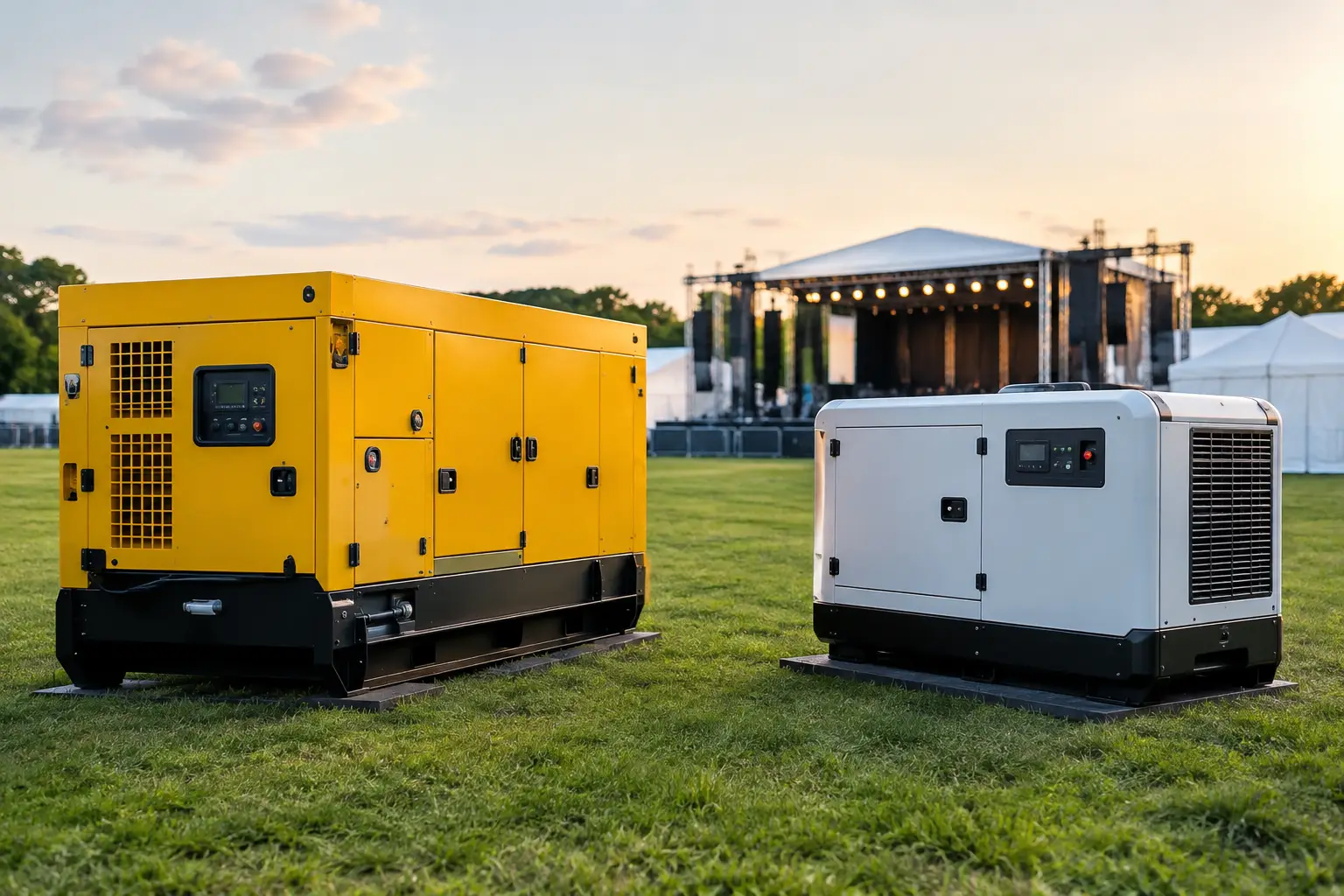
A lighting system needs correctly sized power distribution, protected circuits and cable routes that keep footpaths, exits and work areas clear. For outdoor or temporary sites, that may also mean generators, cable ramps, weather-rated connections and backup provisions where the event cannot afford downtime.
Data deserves the same attention. Modern fixtures rely on controlled data paths, addressing and console programming. One incorrectly patched line can leave a section of the rig unresponsive at the worst possible time. Testing the system during installation gives the crew time to find faults before doors open, rather than while a presenter is waiting at the stage entrance.
For complex productions, a dedicated lighting operator is not an extra. It is the person following the show call, adjusting looks to match the room and responding when the schedule changes. A pre-programmed light show may suit a small, fixed-format event. A live program with performers, speeches, walk-ons and video content needs someone at the controls.
Build the Lighting Plan Around the Event Schedule
A lighting rig needs time. Time to unload, build the structure, cable, hang fixtures, focus them, test the system, program cues and complete safety checks. If the venue provides only a short bump-in window, the design needs to be realistic about what can be achieved without cutting corners.
Share the run sheet early. Include door times, speeches, award presentations, band sets, ceremony moments, AV playback and venue curfews. These details let the production crew build a cue plan that supports the event rather than chasing it.
A useful technical brief should cover:
- venue address, access times and loading conditions
- room or site dimensions, ceiling height and existing rigging points
- stage size, performer requirements and expected guest numbers
- the event schedule, including rehearsals and soundcheck
- available venue power and any restrictions on generators or cable routes
- whether photography, videography or livestreaming will be used.
Photography and video are often missed until late in the process. A room can look spectacular to the eye but be difficult to capture if faces are poorly lit, colour temperatures clash or bright beams point directly into cameras. Discussing content capture upfront allows the lighting design to support both the live audience and the record of the event.
Compliance Is Part of the Job, Not a Late Add-On
For public events, corporate functions and larger private celebrations, compliance paperwork is not administrative filler. Venues, councils, insurers and event managers may require risk documentation, electrical test-and-tag records, structural certification, public liability information and site plans before equipment is approved for use.
Requirements vary by venue and event scale. A ballroom lighting package may be straightforward, while an outdoor public activation with truss, generators and public access can involve more detailed engineering and safety controls. The key is identifying those needs early, before the event is committed to a layout that cannot be approved.
Professional crews also manage the practical side of compliance on site. Cables are secured and protected. Truss legs and ballast are positioned to reduce trip hazards and maintain egress. Fixtures are safety-bonded. Exclusion zones are used during lifting and installation. These are not decorative details. They protect guests, crew, performers and the event itself.
Avoid the Gaps Between Suppliers
Hiring lights from one supplier, staging from another, power from a third and crew separately can appear cost-effective on paper. It can also create a familiar event-day problem: every supplier is responsible for their own equipment, but nobody owns the point where systems meet.
A lighting crew cannot safely finish a rig if the stage location changes after the truss is measured. Audio cannot complete its patch if power distribution has been undersized. A venue cannot sign off a setup if the relevant documentation arrives after bump-in has started.
One accountable production partner reduces those handovers. The scope can be coordinated from the first brief, with an itemised quote that makes the equipment, labour and operational inclusions clear. Then the same team can deliver, install, operate and pack down the system, staying available if conditions change during the event.
Questions Worth Asking Before You Confirm
Before confirming event lighting rig hire, ask who is responsible for the design, structural suitability, power calculations, installation and show operation. Ask whether the quote includes delivery, labour, programming, on-site support and pack-down, or whether those items sit outside the headline price.
Also ask what happens if a fixture fails, weather shifts or the run sheet runs late. Live events are not static environments. Backup equipment, experienced technicians and a clear escalation path matter far more than a cheap fixture rate when the room is full and the show has started.
The best lighting rig is not necessarily the biggest one. It is the rig that fits the venue, supports the programme, meets the safety requirements and has a capable crew behind it until the last note drops. Start with a clear brief, allow enough production time, and choose a team prepared to own the result from bump-in to final pack-down.