A microphone cutting out halfway through a keynote is not a minor technical hiccup. It stops the room, rattles the presenter and makes every organiser look for someone to fix it. Professional live sound system hire is about preventing that moment – giving every guest clear speech, controlled music and the confidence that a technician is already watching the system before a problem reaches the audience.
For a wedding of 80 guests, a school presentation, a corporate awards night or a public festival crowd, the right sound package is never simply a pair of speakers. It is a designed system: speakers matched to the audience area, microphones suited to the people using them, safe cable paths, properly managed power and an experienced crew behind the desk when it matters.
What live sound system hire should include
A sound system starts with the event brief. How many people are attending? Is the programme speech-led, music-led or both? Is the event indoors, outdoors or moving between spaces? Will there be a live band, DJ, panel discussion, video playback, MC, remote guest or formal announcement? The answers determine the system, not the other way around.
For a small indoor function, compact full-range speakers, a mixer and a handful of wireless microphones may be enough. A larger room can require additional delay speakers so guests at the rear hear the same message clearly without the front rows being overwhelmed. Outdoor events may need weather-aware speaker placement, distributed coverage and enough low-frequency support for programmed music or live performance.
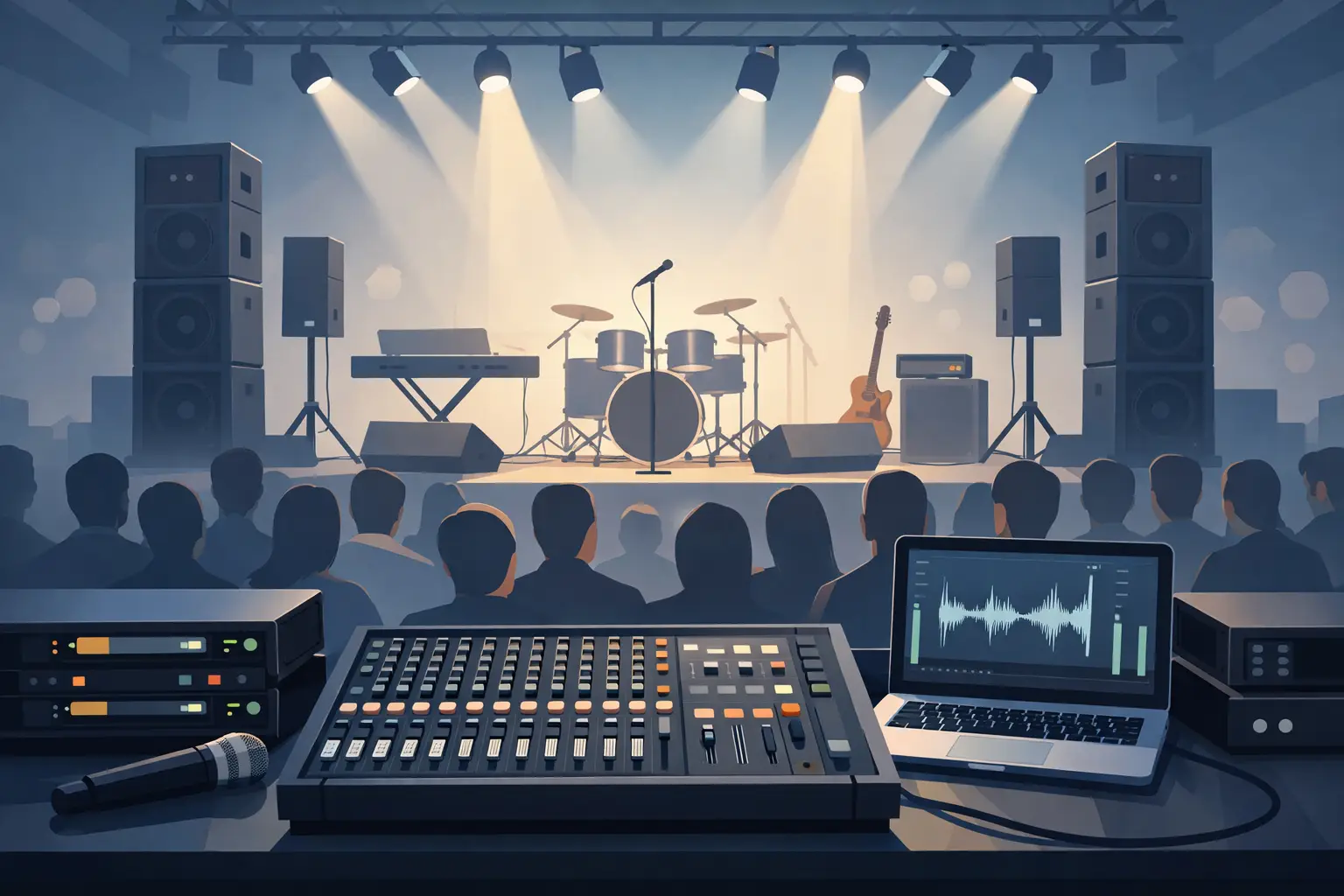
A professionally scoped package can include PA speakers or line-array systems, subwoofers, digital mixing consoles, wired and wireless microphones, DI boxes for instruments, foldback monitors, playback connections, signal distribution, cable protection and communications for production staff. The exact equipment matters, but the way it is deployed matters more.
Good sound is not always the loudest sound. It is intelligible at the back of the room, balanced across the audience and appropriate for the venue, neighbours and event format. A quiet spoken-word ceremony needs a different approach from a high-energy sporting presentation. Both deserve to be heard properly.
The difference between equipment hire and event sound support
Dry hire can suit an experienced operator who knows the venue, understands gain structure and has a contingency plan. For many organisers, however, collecting speakers and hoping the included cables cover the job creates unnecessary risk.
Live events are full of moving parts. A performer arrives with an unexpected instrument. A presenter needs a lapel mic rather than a handheld. A video needs audio routed to the room. The run sheet changes. Wind picks up. A wireless frequency becomes unreliable. These are normal production issues, but they need someone on site who can resolve them without making the audience wait.
That is why Zero Three Event Hire supplies a team, not just equipment. A crew can deliver, install, test and operate the system, coordinate with the venue and other suppliers, then pack down after the final guest leaves. One accountable production partner means the sound system is considered alongside staging, lighting, event power and structures rather than treated as a separate delivery.
Sound design begins with coverage, not a speaker count
Two speakers may be entirely suitable for one space and completely inadequate for another with the same guest number. Room shape, ceiling height, hard surfaces, balcony areas, crowd movement and stage position all influence coverage.
The aim is consistency. Guests near the stage should not be blasted while people near the bar struggle to follow the MC. For larger sites, carefully positioned speaker zones and time alignment can maintain clarity across distance. For outdoor events, speaker placement also needs to account for wind direction, pedestrian access, sightlines and safe rigging or ground support.
This planning protects the event experience and helps manage noise expectations. If volume needs to rise simply because the system is poorly distributed, everyone loses: the audience receives harsh sound and the surrounding area receives more spill than necessary.
Microphones need to suit the job
A corporate host walking between tables, a wedding celebrant, a four-person panel and a lead singer all need different microphone solutions. Wireless handheld microphones are versatile and familiar. Headset or lapel microphones can give speakers freedom to move, but placement, clothing and vocal technique affect their performance. Wired microphones remain a reliable choice for lecterns, instruments and fixed performance positions.
Microphone planning also includes the unglamorous details that make an event run cleanly: fresh batteries, coordinated wireless channels, spares on hand, sensible handover points and soundchecks with the people who will actually use the equipment. A polished event is often built on those small decisions.
Planning live sound system hire for your event
The best time to involve sound production is before the floor plan and running order are locked in. Early planning allows the stage position, speaker locations, power requirements and cable routes to work together. It also avoids late changes that can reduce audience space or create awkward compromises.
Start with a clear brief covering date, venue, audience size, event timings and programme. Include any performers, DJs, presentations, videos, musical acts and special announcements. If the event has several areas – such as a registration zone, main room and outdoor activation – identify which spaces need independent audio and which only need background coverage.
Venue information is equally useful. Access constraints, loading times, stairs, lift dimensions, ceiling rigging points, curfews and existing house systems can all affect the production plan. A site inspection is worthwhile when the event is complex, public-facing or being built in an open space.
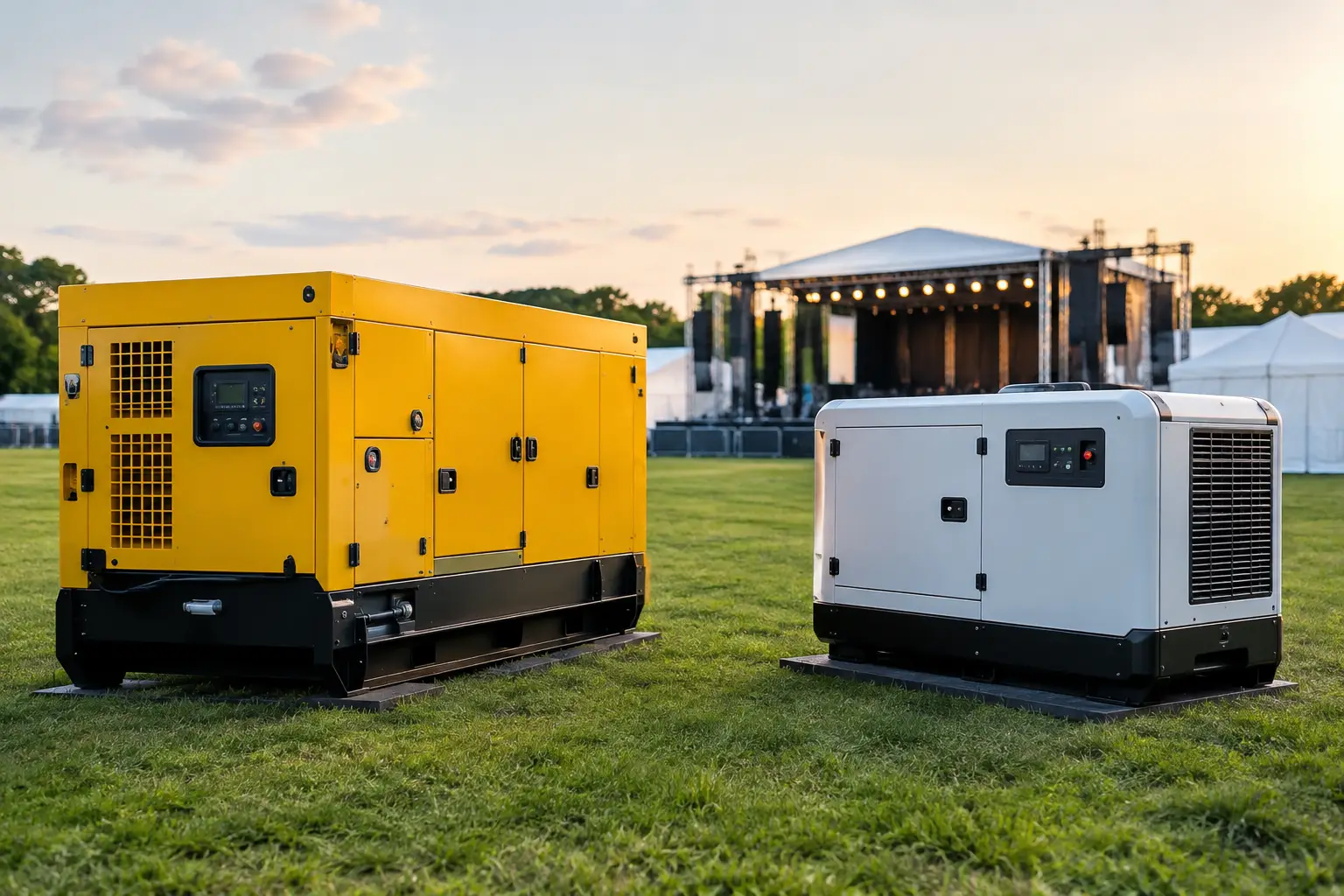
For Melbourne events, weather is part of the production conversation. An outdoor sound plan needs practical allowances for rain, wind and ground conditions, as well as protected equipment positions and a plan for safe shutdown if conditions change. Power and sound cannot be planned in isolation, particularly where generators, temporary distribution or long cable runs are involved.
The operational details that protect the show
A capable sound system is only as dependable as the process around it. Before doors open, the crew should test microphones, playback, monitors and communications; confirm the programme order; check every signal path; and make sure speakers, stands and cables are secure. Where required, cable ramps protect both the cable and the people crossing it.
During the event, an operator manages level changes, cues walk-on music, responds to presenters and keeps an ear on the room. This is especially valuable when the programme has live music, multiple speakers or rapid transitions. No event manager should have to leave their guests to troubleshoot a mixer.
Backup planning also deserves attention. Spare microphones, replacement cables, additional batteries and alternate playback connections can turn a potential interruption into a quick correction. The level of redundancy should reflect the consequences of failure. A casual backyard gathering and a ticketed public event do not carry the same operational risk.
For larger events, sound needs to sit inside a wider production plan covering event power, staging, lighting, structural documentation, access and crew schedules. When these services are coordinated under one scope, responsibilities are clear and decisions happen faster on site.
Questions to ask before approving a sound quote
A transparent quote should make it easy to understand what is being supplied and who is responsible for each stage. Ask whether delivery, installation, operation and pack-down are included, and whether an on-site technician remains for the full event or only for setup. Confirm the number and type of microphones, speaker coverage areas, playback inputs and any equipment needed for performers.
It is also sensible to ask about power requirements, cable management, venue coordination and contingency equipment. If you are comparing quotes, do not compare speaker quantities alone. Compare the crew coverage, production planning, support level and scope of responsibility behind the equipment.
The cheapest package can be the right choice for a simple event with an experienced operator. It becomes a false economy when the system is underpowered, the microphones are unsuitable or no one is available when the schedule changes.
A well-planned sound system lets the audience focus on the message, the music and the moment – not the mechanics behind it. Give the production team a proper brief early, and they can build the coverage, crew plan and contingencies that carry your event from first welcome to the last note drops.