When the house lights dim, the band is ready and 800 guests are facing the stage, there is no such thing as a minor technical issue. A tripped circuit, a missing microphone channel or a gust of wind against temporary structures can affect the entire experience within minutes. An on-site event technical crew is the difference between a disruption that reaches the crowd and a problem resolved quietly behind the scenes.
Equipment is only one part of event delivery. Someone still needs to understand the site, connect systems in the right order, monitor what is happening and take ownership when plans change. That is what a professional crew is there to do – from the first vehicle on site to the final pack-down.
What an on-site event technical crew actually does
An event crew is not simply there to switch equipment on. They are the operational link between your event plan and the infrastructure that makes it possible. Depending on the scope, that may include staging technicians, licensed electricians, AV operators, lighting technicians, riggers, structural specialists, site coordinators and general production crew.
Before guests arrive, the team checks that equipment is installed to plan, safely secured and fully operational. Power distribution is tested under load. Audio is tuned for the room or outdoor site. Lighting is focused and programmed. Stage access, cable paths and emergency routes are checked before they become an issue.
Once doors open, the work shifts from installation to active management. The crew follows the run sheet, supports presenters and performers, monitors power and AV systems, and responds to changing conditions. At an outdoor event, that may mean adjusting for weather, moving equipment into protection or reassessing wind ratings. At a corporate launch, it might mean a last-minute presentation change, a remote speaker with poor audio or a CEO arriving earlier than scheduled.
The crew also manages the part organisers should not have to think about during their own event: keeping the technical areas controlled, identifying faults early, coordinating suppliers on site and maintaining a safe working environment through pack-down.
The risk of dry hire without technical support
Dry hire has a place. For a simple backyard celebration with a basic speaker and a modest lighting package, collection or delivery-only hire may be appropriate. The trade-off is clear: you take responsibility for setup, operation, fault-finding and return condition.
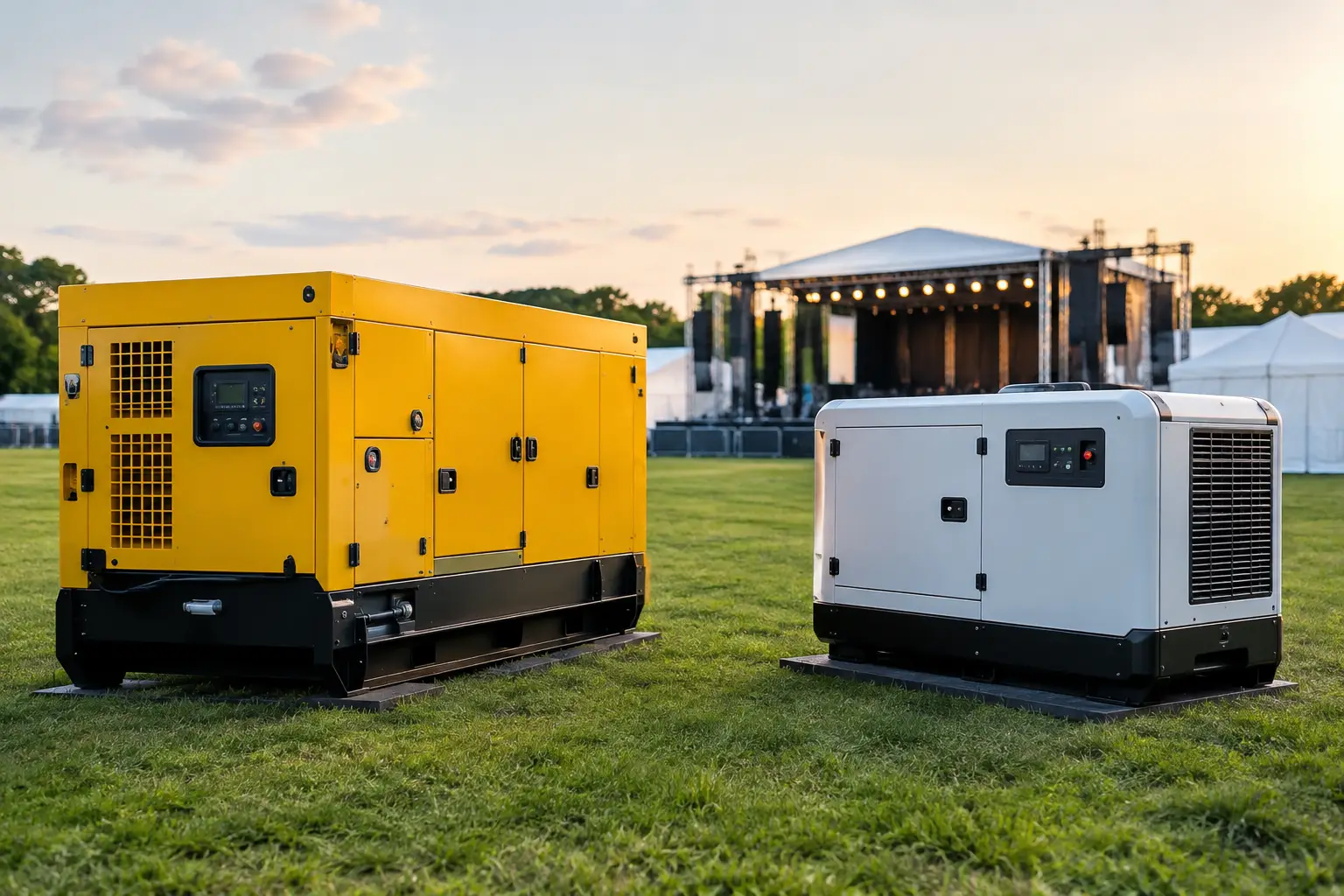
That model becomes riskier as soon as your event has multiple systems or public-facing obligations. A generator needs the correct load calculation and distribution. A stage needs proper installation and suitable access. A PA system needs more than speakers positioned at either end of a room. It needs correct placement, signal management and an operator who knows when feedback is building before it reaches the audience.
A venue may also require compliance documents, electrical test and tag records, public liability details, structural engineering information or a site-specific safety plan. These are not items to chase while trucks are waiting at the loading dock.
With an on-site crew, technical responsibility sits with people who know the supplied equipment and the agreed production plan. If a backup is required, they can make the call and action it. If another supplier needs power or a performer needs a monitor mix, there is one production point of contact rather than a string of phone calls.
Crew coverage should match the event, not a standard package
Not every event needs the same staffing level. A wedding reception may need a technician for setup, soundcheck, formalities and a handover to the DJ. A conference with multiple breakout rooms may need dedicated AV operators throughout the day. A music festival needs a deeper crew structure, clear site leadership, changeover support, power oversight and people assigned to critical systems.
The right question is not, “How many crew do we need?” It is, “What cannot be allowed to stop?”
For some events, that critical point is uninterrupted speech audio. For others, it is site power, stage safety or the precise timing of a brand reveal. A capable supplier scopes crew around those consequences, rather than sending the smallest possible team and hoping the day stays simple.
Consider the true operating window
Crew time is often underestimated because organisers focus on guest-facing hours. A six-hour event can require a full day of technical coverage once delivery access, installation, testing, rehearsals, doors, operation and pack-down are included.
Early access can be just as valuable as additional equipment. A properly built schedule gives technicians time to install without competing with caterers, stylists, exhibitors and venue staff. It also creates room for a complete systems check before the first guest arrives.
For events with an evening finish, confirm who remains on site until equipment is secured and packed down. Leaving costly AV, power systems or staging unattended is not an operational plan.
The value is in decision-making under pressure
Most technical problems are manageable. The issue is whether the person managing them has the authority, experience and equipment to act quickly.
A trained technician can isolate a faulty cable, move a signal to a spare channel, rebalance an overloaded circuit or replace a failed fixture without turning it into a show-stopping moment. They understand the knock-on effects. Switching off the wrong circuit can affect catering refrigeration. Moving a speaker can create a sightline problem. Adding an unplanned heater may change the generator load.
This judgement is particularly important at public events, where safety and audience flow must take priority over convenience. If a cable crossing needs protection, if wind conditions require a structural response or if an access path is blocked, the crew needs to address it decisively. Good production support is not dramatic. It prevents drama.
Build the crew into the brief from the start
Technical crew should not be an afterthought added when the equipment quote is nearly final. Include operational support in the first event conversation, alongside guest numbers, venue details, access times, event format and key run-sheet moments.
A clear brief should explain what is happening on stage, who is supplying content, whether performers have technical riders, where guests enter, how long the event runs and what site restrictions apply. For outdoor events in Melbourne, it should also acknowledge weather exposure, ground conditions, noise requirements and the practical realities of getting vehicles and equipment safely onto site.
Be upfront about uncertainty as well. Guest numbers may change. The final floorplan may not be locked. A sponsor may add a screen or activation late in the process. A good production partner can allow for likely changes, but only if they are part of the planning conversation.
Ask who owns each critical system
If your event uses separate suppliers for staging, generators, lighting and sound, establish who is responsible for integration. A generator provider may supply power, but not connect every downstream distribution board. An AV supplier may provide screens, but not have authority over the venue’s hanging points. A stage supplier may install a platform, but not provide an operator for the show.
Fragmented supply can work when responsibilities are documented and all parties coordinate well. It can also create gaps that only become visible during setup. One accountable production team reduces those handover points by managing equipment, crew, compliance and live operation as one connected scope.
Zero Three Event Hire works this way because technical delivery is never just a truck drop. The crew that installs the infrastructure understands how it has been built, what it is supporting and what contingency equipment is available if conditions change.
What to expect from a professional crew provider
You should receive more than a vague allowance for “tech support”. Your quote should make clear the crew roles, expected hours, supplied equipment, operating responsibilities and any assumptions around venue access or event changes. Transparent itemisation helps you see where the budget is going and whether coverage matches the risk.
For larger or more complex events, ask how the supplier handles backup equipment, escalation after hours and communication on site. A named coordinator matters. So does knowing whether the person taking your brief is connected to the crew delivering it.
The strongest crews are calm, prepared and visible when needed, not constantly in the spotlight. They communicate clearly with venue teams, performers, organisers and other suppliers. They protect the run sheet without making every small adjustment feel like a crisis.
Your guests will remember the speeches they could hear, the stage that looked right, the lights that hit on cue and the event that ran as promised. Give the technical work the same level of planning as the guest experience, and let a qualified crew carry it through until the last note drops.