A stage truck arriving after the caterer has set up, a generator positioned too far from the distribution board, or a missing traffic plan can put an entire event under pressure before guests arrive. Event logistics is the operational work that prevents those problems. It turns an approved event concept into a site that is safe, powered, built, staffed and ready when the doors open.
For a wedding reception, that may mean coordinating a marquee, dance floor, lighting and sound around venue access. For a festival, it can mean staged truck movements, structural inspections, power distribution, crew call times and live technical support across several days. The scale changes. The need for control does not.
Event logistics starts with the real event brief
A useful event brief does more than state the date, guest count and venue. It identifies what has to happen on site, who needs access, where equipment can travel, when noise restrictions begin and which systems cannot fail. This is where a production partner separates a workable plan from a collection of hire items.
Start by defining the guest experience and the operational requirements together. If the audience needs clear sightlines, the stage height and location matter. If speeches, bands and presentations are part of the running order, sound coverage, microphone requirements and operator support need to be scoped early. If food service, bar operations, vendors and toilets are all drawing power, a generator cannot be selected on headline capacity alone. The actual load, distribution design and required redundancy matter.
For public events in Melbourne, access windows, vehicle movements and local conditions can quickly shape the build plan. A tight CBD loading dock is a different job from an open sports reserve. One may require smaller deliveries and precise bump-in sequencing; the other may require ground protection, traffic management and weather-rated infrastructure. Good planning deals with those differences before trucks are booked.
Build the site plan around access, safety and timing
A site plan is not a decorative map. It is the working document that allows suppliers, crew and venue teams to understand where infrastructure sits and how it gets there. It should account for stages, marquees, speakers, lighting towers, generators, cable routes, emergency exits, public walkways and service areas.
The biggest mistake is treating installation space as if it is the same as the finished event footprint. A clearspan structure needs room for delivery vehicles, lifting, assembly and safe working zones. A stage needs access for deck, roof, audio and lighting crews before the front-of-house area is ready. Generators need appropriate placement, ventilation, refuelling access and protected cable paths. If the plan only works after every vehicle has disappeared, it is not yet a buildable plan.
Timing needs the same discipline. Bump-in should be scheduled in the order the site can physically support: ground preparation and major structures first, then power, staging, AV, dressing and final checks. Trying to install every department at once may look efficient on paper, but it often creates congestion, delayed sign-offs and unnecessary safety risks.
Where several suppliers are involved, one named coordinator should own the master schedule. They do not need to control every contractor’s work, but they do need authority to manage access, resolve clashes and confirm when each area is ready for the next trade. That accountability is what stops a late delivery from becoming everyone else’s problem.
Power and AV need operational ownership
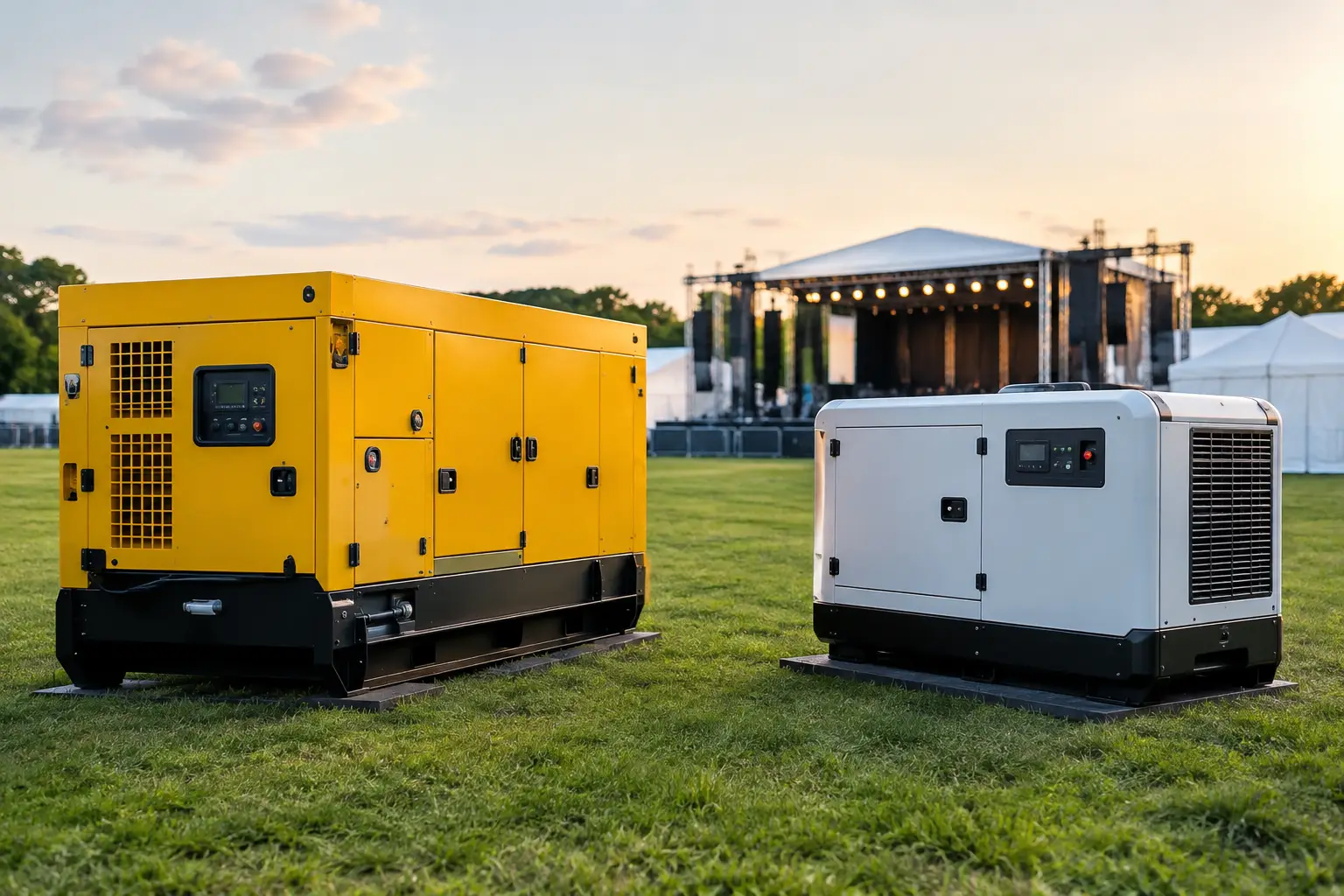
Event power is one of the clearest examples of why dry hire alone is not always enough. A generator is only one part of the system. The full job includes load calculations, distribution boards, protected cabling, testing, isolation requirements, backup planning and a technician who can respond if conditions change.
A corporate presentation with a small PA may have modest power needs, while a music programme with line arrays, lighting rigs, catering and vendor power can require a far more detailed design. It depends on the equipment, the duration, the site and the consequence of downtime. The right answer is not automatically the biggest generator. It is a properly calculated system with capacity where it is needed and no unsafe shortcuts on cable runs.
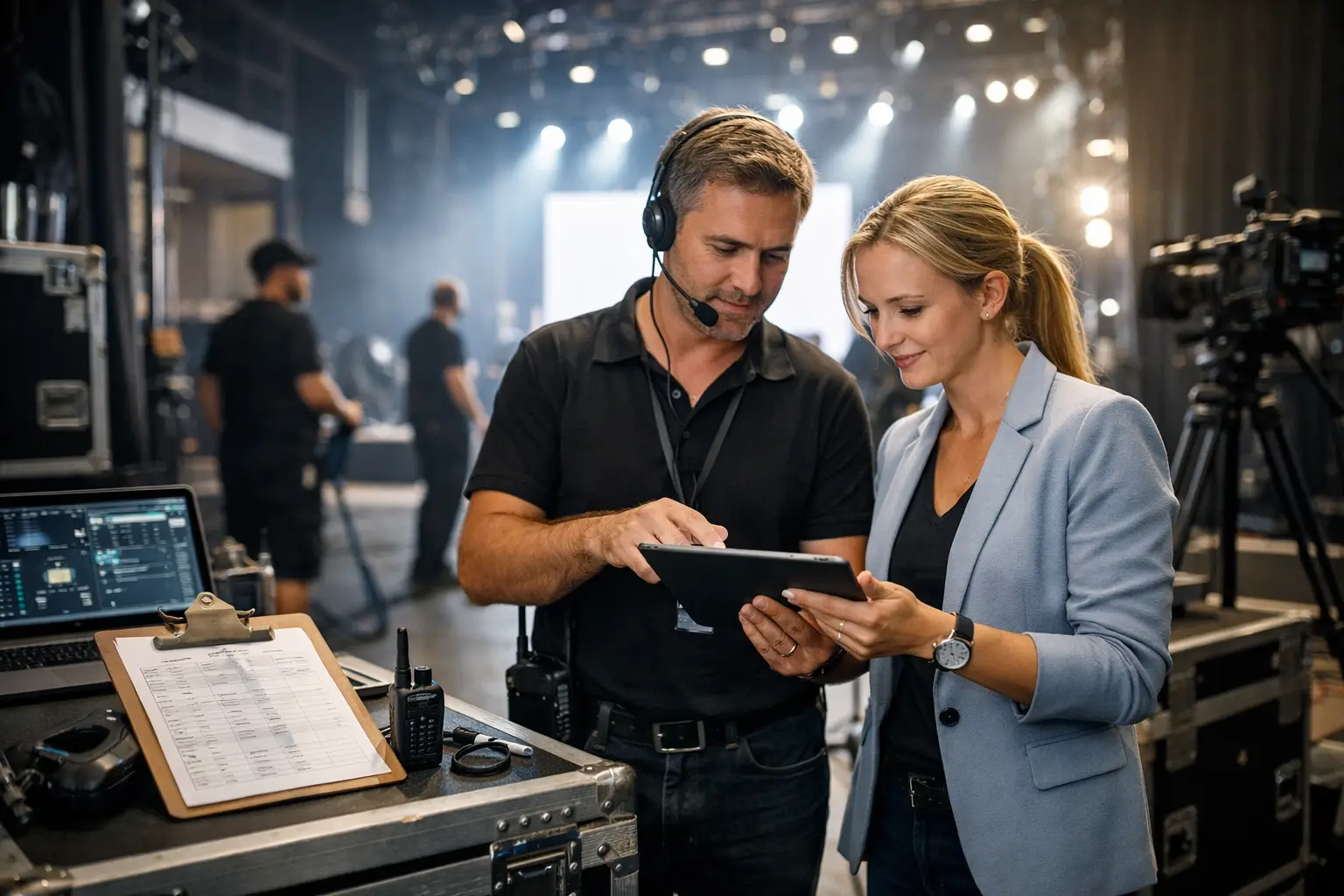
The same applies to audio and lighting. Equipment should be specified for the room, crowd size, programme and operating environment. A beautifully presented stage will still fall flat if speeches are unintelligible, artists cannot hear foldback, or lighting is not positioned to support cameras and audience sightlines. An on-site technical crew gives the event a live point of control, from soundcheck until the last note drops.
Compliance is part of event delivery, not paperwork at the end
Engineering certificates, electrical testing, structural documentation, risk assessments and public-liability requirements are often treated as administrative tasks. In reality, they influence what can be installed, where it can sit and how it must be operated.
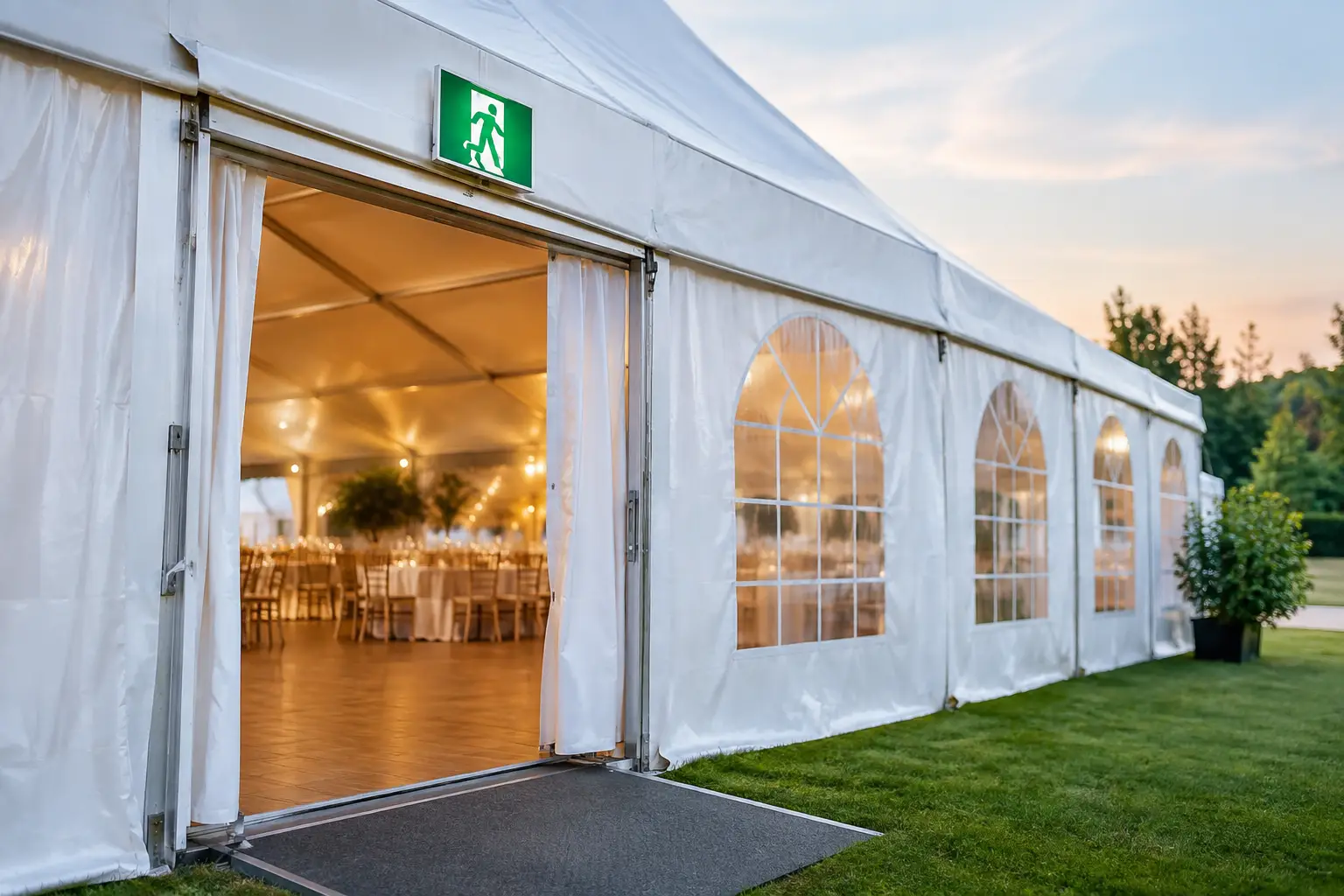
This is particularly relevant for temporary stages, roof systems, marquees, elevated platforms and large structural installations. Wind ratings, ballast, ground conditions and egress requirements cannot be guessed once the build is underway. The event organiser, venue and relevant authorities need clear documentation before the site becomes busy.
A capable supplier will identify these requirements during scoping, include them in the programme and provide the appropriate documentation as part of the delivery process. That reduces late surprises, but it also protects the people attending and working at the event. Compliance does not make an event less creative. It makes the creative plan possible to deliver responsibly.
Plan for changes, not just ideal conditions
Even well-run events change. A keynote runs long. Rain moves guests under cover. A performer adds a playback requirement. A delivery is delayed by traffic. The logistics plan needs enough flexibility to absorb normal changes without sacrificing safety or presentation.
That does not mean paying for unnecessary equipment across every job. It means making deliberate decisions about backup. For a high-attendance festival, redundant power or spare critical AV equipment may be essential. For an intimate ceremony, the priority may be a rapid-response technician and a wet-weather plan. The level of contingency should reflect the event’s risk, budget and audience expectations.
Clear communication makes this workable. Before event day, every key party should know the access times, contact names, site rules, production schedule and escalation path. During the event, the production lead should have the authority to make practical calls quickly. Waiting for multiple suppliers to agree on who owns a fault is how small issues become visible to guests.
Pack-down deserves the same planning as bump-in
The event may be finished for the audience, but the operational job is not complete until infrastructure is safely removed and the site is handed back in the agreed condition. Pack-down often happens when crews are tired, venues want access restored and weather has changed. It needs a managed sequence, adequate crew coverage and safe vehicle movements.
Power should be isolated correctly, AV systems packed by trained hands, structures dismantled to their approved method and equipment checked before it leaves site. A single operational partner can coordinate that final stage rather than leaving the organiser to chase separate collection times and responsibility for any remaining equipment.
At Zero Three Event Hire, the objective is straightforward: one accountable team from scope and itemised quote through engineering, build, live operation and pack-down. The result is not just equipment in place. It is a site that works when the schedule is tight, the crowd arrives and the show has no room for excuses.
The best time to solve an event-day problem is while it is still a line on the site plan. Give the logistics the same attention as the programme, and your crew can focus on the moment guests will remember.