A stage is where every set change, keynote, ceremony, announcement and final encore has to land on time. Stage hire is not simply choosing a platform that looks right in a quote. It is a live-event infrastructure decision involving audience sightlines, performer safety, access, weather exposure, production equipment, public liability and a schedule that rarely has room for a second attempt.
For a wedding reception, that may mean a clean, stable stage that gives speeches and live music their moment without swallowing the room. For a festival, sporting event or public activation, it means a certified structure built for real loads, real weather and a crowd that expects the show to keep moving. The right solution depends on the event, but the standard should not: the stage must be safe, presentable and ready before the first guest arrives.
Stage Hire Is a Production Decision
The cheapest stage package can become the most expensive choice when it arrives without the crew, documentation or equipment needed to make it work on site. A platform may be technically available, but that does not answer the questions that matter on event day. Can it be installed on the surface available? Is there enough clearance for a lighting rig? How will speakers, presenters and performers access it? Has the structure been selected for the intended load?
Professional stage hire begins with the event brief, not a standard size pulled from a catalogue. The production team needs to understand who will be on stage, what they are doing, what equipment they are bringing and where the audience will be positioned. A solo acoustic act, a six-piece band, a panel discussion and an awards presentation can all use the same footprint on paper, yet require very different layouts and operating conditions.
A well-planned stage also protects the rest of the event plan. It creates a defined performance area, gives camera operators and AV technicians a workable position, and helps keep cables, cases and crew movement out of guest pathways. When the audience can see clearly and the production team can work safely, the event feels effortless. That result is designed well before doors open.
Set the Stage Size Around the Show
Stage dimensions should be driven by the performance and the production package, rather than the maximum space available at a venue. Bigger is not always better. An oversized stage can make a small presentation feel disconnected, while a cramped platform forces performers, instruments, lecterns and technical equipment into each other’s space.
Start with the people and equipment that must occupy the stage at the same time. Allow room for performers to move naturally, presenters to walk on and off confidently, and technicians to make fast changes without creating a hazard. A corporate event may need space for branded lecterns, presentation screens and award recipients. A band may need drum risers, monitor wedges, backline and safe cable routes. A church service may need room for a worship team, speakers and projected content, with access that works for people of all abilities.
Stage height deserves the same attention. A low stage can suit an intimate room where guests are close to the action. A higher deck may be necessary for a larger crowd or uneven outdoor ground, but it also changes access requirements and the way performers connect with the audience. Stairs, handrails and ramps are not afterthoughts. They are part of the structure and should be planned with the users, movement and event conditions in mind.
Sightlines Are Part of the Guest Experience
If guests cannot see the person speaking, the screens displaying content or the band performing, the stage is not doing its job. Sightlines are affected by stage height, audience layout, furniture placement, roof lines, lighting positions and even the location of a bar or service area.
For larger audiences, video screens and camera coverage may be needed to support the physical stage. That changes the power, AV and crew requirements. It is one reason staging works best when it is scoped alongside sound, lighting and vision rather than being treated as a separate hire item.
Build for the Site, Not the Catalogue Photo
Indoor ballrooms, school ovals, waterfront lawns, car parks, warehouses and marquee floors each present different constraints. Ground conditions, vehicle access, ceiling heights, noise limits, drainage, wind exposure and venue rules all affect what can be installed and how long it will take.
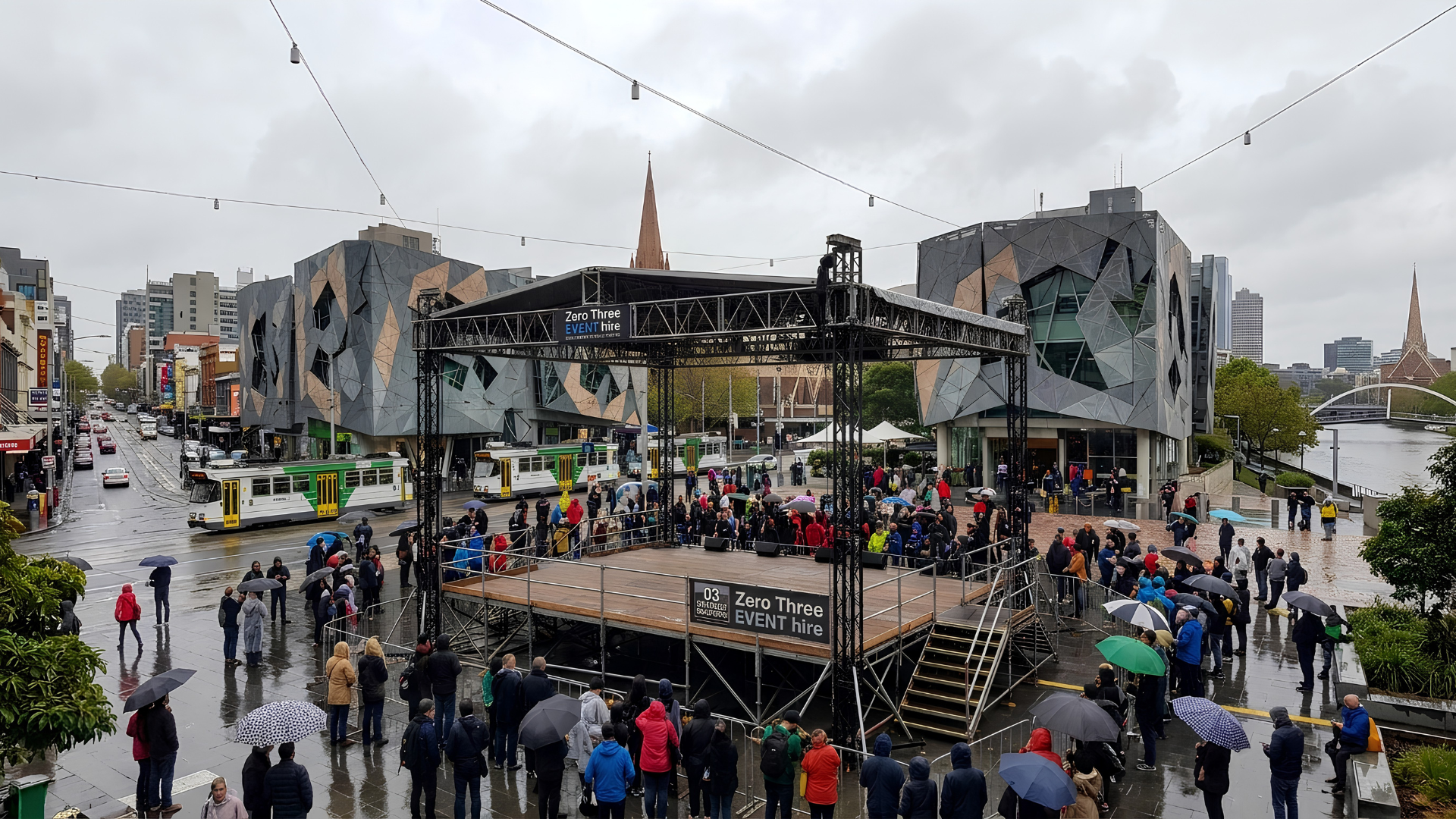
Outdoor events need particular discipline. A stage that looks straightforward in calm weather can require additional engineering, ballast, roofing or wind-management procedures once it is exposed to the elements. Temporary structures must be selected for the site and installed to their specified conditions. There is no value in a showpiece roof or lighting rig if the event team does not have a clear plan for changing weather.
The site inspection is where practical issues are found early: narrow gates, sloping ground, underground services, restricted loading times, public footpaths, nearby residences and limited truck access. Solving these details during planning is far better than trying to solve them while suppliers are waiting at the dock or guests are already arriving.
What Compliant Stage Hire Should Include
A stage is a structural installation, not a stack of equipment cases. For public events, corporate functions and any production carrying significant equipment or people, documentation and installation standards matter. The exact requirements vary by venue, council, event size and structure, but organisers should expect the supplier to take compliance seriously from the outset.
That means confirming the intended use and load, supplying appropriate structural information where required, and installing the system with trained crew rather than leaving assembly to an unbriefed event team. It also means ensuring access points, handrails, steps, ramps and edge protection are appropriate to the design.
The stage needs to be coordinated with overhead equipment as well. Audio line arrays, lighting truss, LED screens and banner systems introduce their own loads and engineering considerations. When separate suppliers each manage a small part of the setup, responsibility can become blurred. One production partner who scopes the complete system can identify clashes before they turn into delays.
Power, Audio and Lighting Need a Shared Plan
A stage without dependable power is simply an elevated platform. The moment microphones, band equipment, lighting, screens or playback are added, the stage becomes the centre of a technical system that must be designed and operated as one.
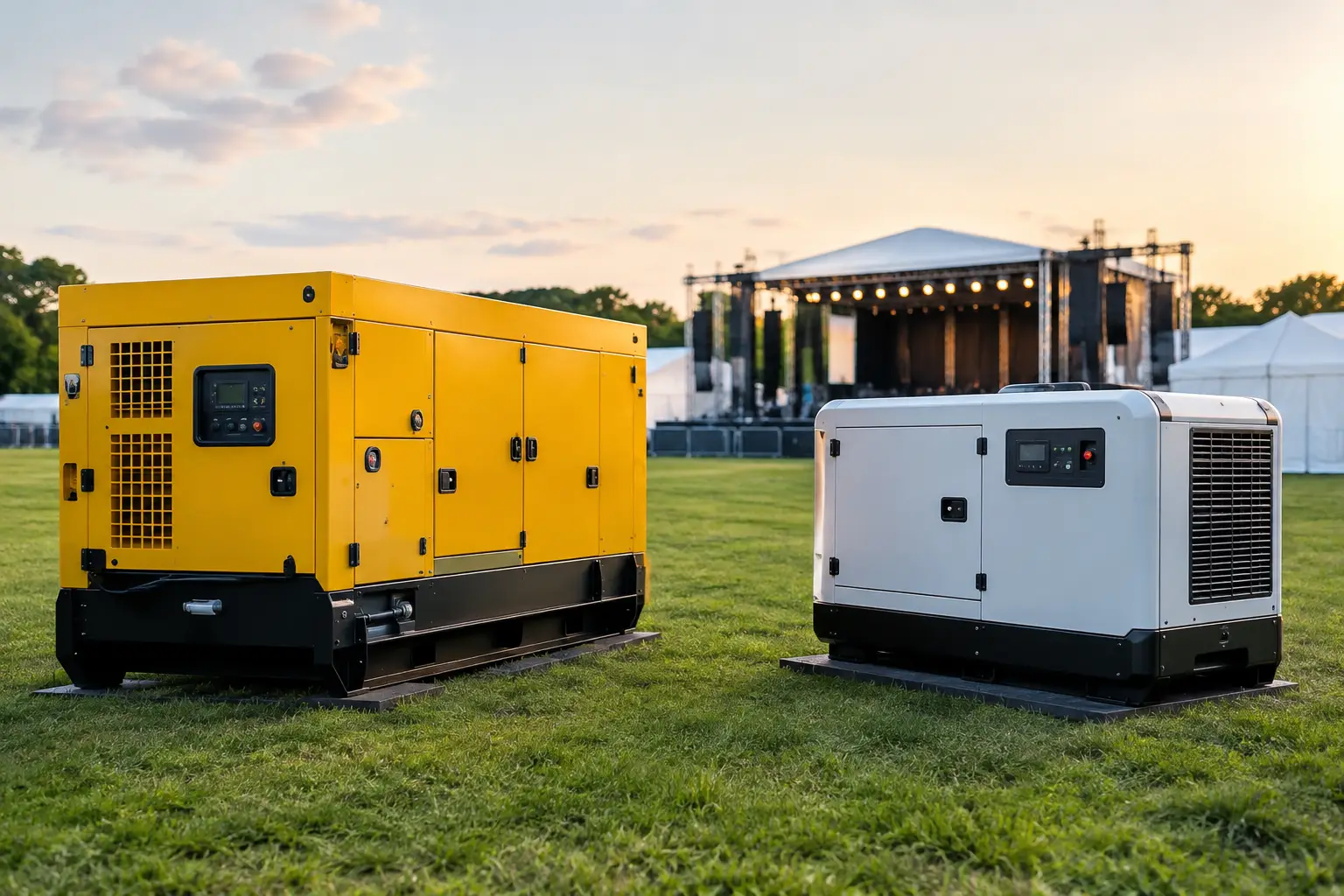
Power requirements should be calculated from the actual equipment list, including realistic allowances for lighting, AV, catering or other event loads connected to the same supply. A generator selected only by a rough estimate can leave too little capacity, create noisy operation or complicate distribution across the site. Proper cable routing, tested distribution and backup planning protect both the performance and the people working around it.
Audio and lighting design should support the purpose of the stage. A daytime awards event needs clear speech reinforcement and controlled presentation lighting. A concert needs coverage that reaches the crowd without overwhelming neighbours or front-of-house positions. A wedding band needs a system that sounds polished without dominating dinner service. The equipment is important, but experienced operators are what keep those systems stable once the run sheet changes or a microphone fails five minutes before a speech.
The Crew Is What Keeps the Schedule Intact
Delivery is only one part of stage hire. The critical work happens in the hours before and during the event: unloading, installation, checks, soundcheck, cueing, monitoring weather, responding to changes and packing down safely after the final guest leaves.
A trained on-site crew gives organisers one accountable team to call when something shifts. That might be a revised stage layout, a late-arriving performer, a lectern that needs moving, an unexpected rain shower or a technical issue during a live presentation. These are normal event-day realities. The difference is whether they are handled quietly by people who know the system or pushed back onto an organiser already managing guests, suppliers and a run sheet.
At Zero Three Event Hire, staging can be delivered as part of a complete production package covering power, AV, lighting, structures, logistics and technical crew. This reduces vendor handovers and makes responsibility clear from the first site conversation through to pack-down.
Ask for a Quote That Reflects the Real Event
A useful stage quote is itemised, practical and built around the full operational scope. It should make clear what stage dimensions, height, access equipment, roofing, crew, delivery, installation and pack-down are included. If AV, lighting, power or generators are required, those components should be identified rather than buried in a vague allowance.
Before confirming stage hire, provide the event date, location, expected audience, program, venue access details, available power, performance requirements and bump-in window. Photos, site plans and a run sheet can help a production team identify the right approach quickly. For larger or public-facing events, share venue requirements and any known compliance conditions early.
The aim is not to make the planning process complicated. It is to remove surprises before they become expensive. A properly scoped stage gives performers confidence, gives technicians room to work, and gives organisers the assurance that the event can keep moving until the last note drops.
When the stage is built around the site, the show and the people responsible for delivering both, it becomes more than a place to stand. It becomes the dependable base from which the whole event can perform.