The best festival power solutions are not decided by generator size alone. They are built around what happens when gates open, the headline act takes the stage, food vendors hit their evening peak and every department needs power at once. If the supply has been guessed, undersized or left unsupported, the consequence is not a minor inconvenience. It is a dark stage, warm refrigeration, silent EFTPOS terminals and a programme that stops in front of a crowd.
Festival power needs to be designed as an operating system, not hired as a single piece of equipment. That means accurate load calculations, correctly sized generators, safe distribution, protected cable routes, redundancy where failure is unacceptable and a technical crew who can act before a problem reaches the audience.
Start with the real load, not the generator catalogue
A festival’s stated power requirement is often incomplete. A stage may have an audio and lighting specification, but that is only one part of the site. Add catering, bars, cool rooms, site offices, ticketing, security, toilets, amusement equipment, vendor stalls, back-of-house facilities and temporary lighting, and the total demand changes quickly.
The first job is to map every load by location, phase, connection type and likely operating time. A 63A three-phase outlet is not the same as a constant 63A draw, and equipment rarely reaches peak demand at precisely the same time. Equally, relying on diversity factors without understanding the actual schedule can leave too little capacity at the moment it matters most.
A proper power plan separates critical and non-critical loads. Main stage audio, communications, safety lighting, medical facilities and essential refrigeration may need priority supply. Decorative lighting, selected concessions or non-essential back-of-house loads can be isolated if a fault develops. This approach gives the production team options instead of forcing an all-or-nothing response.
Generator capacity should also include sensible headroom. Running a generator constantly at its limit invites voltage instability, heat issues and no room for late additions. Too much oversizing, however, can be inefficient and costly, particularly where generators spend long periods at very low load. The right answer depends on the event’s equipment, duty cycle, future additions and the level of backup required.
Best festival power solutions use a complete system
A reliable festival supply is a chain. The generator is only one link. The best festival power solutions bring generation, distribution, cable management, testing and live support together under one controlled plan.
Generation matched to the event programme
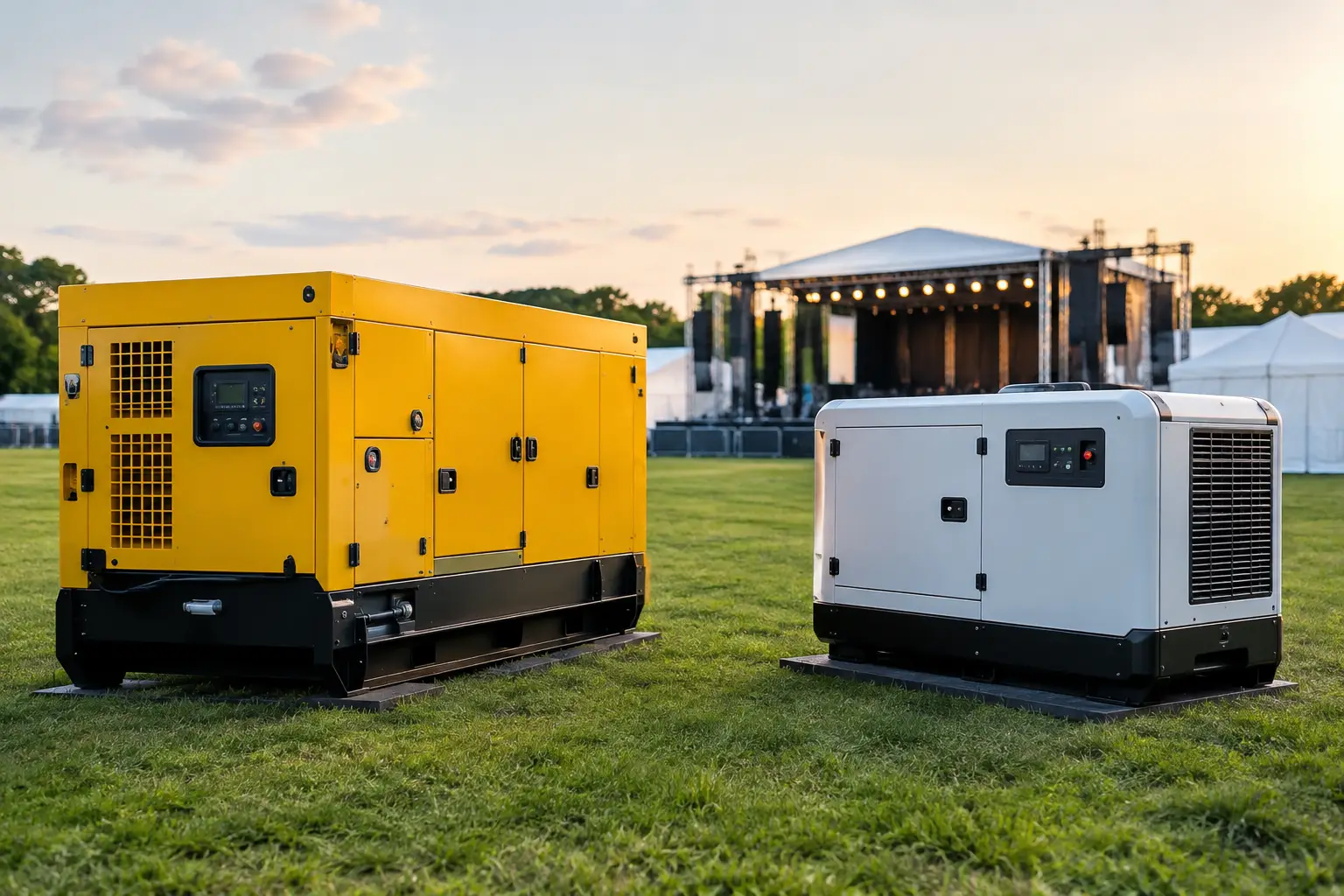
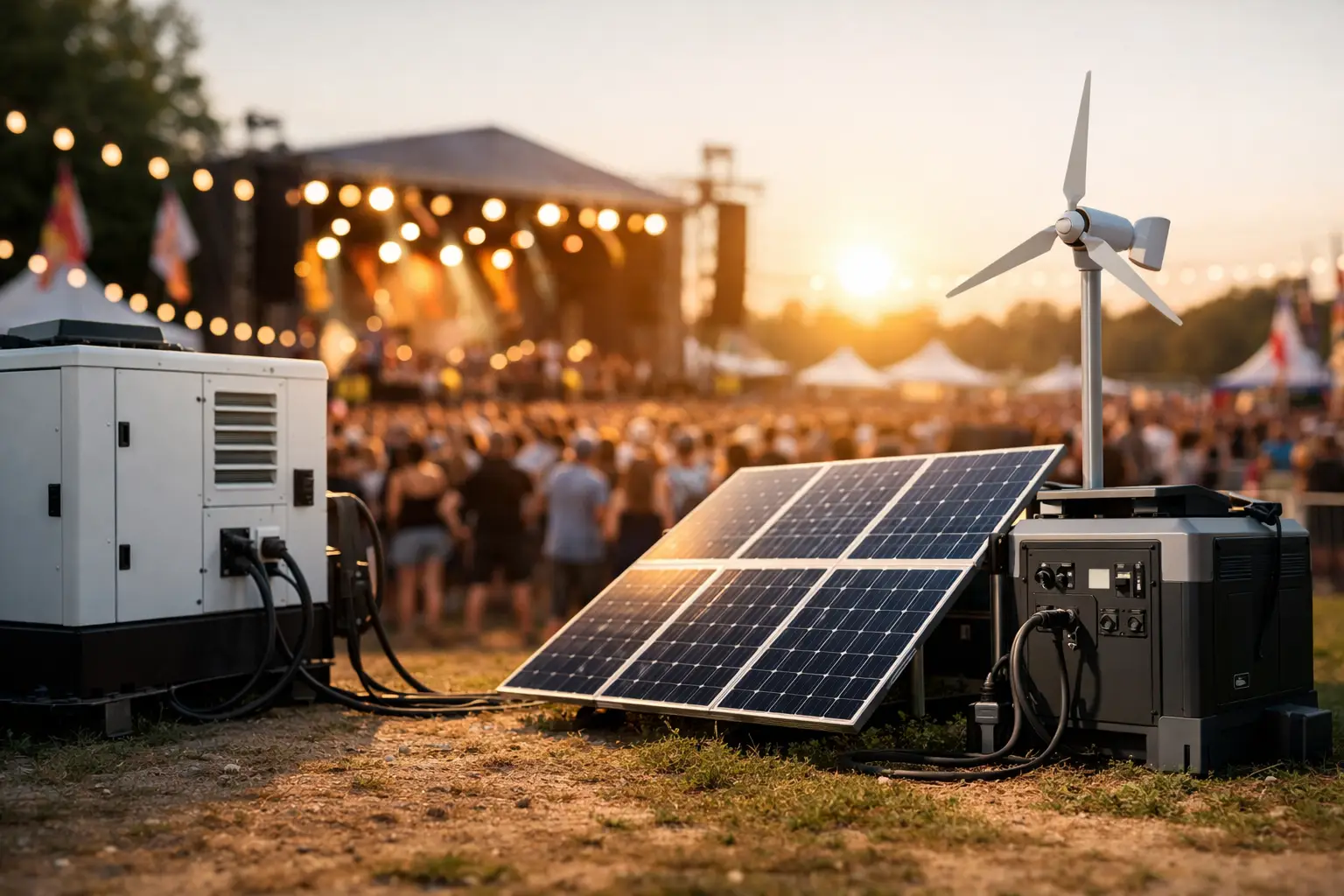
Diesel generators remain a practical choice for many outdoor events because they provide independent, high-capacity power where mains supply is unavailable or insufficient. For a small community festival, one appropriately sized unit may be suitable. For a multi-stage music event, power is more commonly divided across separate generators or purpose-built distribution zones.
Splitting supply can improve resilience and simplify cable runs. It also prevents one fault in a vendor area from affecting the main stage. The trade-off is more equipment, more planning and more fuel management. For high-attendance sites, those costs are often justified by the protection they provide.
Generator placement matters as much as capacity. Units need safe access for delivery, refuelling and pack-down, clearance for ventilation, weather protection where required, noise consideration and secure separation from patrons. Put the generator too far from the demand and cable lengths increase. Put it too close to the audience or performance area and noise, exhaust and presentation become problems.
Distribution that protects people and equipment
Temporary power distribution needs to be designed for the environment it will operate in. Outdoor festivals contend with foot traffic, vehicle movements, uneven ground, rain, dust and queues. Every outlet, distribution board and cable route needs a defined purpose, suitable protection and clear ownership.
Professional distribution uses appropriately rated switchboards, circuit protection, RCD protection and tested leads. Cables should be routed away from public pathways wherever possible. Where crossings cannot be avoided, rated cable covers and deliberate traffic management are essential. A loose lead across a thoroughfare is not a small detail. It is a trip hazard, a potential cable failure and an avoidable interruption to the event.
Power should also be balanced across phases. Poor phase balancing can limit available capacity and create operational issues even when the generator appears large enough on paper. The production team needs to know what is connected where, particularly when exhibitors or caterers arrive with equipment that was not included in the original brief.
Clean power for production-critical systems
Audio, lighting, LED screens and broadcast equipment can be sensitive to poor-quality supply, electrical noise and sudden load changes. Their supply should be planned separately from heavy, fluctuating loads such as refrigeration, pumps, cooking equipment or amusement rides wherever possible.
This does not mean every event needs a separate generator for every department. It means the power design must reflect the production standard expected. A simple daytime market has different needs from a ticketed festival with line arrays, moving lights, video walls and live-streaming. A competent supplier will explain that difference clearly, rather than selling a one-size-fits-all package.
Build redundancy around what cannot fail
No power plan can remove every risk. It can, however, decide in advance which failures are unacceptable and what happens next.
For a headline stage, backup may involve a second generator ready to take over, separated generator supplies for critical departments, or an automatic changeover arrangement where appropriate. For a site office, a contingency connection may be enough. The level of redundancy should be based on the impact of downtime, not simply the event budget.
Fuel is part of redundancy too. A generator that is technically capable but not refuelled safely and on time is still a single point of failure. Fuel planning needs expected consumption, operating hours, reserve capacity, delivery access and clear procedures for refuelling during live operation. On a busy festival site, this work cannot be left to a last-minute call once warning lights appear.
Weather deserves the same attention. Melbourne conditions can shift quickly, and temporary electrical infrastructure must account for rain, wind, mud and heat. Equipment placement, elevated connections, cable protection and site inspections should be planned before the forecast becomes a problem.
Compliance is part of the show, not paperwork after it
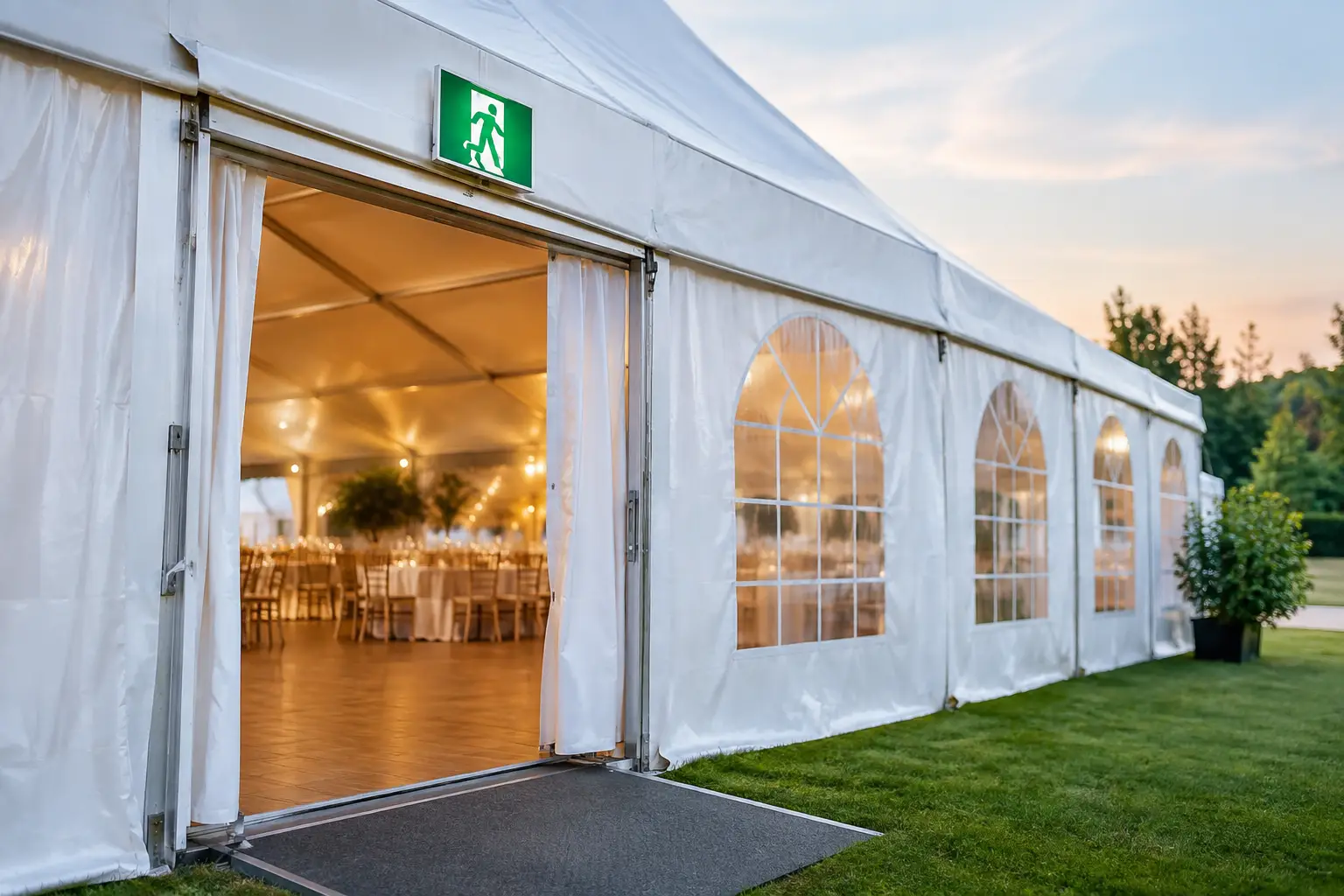
Public events require more than equipment arriving on time. Organisers may need electrical test and tag records, generator specifications, site plans, risk assessments, safety documentation and evidence that temporary structures and services have been installed appropriately. Councils, venues, insurers and event authorities may all have their own requirements.
The operational risk of fragmented suppliers is that each contractor assumes somebody else owns the detail. The generator hire company may provide a unit, the AV supplier may run their own cables, vendors may bring untested leads and the organiser is left trying to join the pieces together. That is how compliance gaps and unsafe connections appear.
A single production partner can scope the site, coordinate power zones with staging and marquee layouts, prepare the relevant documentation, install the system and keep a named team accountable on event day. Zero Three Event Hire works this way because a power plan only works when the people who designed it can see it operating on site.
Keep a qualified crew on site until the last note drops
A festival rarely follows the original run sheet perfectly. A sponsor activation may need an additional outlet. A caterer may arrive with equipment that draws more than declared. A wet-weather change may move patron areas, alter cable routes or increase lighting demand. These are normal live-event variables, not reasons to compromise the system.
On-site technicians can monitor generator loading, respond to faults, manage safe additions and coordinate with stage, AV, security and venue teams. They also provide a direct escalation point. Instead of an organiser searching for a hire-company phone number while a stage waits for power, the crew already knows the system, the site and the contingency plan.
This is especially valuable during bump-in and bump-out. Many power issues begin when multiple contractors connect equipment quickly, often before the site is fully operational. Controlled connection, inspection and sign-off prevent avoidable faults from becoming show-stoppers later.
Ask the questions that expose weak power plans
Before approving a festival power quote, ask who has completed the load calculation, what equipment is treated as critical, how distribution will be protected, where cables will cross public or vehicle areas, and who is responsible for fuel. Ask what happens if a generator fails, who is on site during live hours and whether the quote includes delivery, installation, testing, operation and pack-down.
Transparent answers matter. A low equipment-only figure can become expensive once cables, boards, fuel, crew call-outs, compliance documents and late changes are added. An itemised proposal makes the scope visible and lets organisers compare operational coverage, not just generator kVA.
A festival audience should notice the stage, the sound and the atmosphere – never the infrastructure keeping it alive. Plan power early, give critical systems the protection they deserve and put experienced people in charge of the site. That is how the event keeps moving from first gates to final pack-down.