A stage arriving late can hold up every supplier behind it. A generator sized without proper load calculations can take out the bar, catering or headline act. And an AV system without a technician can turn a polished run sheet into a very public problem. So, what does event production include? It includes the planning, infrastructure, people and technical control required to turn an event brief into a safe, working site – then keep it working until the last guest leaves.
For a wedding reception, that may mean a clean stage, lighting, sound and enough reliable power for the band and caterers. For a festival or public activation, it may extend to engineered structures, distribution boards, line-array PA systems, certified staging, generators, technical crews, site logistics and backup plans. The scale changes. The need for ownership does not.
What does event production include?
Event production is the operational layer behind the guest experience. It is more than hiring a few items of equipment and hoping they work together on the day. A proper production scope brings the physical event environment, technical systems, safety requirements and on-site crew under a managed plan.
The exact inclusions depend on the venue, audience numbers, event format, bump-in window, weather exposure and what is already available on site. A ballroom with installed lighting and three-phase power needs a different approach to a park, paddock, school oval or warehouse. The job is to identify those differences early, price them clearly and prevent surprises from becoming show-stopping delays.
Event scoping and production planning
Production starts before a truck is loaded. The first job is to understand what the event needs to achieve: where people enter, where they gather, what needs to be seen and heard, how suppliers access the site, and what has to happen at each point in the run sheet.
This stage commonly covers site inspections, venue liaison, access constraints, equipment selection, production schedules and bump-in sequencing. It also means checking practical details that are easy to miss in an early brief – ceiling heights, loading dock access, underground services, distance to power, noise limits, emergency exits and wet-weather contingencies.
For larger Melbourne events and public-facing builds, planning may also include traffic management interfaces, stakeholder coordination and timing around council or venue conditions. Good production planning protects the schedule because it gives each contractor a clear place, time and responsibility.
Staging, marquees and event structures
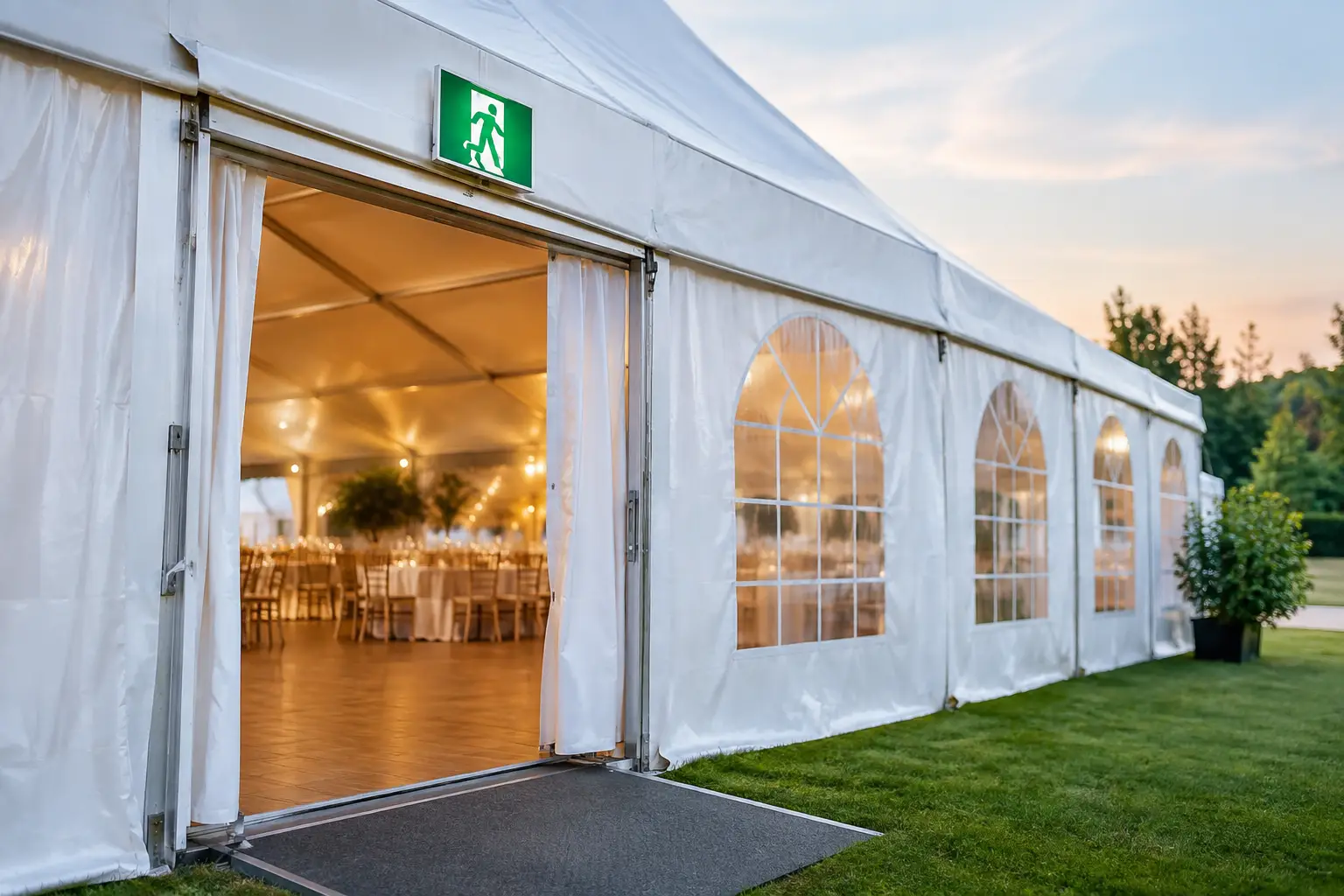
The visible infrastructure is often the first thing clients picture, but it needs to do much more than look good. Event production can include modular stages, risers, ramps, steps, handrails, stage roofs, lecterns, clearspan structures, marquees, truss, entry features, barriers and crowd-control systems.
The right configuration depends on sightlines, performer requirements, audience capacity and the location. A corporate presentation may need a low-profile stage and confidence monitors. A music event may need a larger platform with roof loading, backstage access, speaker hangs and safe cable pathways. A wedding may require a marquee that protects guests from heat or rain without compromising the look of the site.
Structural equipment should be assessed as a system, not as isolated pieces. Engineering certification, ballast requirements, wind ratings and installation methods matter. If a structure is exposed to weather or supports lighting, audio or signage, those decisions cannot be left to guesswork.
Event power and distribution
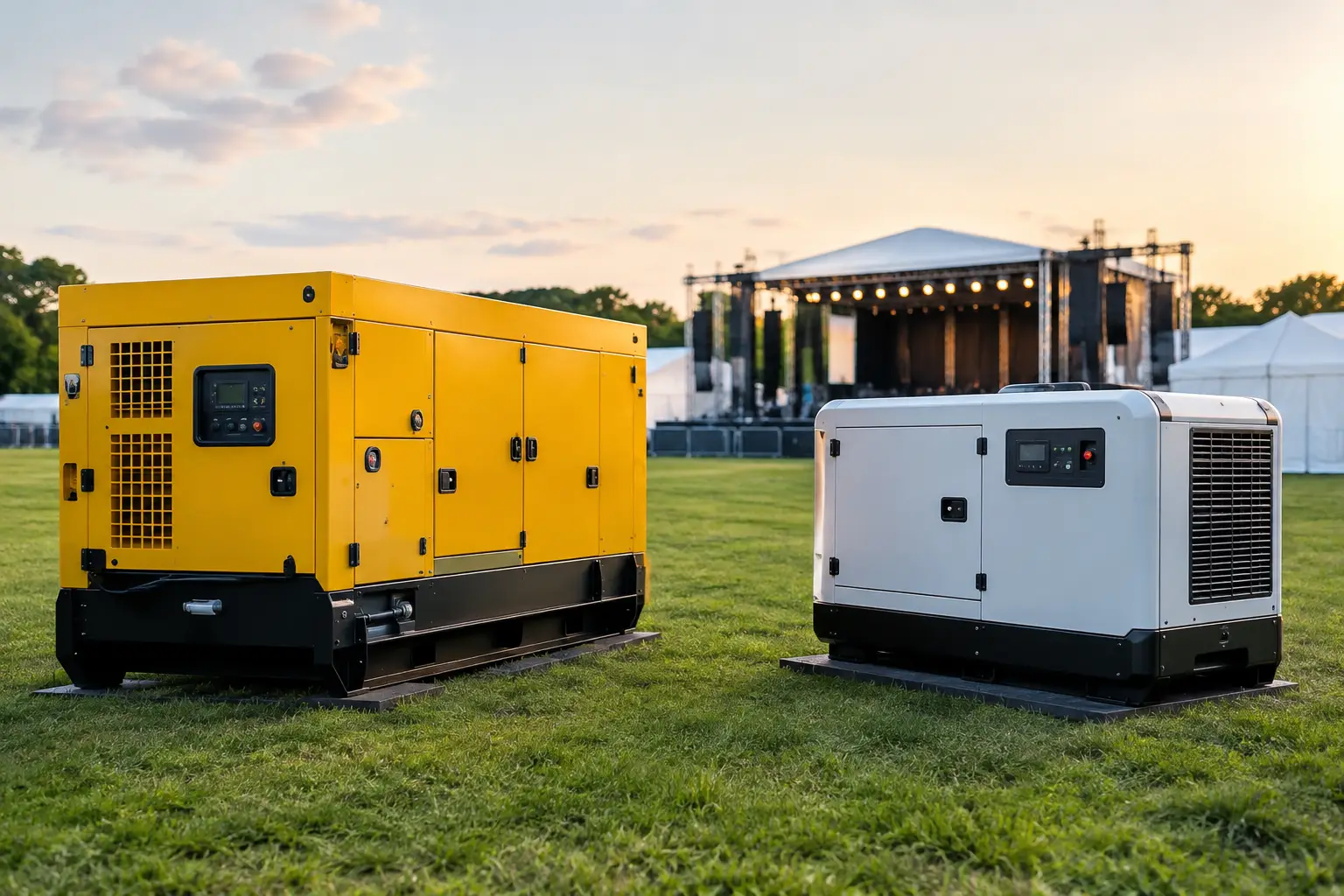
Power is where many otherwise well-planned events come unstuck. Production includes calculating the electrical load, supplying generators where required, distributing power safely and separating critical circuits from high-demand equipment.
That may involve generators, distribution boards, temporary cabling, cable ramps, RCD protection, emergency backup and dedicated feeds for audio, lighting, catering, refrigeration, vendors and amenities. A generator is not simply selected by choosing a large number. The production team needs to consider starting loads, cable runs, phases, fuel duration, noise, location, redundancy and how a failure would affect the event.
A well-built power plan also keeps the site tidy and accessible. Cables should not create trip hazards across guest areas, footpaths or vehicle routes. Equipment placement needs to allow safe refuelling, ventilation and technician access without becoming part of the guest experience.
Audio, vision and communications
Professional AV makes the event legible. Guests need to hear speeches, musicians need to hear themselves, presenters need confidence monitors, and screens need to be bright enough for the room or outdoor conditions. Production can include PA systems, microphones, mixing consoles, line arrays, DJ equipment, foldback, projector and LED screen systems, presentation switching, playback and recording support.
The system is selected for the audience and the environment, not just the stage. A small church service has different coverage requirements to a gala dinner, sporting presentation or outdoor festival. Room acoustics, crowd noise, ceiling height, speaker placement and local noise restrictions all affect the design.
Communications are part of the same operational picture. Radios, production comms and clearly assigned channels help the event team make fast decisions without shouting across a crowded site. They are especially valuable during tight changeovers, emergency responses and multi-area events.
Lighting that supports the moment
Lighting does two jobs: it lets people see what matters, and it shapes how the event feels. A production package may include stage wash, intelligent lighting, uplighting, festoon, truss-mounted fixtures, control desks, architectural lighting and emergency lighting considerations.
For a conference, lighting should make speakers look clear and credible on stage and on camera. For a wedding, it may create warmth around the dance floor and tables. For a live act, it needs enough flexibility to carry the energy from the opening set to the final encore. The trade-off is budget and complexity. More fixtures create more creative options, but also require more rigging, power, programming and crew time.
Crew, technical operation and live support
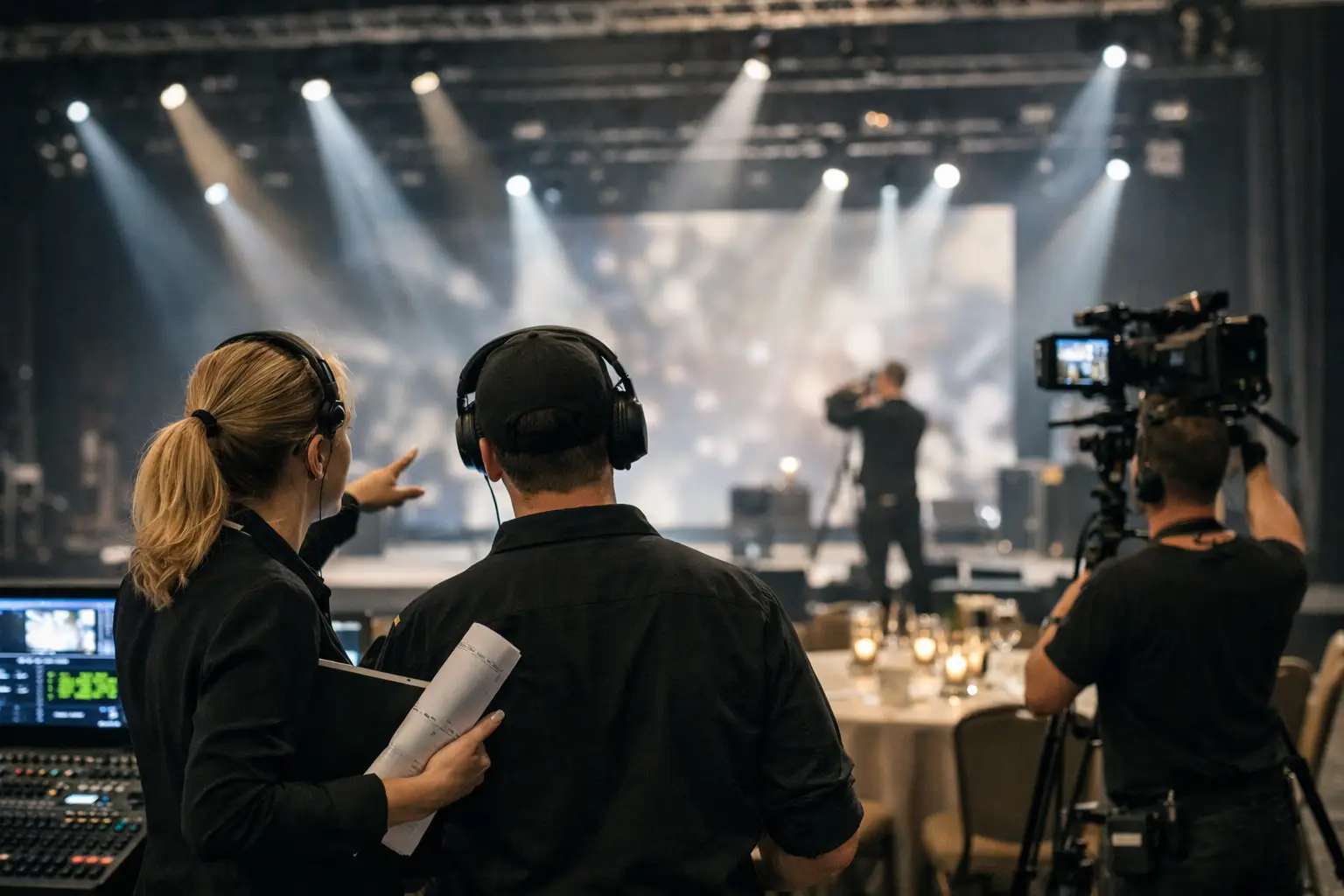
Equipment does not manage itself. One of the clearest differences between dry hire and full event production is the people on site. Production crews can include project coordinators, site managers, stagehands, AV technicians, lighting operators, audio engineers, power technicians, riggers and specialist engineers.
Their work covers delivery, installation, system testing, show operation, troubleshooting and pack-down. They check microphones before doors open, adjust levels when a room fills, respond to a speaker change, monitor generator performance and fix faults before guests notice them.
This is where accountability matters most. If the stage, power, sound and lighting are supplied by separate businesses, diagnosing an issue can become a chain of phone calls. A single production partner has visibility across the system and a named team responsible for getting the show back on track.
Compliance, safety and documentation
Event production also includes the paperwork and controls that allow an event to operate safely. Depending on the scope, this can involve risk assessments, site plans, engineering documentation, electrical test and tag records, safe-work procedures, public-liability requirements, structural certificates and emergency planning support.
Not every event requires the same documentation. A private backyard celebration is not managed like a 5,000-person public event. But every build needs an appropriate level of safety planning, particularly where temporary structures, elevated stages, electrical systems, crowds or weather are involved.
Safety is not a separate task completed after the creative decisions. It affects where the stage sits, how guests move, where cables run, what structures can carry and how the team responds if conditions change. That is why it belongs in the production scope from the beginning.
Logistics, bump-in and pack-down
The final inclusion is often underestimated: getting everything in and out without disrupting the venue, neighbours, guests or schedule. Production logistics cover delivery windows, vehicle access, loading plans, crew call times, installation order, rubbish removal and pack-down after the event.
A strong run sheet accounts for the realities of event day. Caterers need power before they can prep. Decor teams need a completed structure before they can dress it. Performers need a tested stage before soundcheck. Guests should arrive to a finished space, not a half-built site with flight cases and cable drums still on the floor.
Zero Three Event Hire approaches this as one managed operation: scope the brief, provide an itemised quote, prepare the technical and compliance requirements, install the infrastructure, operate the systems and pack down when the work is done.
The best time to solve an event problem is while it is still a line on a site plan. Bring your production team in early, give them the real brief, and let the event be remembered for the right reasons.