A marquee that looks perfect at bump-in can become a serious risk by mid-afternoon if the wind changes, the ground softens or an access point is left unsecured. Knowing how to secure temporary structures is not about adding a few extra straps at the last minute. It is a planned process that begins with the site, follows the engineering, and stays active until pack-down.
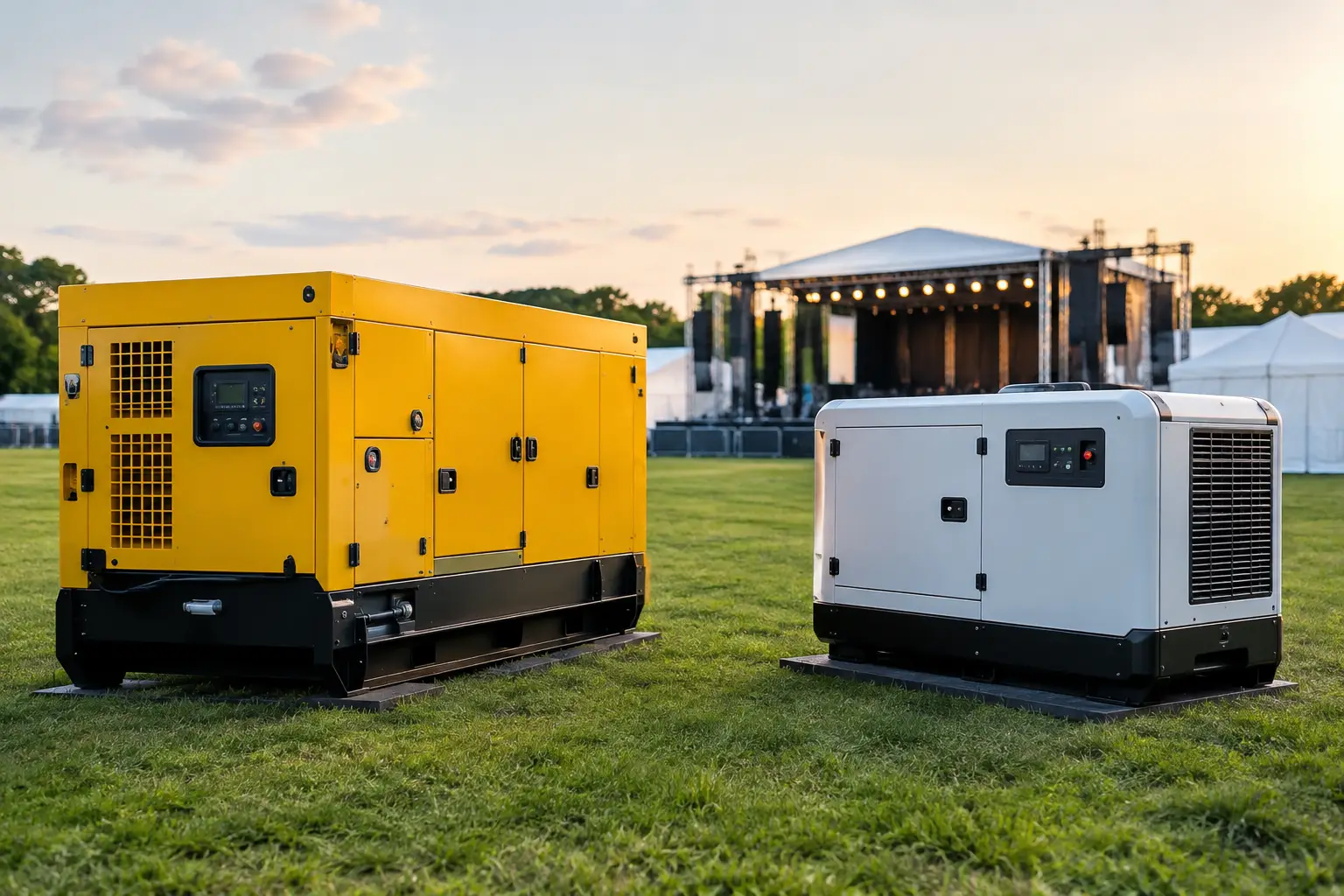
For events, temporary structures include marquees, clearspan tents, stages, grandstands, lighting towers, truss systems, entry arches, temporary fencing, screen supports and temporary platforms. Each has different load paths, fixing methods and operating limits. Treating them all as “just event gear” is where preventable problems start.
Start with the Site, Not the Structure
The ground determines what can safely sit on it and how it can be restrained. Before equipment is loaded onto trucks, assess the event site for soil condition, slope, drainage, underground services, vehicle access and likely weather exposure.
Grass can look firm after a dry week but lose holding capacity quickly after rain. Asphalt may suit ballast blocks but will not accept pegs. A concrete forecourt might be ideal for a compact stage, provided its load capacity and anchor restrictions are understood. On sloping ground, levelling may be required before a stage deck, marquee frame or temporary seating system can be installed safely.
Underground services need the same attention as what is visible above ground. Pegging into buried electrical cables, irrigation, gas lines or drainage is not an acceptable gamble. Obtain relevant service information before any ground penetration is considered, then mark exclusion zones clearly for the installation crew.
A proper site inspection also identifies wind channels. Open ovals, waterfront locations, building gaps and elevated sites can experience much stronger gusts than a standard weather forecast suggests. The structure, orientation and anchoring plan must account for the site that exists, not the site everyone hoped for when the event was booked.
How to Secure Temporary Structures with the Right Restraint
There is no universal anchoring method. The correct restraint depends on the structure’s engineering, its size and profile, the ground condition, expected wind exposure and whether penetration is allowed.
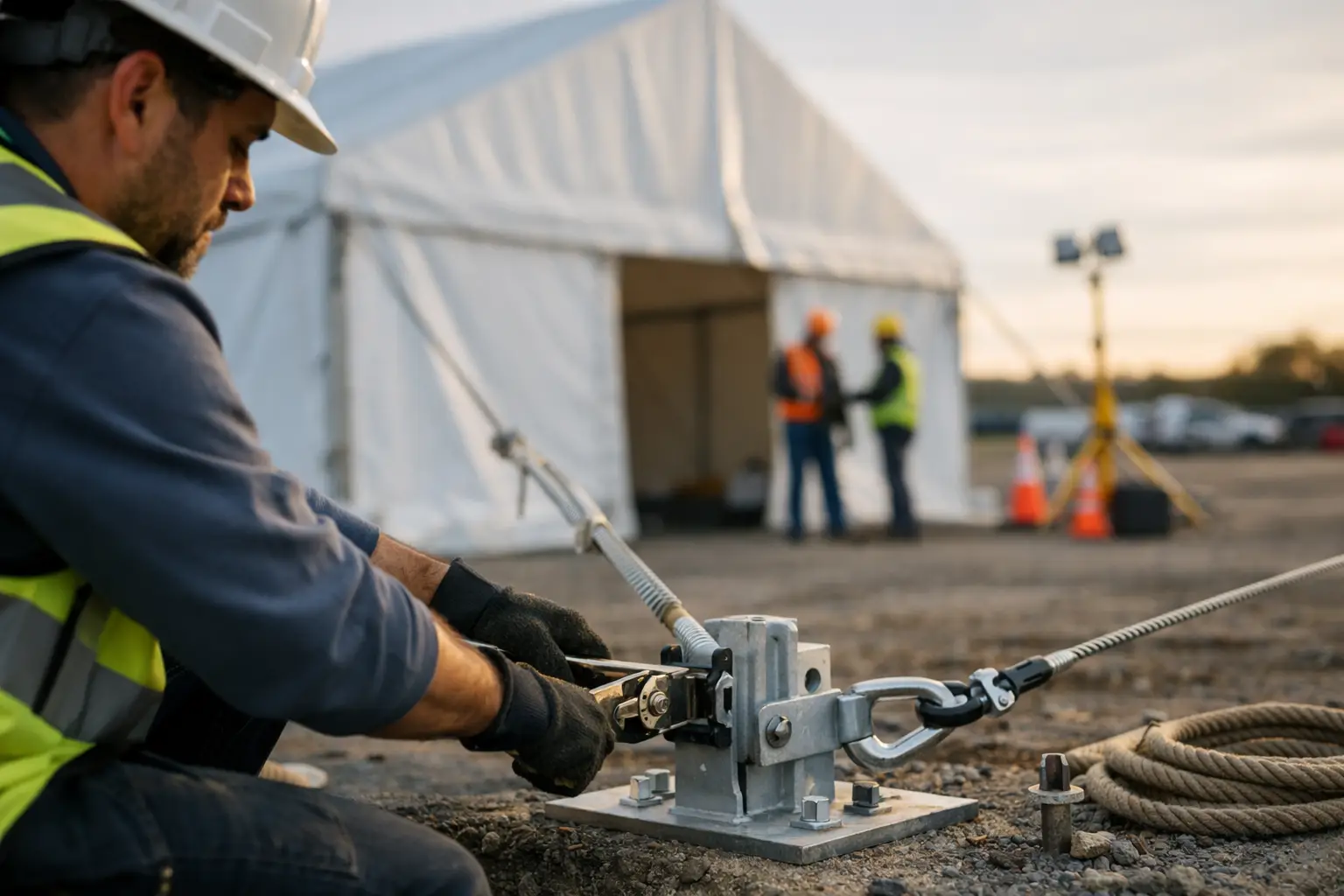
For structures installed on suitable natural ground, engineered stakes or pegs may be specified. Their depth, diameter, position and installation angle matter. A short or poorly driven peg is not made safe by adding a ratchet strap. It may look secure, but it will not deliver the designed holding capacity.
Where pegging is not possible, ballast is commonly used. Concrete weights, water ballast or purpose-designed steel ballast can restrain temporary structures when sized and positioned to the engineering requirements. The total weight alone is not enough. Ballast must be connected to the correct structural points and placed so it resists uplift, sliding and overturning loads.
For stages, towers and truss structures, base plates, outriggers, guy wires, ballast and rated connectors may all form part of the installation. Every component needs to be compatible with the system. Improvised weights, loose pavers, unverified shackles and mismatched fittings have no place in a public event environment.
Ballast is not a visual add-on
A neat row of weights can reassure an organiser, but visual reassurance is not the objective. The question is whether the ballast arrangement matches the approved design for that structure and site. A larger marquee, for example, can have significantly different requirements at its corners, perimeter bays and entry points.
Ballast also needs protection from public access. It should be positioned so guests cannot trip over it, climb on it or move it. If barriers or covers are needed, include them in the installation plan rather than trying to resolve the issue once doors open.
Protect the load path
Temporary structures work as connected systems. A marquee canopy transfers wind forces through its frame, legs, base plates, anchors and into the ground or ballast. A lighting rig transfers loads through truss, couplers, hoists, support towers and base assemblies. One missing pin, loose brace or altered connection can compromise the entire load path.
That is why event crews should never remove bracing to improve sightlines, shift ballast to clear a catering route or hang banners from a structure without approval. Even lightweight-looking additions create wind area and extra load. Signage, fabric, LED screens and decorative installations must be assessed before they are attached.
Engineering, Documentation and Clear Responsibilities
For public-facing events, compliance paperwork is part of the build, not an afterthought. Depending on the structure, location and event scale, organisers may need engineering documentation, installation details, site plans, permits, certificates or council approvals. Requirements vary across Melbourne venues, councils and event types, so assumptions are costly.
The practical rule is straightforward: use a structure as it was designed to be used, install it to the approved configuration and retain the documents that demonstrate this has happened. If the event brief changes – perhaps a larger screen is added, the marquee footprint expands or the stage roof is altered – the documentation may need to change too.
Responsibility must also be clear. A dry-hire arrangement can leave organisers coordinating separate suppliers for staging, marquees, power, fencing and AV. That creates handover gaps, particularly where one supplier’s equipment affects another’s structure. A full-service production partner can coordinate these interfaces, nominate a site lead and keep installation decisions accountable.
At Zero Three Event Hire, that approach means scoping structures alongside staging, power, lighting and operational access, rather than treating each element as an isolated hire item. The goal is simple: one controlled build, one clear chain of responsibility and no confusion when conditions change on site.
Plan for Wind Before It Arrives
Wind is one of the most common reasons temporary structures become unsafe, and it rarely arrives on cue. A calm morning does not remove the need for a weather plan. Event organisers should establish wind-monitoring responsibilities before build day, including who receives weather updates, who has authority to pause operations and what actions apply at different conditions.
Those actions may include closing sidewalls, lowering flags, removing loose branding, clearing a stage roof, suspending overhead work, evacuating a temporary structure or delaying reopening until it has been inspected. The right response depends on the engineered operating limits and the specific equipment in use.
Do not rely on a phone forecast alone. On-site observations matter, especially at exposed sites. Crews should watch for lifting roof fabric, moving ballast, swaying towers, rattling truss, pooling water and changes in ground condition. These are operational warnings, not cosmetic defects.
Rain creates its own risks. Water can soften pegged ground, pool around electrical distribution and increase slip hazards at stage access points. Drainage paths should be checked before installation, and cable ramps, entrances and emergency routes should remain usable in wet conditions.
Build, Inspect and Operate as One Process
Security is not complete once the last structure is standing. A disciplined event build includes checks at installation, before public entry, during operation and after significant weather changes.
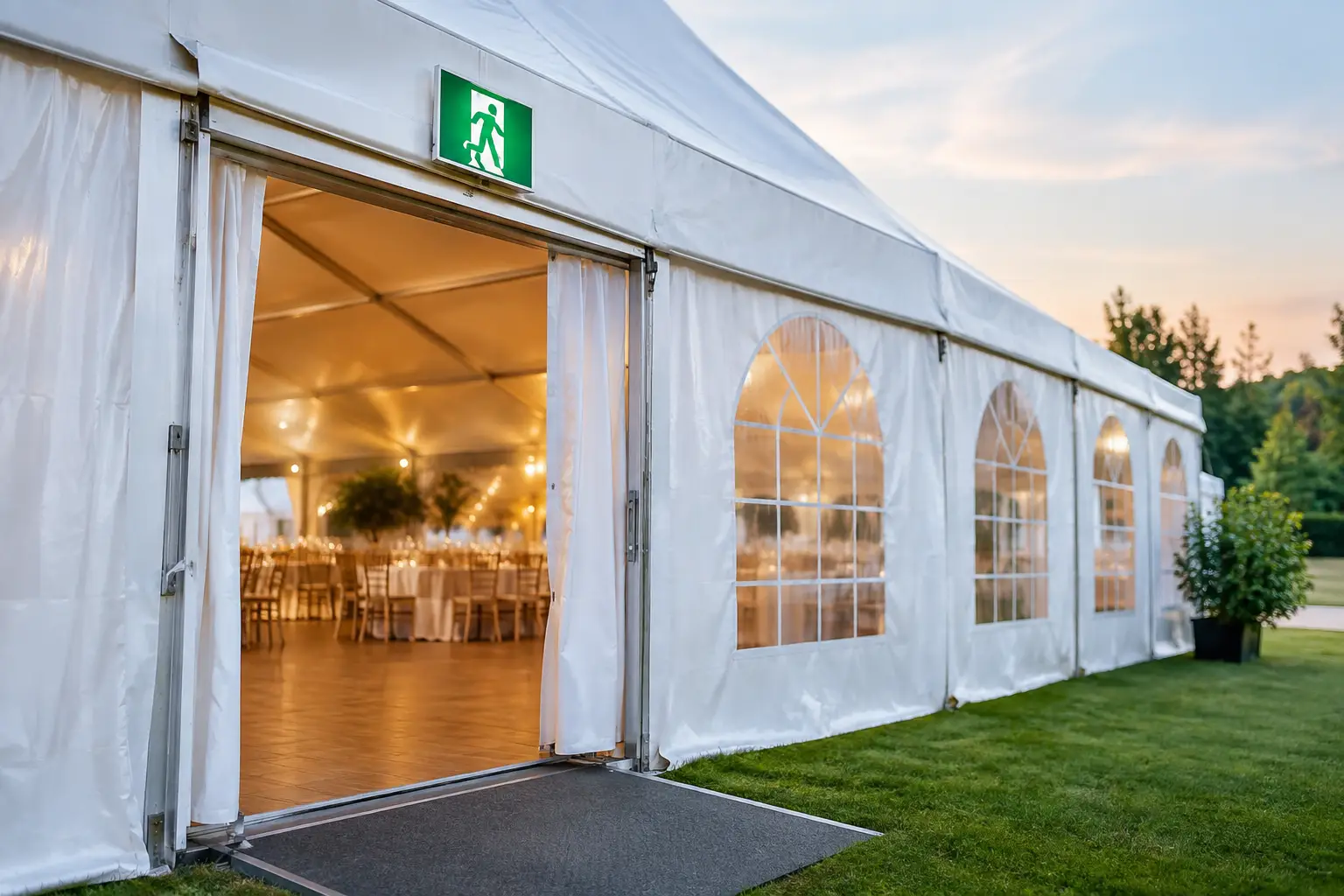
Before gates open, inspect anchors and ballast connections, frame members, pins, bracing, stage legs, decks, handrails, stairs, roof components and safety barriers. Confirm that access routes are clear, fire exits are not obstructed and no unauthorised items have been attached to the structure.
During the event, maintain exclusion areas around technical infrastructure and prevent guests, vendors and contractors from modifying equipment. A temporary fence panel moved for convenience, a cable ramp lifted by a food truck or a banner tied to a truss can create a problem that was not present at sign-off.
For larger events, this is where an on-site technical crew earns its place. They can monitor conditions, respond to changing weather, manage power and production interfaces, and act before a small issue disrupts the show. Events do not pause because the infrastructure team has gone home.
Know When to Stop
Schedule pressure can make people reluctant to delay a build, close a structure or alter a layout. But a temporary structure is only safe within its approved conditions. If ballast cannot be installed as designed, the ground has become unsuitable, wind limits are reached or a component is damaged, the answer may be to stop and reassess.
That decision protects guests, crew, performers and the event itself. It also protects the work that has gone into the production from brief to standing ovation.
The safest temporary structures are not the ones with the most gear around them. They are the ones planned for the actual site, installed by capable crews, checked without shortcuts and actively managed until the last note drops.