A stage that arrives late, a generator sized by guesswork or a sound system with nobody qualified to run it can turn a well-funded event into a very public problem. This event production budget guide is built to prevent that outcome: price the full operating picture, not just the equipment sitting in a quote.
For a wedding, corporate launch, church service, festival or public activation, your production budget is not simply a shopping list of speakers and lights. It is the cost of making the site safe, functional, presentable and supported from bump-in until the last note drops.
Start with the event brief, not the hire catalogue
The quickest way to lose control of an event budget is to request individual items before the event requirements are clear. A stage may look like a simple line item, but its final cost depends on dimensions, height, roof loading, access, wind exposure, stairs, handrails, skirting, engineering and the crew required to install it safely.
Build your budget around the questions a production team needs answered: What is the event format? How many guests are expected? Is the event indoors, outdoors or split across both? What needs to happen on stage? What are the site access times, curfews and pack-down deadline? Is the venue supplying anything, and can that commitment be verified?
For public events, also establish the site plan, audience flow, emergency access, nearby power sources, ground conditions and noise restrictions early. These details determine infrastructure needs long before the first flight case is unloaded.
A good brief does not need to be highly technical. It needs to be honest. If the run sheet includes a band, speeches, video playback, food vendors, temporary bars and a livestream, say so. Each element has a power, audio, lighting, crew or compliance consequence.
The core cost areas in an event production budget
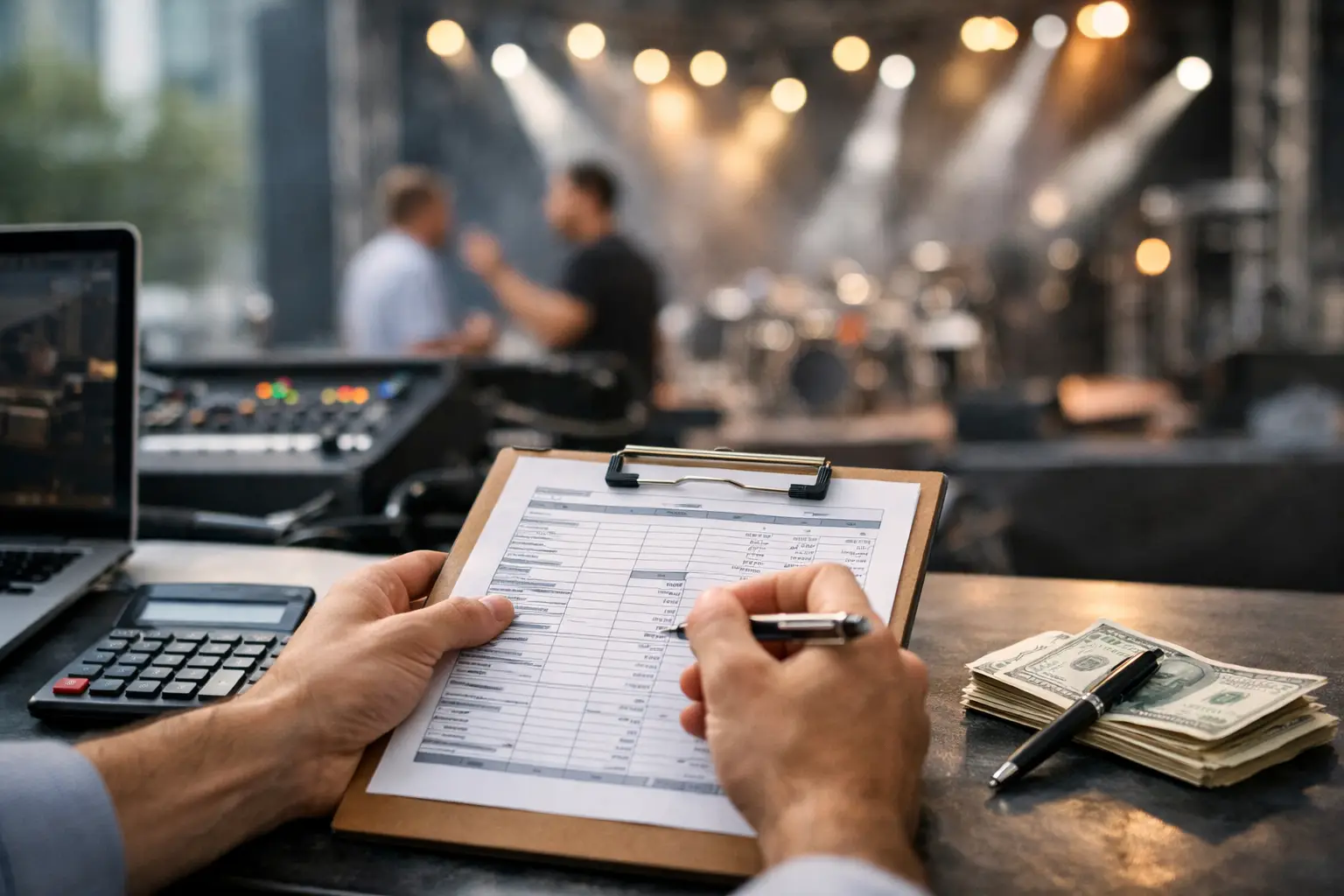
A workable event production budget separates the visible elements from the operational work that makes them perform. Combining everything under one vague allowance might feel easier at first, but it makes comparisons difficult and leaves room for costly assumptions.
Staging, structures and weather protection
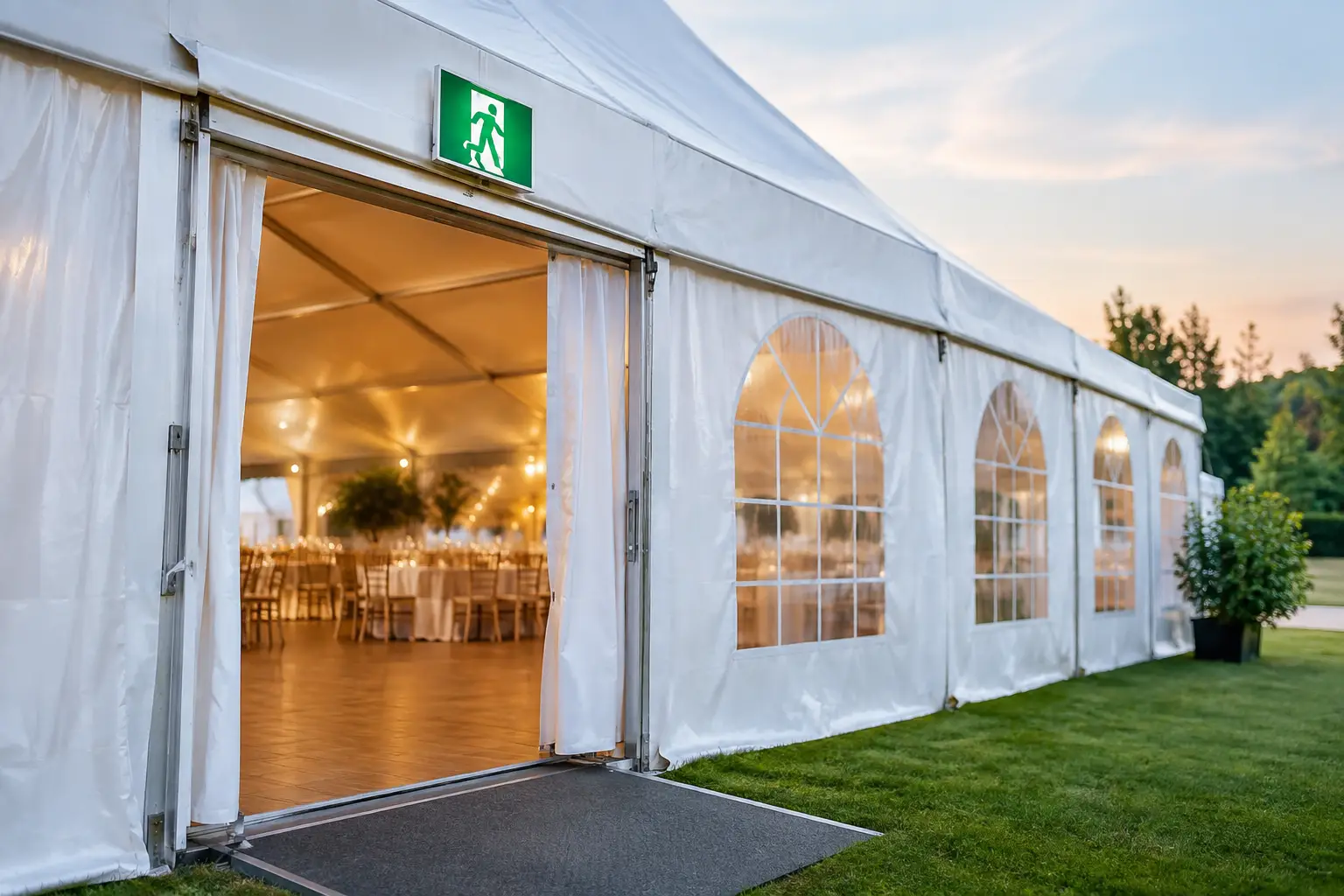
Staging costs should cover the platform itself as well as decks, legs, stairs, ramps, handrails, skirting and any roof or truss system needed for lighting and sound. For an outdoor event, a stage roof, clearspan marquee or other weather protection can be the difference between continuing safely and cancelling a key part of the program.
The trade-off is scale versus resilience. A basic ground-level stage may suit an intimate indoor presentation. A festival stage exposed to Melbourne weather needs a far more considered structure, ballast, engineering and wind-management plan. Budget for what the event actually demands, not the cheapest version of a similar-looking setup.
Power generation and distribution
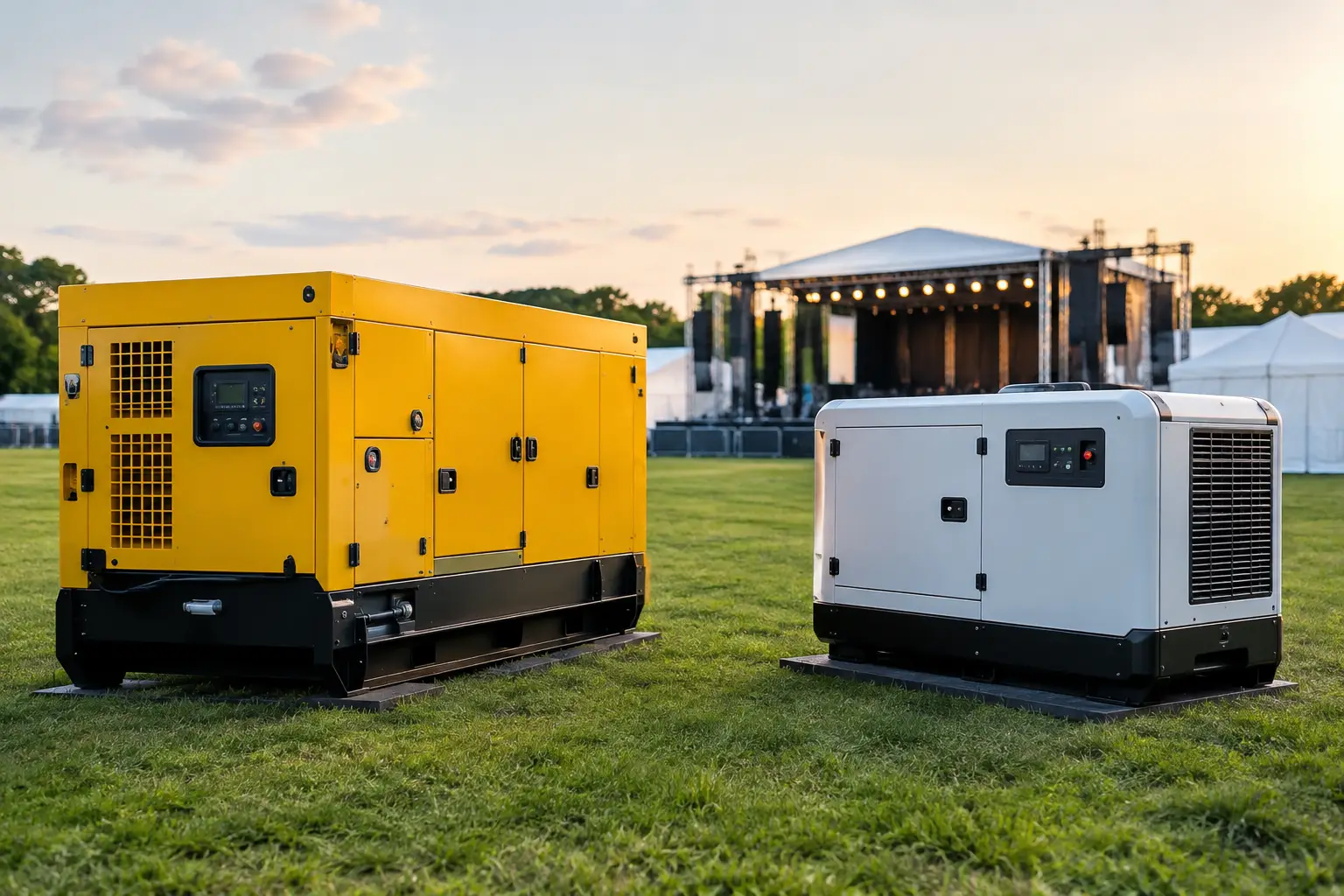
Power is often under-budgeted because organisers see a generator as one item. In practice, the generator is only part of the system. A proper allowance may include load calculations, generator capacity, fuel, distribution boards, cable runs, cable protection, test and tag requirements, a licensed electrician where required, backup capacity and an operator.
Do not rely on a venue outlet or an existing generator without confirming capacity, circuit separation and location. Audio, lighting, catering, refrigeration, vendor stalls and production offices can create a load profile that is very different from the original plan.
Undersizing power can cause outages. Oversizing it without assessing the load wastes money. The right answer is calculated power, with essential systems protected and responsibilities clearly assigned.
Audio, vision and lighting
AV budgets should be based on audience size, venue acoustics, sightlines and content, not a generic package name. A room designed for 100 seated guests needs a different sound approach from a 1,000-person outdoor crowd. A keynote with a single presenter is different from a panel, awards show, live band and screen content running throughout the night.
Include microphones, speakers, mixing consoles, playback, confidence monitors, screens, projection or LED walls, lighting fixtures, control systems and all required cabling. If content is being supplied by an agency or client, allow time and technical support for testing file formats, aspect ratios, audio routing and cueing.
Lighting is another area where presentation and safety overlap. It shapes the room, gives presenters visibility, supports cameras and helps audiences move safely through entrances, pathways and temporary structures.
Crew, logistics and operational coverage
Equipment without qualified people is dry hire. That can be appropriate for a simple event managed by an experienced technical team, but it is not always the lowest-risk or lowest-cost choice once something changes on site.
Your budget should identify the crew required for delivery, installation, operation, standby support and pack-down. Depending on the event, that may include production management, audio engineers, lighting technicians, vision operators, stagehands, riggers, electricians, forklift operators and site crew.
Also allow for trucks, travel, parking, loading dock access, difficult site access, after-hours work and multi-day hire. A quote that appears cheaper can become more expensive if it excludes the labour required to get equipment safely into position or to operate it during the show.
Budget compliance before it becomes an urgent variation
Compliance is not a box to tick after the creative decisions are locked in. It should be a defined production cost from the beginning, especially for outdoor, high-attendance and public-facing events.
Depending on the scope, this can include engineering documentation, structural certification, electrical compliance, rigging plans, site-specific safety documentation, public liability requirements, traffic management coordination and emergency planning. Venue rules and council requirements may add further obligations.
Not every event needs every document or specialist. A small private reception has a different risk profile from a ticketed event in a public reserve. The point is to have the scope assessed early by people who understand what is being installed, where it is going and who will be near it.
When compliance is left until the final week, organisers may face rushed engineering, redesigns, replacement equipment or a structure that cannot be approved in its planned position. Those are avoidable budget shocks.
Build contingency into the event production budget guide
A contingency is not an admission that the plan is weak. It is how a capable plan handles variables. Outdoor events need room for weather responses, ground protection, additional ballast, revised cable routes and wet-weather shelter. Complex shows need room for schedule changes, extra rehearsal time, replacement equipment or an added crew call.
For a straightforward indoor event with a confirmed venue and simple program, contingency may be modest. For a multi-vendor public event, it should be more substantial. Set it aside as a visible budget line rather than hoping it can be found elsewhere if conditions change.
Keep contingency separate from scope creep. If a client adds a second performance area, a live stream or a larger audience capacity, that is a scope change and should be quoted accordingly. Clear distinctions protect both the event outcome and the working relationship.
Compare quotes by inclusions, not the bottom line
When reviewing production quotes, ask whether each supplier has priced the same operational outcome. A low total can hide exclusions that matter on event day.
Check whether the quote specifies equipment quantities and models, crew hours, delivery and collection windows, installation and pack-down, freight, fuel, power distribution, cable protection, engineering, documentation, operator coverage and after-hours rates. Confirm who is responsible for troubleshooting if an AV, power or structural issue arises during the event.
An itemised quote makes these comparisons possible. It also lets you make sensible decisions if the budget needs to move. You may be able to reduce decorative lighting, screen size or non-essential production elements without compromising safe power, competent crew coverage or the core stage and sound system.
Spend where failure is most visible
If the budget is tight, protect the areas that carry the greatest event risk: safe structures, reliable power, intelligible audio, appropriate weather protection and trained people on site. Guests may not notice a smaller lighting package. They will notice a speech nobody can hear, a dark entrance, a power failure or a delayed start.
That does not mean every event needs a festival-scale system. It means the production should match the consequence of failure. A boardroom presentation and a 5,000-person public event deserve different infrastructure, but both deserve a plan that works under real conditions.
The strongest budgets are developed as a conversation, then converted into a precise scope before bookings and schedules are locked. Zero Three Event Hire approaches that work as one accountable production partner, from site assessment and itemised quote through installation, live operation and pack-down. Put the right detail into the budget early, and event day can stay focused on the audience rather than the infrastructure behind them.