A great event can look effortless from the audience side. Behind the stage, marquee wall or registration desk, it is a controlled operation: vehicles moving through loading zones, temporary power running across a site, people working at height and crowds relying on clear exits. Event safety regulations are not paperwork to deal with after the creative decisions are made. They shape whether the event can be built, operated and packed down safely.
For organisers, the real challenge is knowing what applies, who owns each action and when it must be done. Requirements differ by state, council, venue, event type and site conditions. A 60-person wedding reception does not carry the same risk profile as a public festival, but neither is exempt from duty of care. The sensible approach is to build safety into the production plan from the first brief, rather than try to bolt it on in the final week.
Event safety regulations start with clear ownership
In Australia, the event organiser generally carries overall responsibility for delivering a safe event, while suppliers, venue operators, contractors and workers each have their own work health and safety duties. That shared responsibility only works when it is specific. If everyone assumes someone else has handled a risk, it has not been handled.
Before equipment is booked, identify the person with authority to make operational calls on site. They need a current event run sheet, supplier contacts, emergency procedures, site plan and a clear understanding of escalation points. For a larger public event, this often means a named event safety officer working alongside the production manager and site manager. For a smaller event, the role may sit with the organiser, but it still needs to be actively managed.
The same principle applies to hired infrastructure. Confirm who is responsible for checking the ground conditions, arranging permits, supplying fire equipment, managing security, monitoring weather and isolating power in an emergency. Put those responsibilities in writing. Vague handovers create risk, delays and expensive arguments when conditions change.
Build the risk assessment around the real site
A generic risk assessment has limited value if it does not reflect the actual site, schedule and crowd. Walk the venue or event ground early with the people who will deliver the build. Look at access for trucks and emergency vehicles, overhead lines, uneven surfaces, drainage, public interfaces, noise limits and nearby residents or businesses.
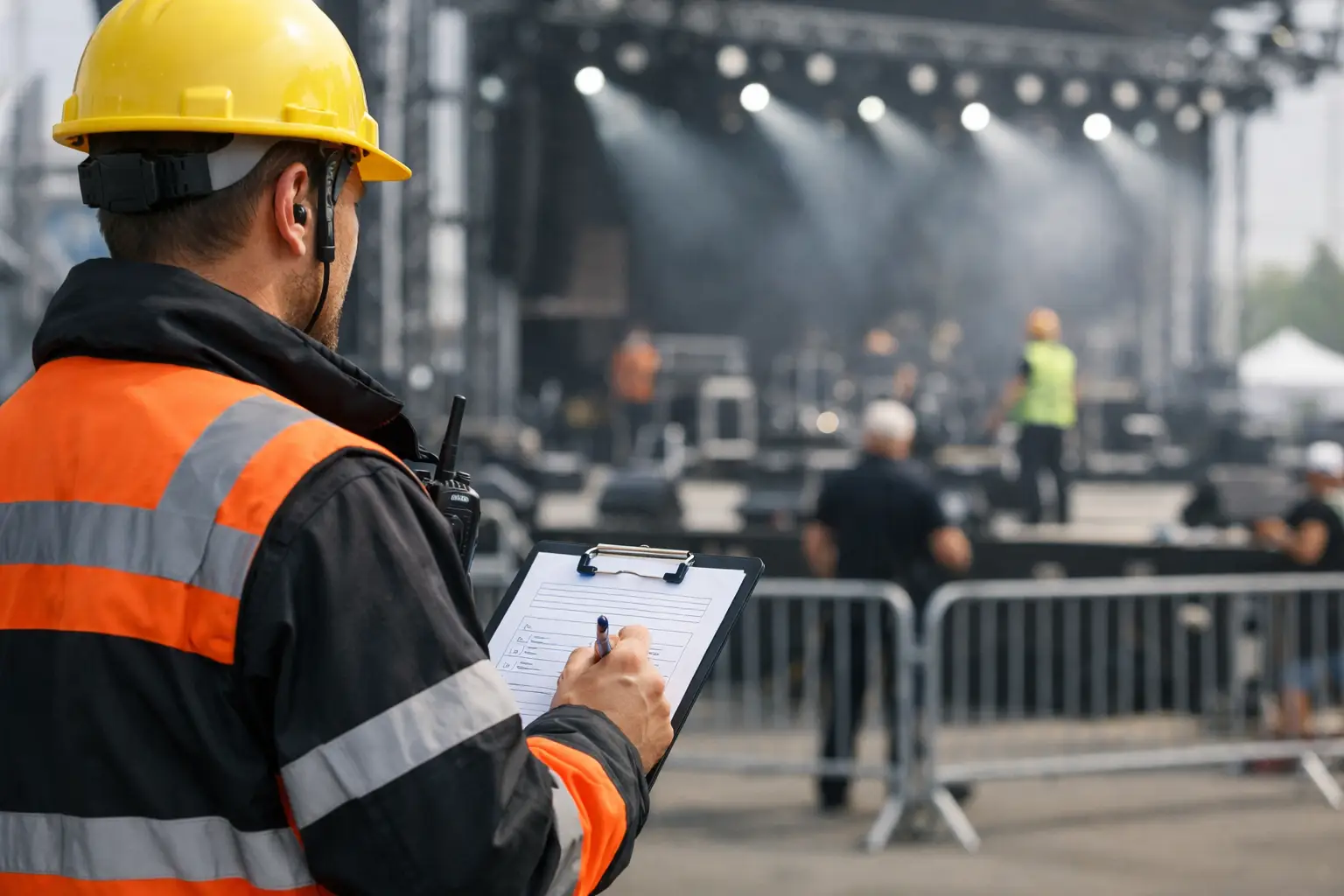
Then assess each activity across the full event lifecycle: bump-in, live operation, bump-out and pack-down. The highest-risk work often happens when the public is not there. Forklifts moving truss, crews assembling stages, cable runs being laid and generators being connected all need controlled work areas, competent operators and enough time to do the job properly.
A useful risk assessment does more than list hazards. It sets controls, assigns an owner and states how the control will be checked. For example, a trip hazard from temporary cabling may require cable ramps, taped-down runs where appropriate, restricted access zones and a pre-opening inspection. A note saying “be careful of cables” is not a control.
Where risks cannot be eliminated, reduce them in layers. Keep vehicles separated from pedestrians, provide physical barriers rather than relying only on signs, and make sure staff know who can stop work if conditions become unsafe. Weather is a perfect example. High wind, heat, rain and lightning need defined response triggers, not a vague promise to “monitor the forecast”.
Temporary structures need engineering, not assumptions
Stages, marquees, roof systems, grandstands, scaffolding, lighting towers and temporary seating can all require engineering certification, permits or inspections depending on their size, design, location and local rules. The exact requirements vary, particularly across Melbourne councils and venues, so check early rather than assuming a structure used elsewhere is automatically approved for your site.
Engineering documentation should match what is actually installed. That includes the structure’s configuration, ballasting or anchoring method, ground conditions and any extra loads such as LED screens, line arrays, lighting rigs, banners or drapes. Adding “just one more” screen or speaker can change the load calculation. It is a production decision with a structural consequence.
Keep the approved plans available on site, and do not allow unapproved changes during the build. If the site manager relocates a stage because of sightlines, or a sponsor wants signage added to a marquee, pause and confirm that the change is safe and compliant. The right answer may be simple, but it must come from the appropriate technical person.
Power safety is audience safety
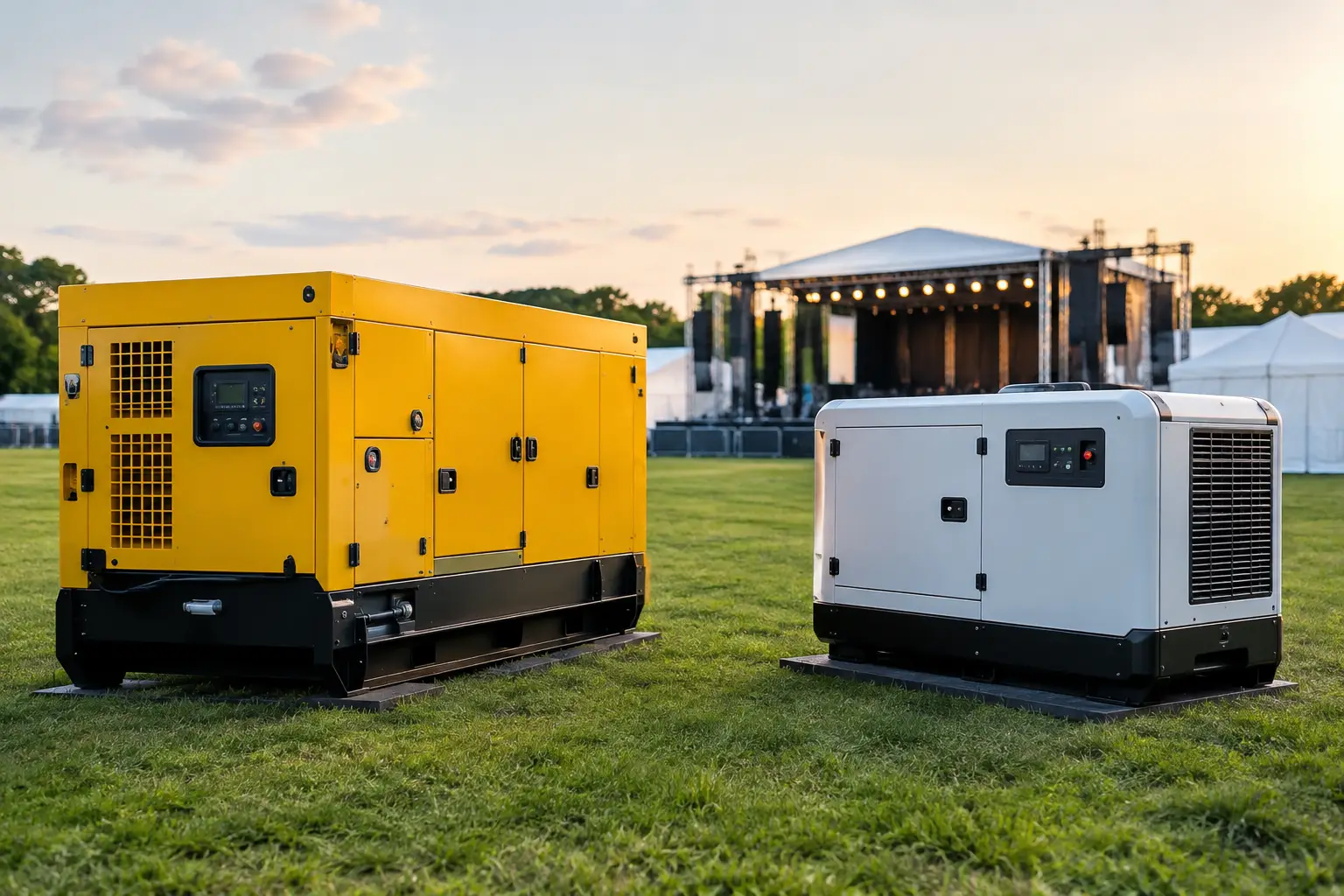
Event power has to be sized, protected and operated for the conditions on site. A generator that is too small, poorly positioned or incorrectly connected can stop the show, damage equipment or create a serious electrical hazard. Load calculations should account for starting loads, lighting, AV, catering, refrigeration, site offices and any critical systems – not just the headline act’s equipment list.
Temporary electrical installations should be designed and installed by appropriately qualified people, with tested and tagged equipment, suitable distribution boards, residual current protection and protected cable routes. Power and data cables need to be managed around pedestrian paths, vehicle routes and wet areas. A neat-looking cable run is useful; a safe, rated and inspected cable route is essential.
Plan for failure as well as normal operation. Critical events may need generator redundancy, backup circuits, emergency lighting or a clear shutdown sequence. The right level of backup depends on the event. A corporate presentation may need uninterrupted AV, while a community event may prioritise refrigeration, lighting and safe egress. What matters is deciding before doors open what cannot be allowed to fail.
Fuel also needs active control. Locate generators with ventilation, exclusion zones and safe refuelling access in mind. Keep fuel away from ignition sources and public areas, and make sure the crew knows the refuelling procedure. These details are rarely glamorous, but they are exactly what keeps a minor issue from becoming an incident.
Crowd, fire and emergency planning must work under pressure
Emergency plans need to be practical enough for staff to use when noise is high, the site is busy and mobile reception is patchy. Establish how alarms will be raised, who contacts emergency services, who makes public announcements, where people evacuate and how emergency vehicles enter the site.
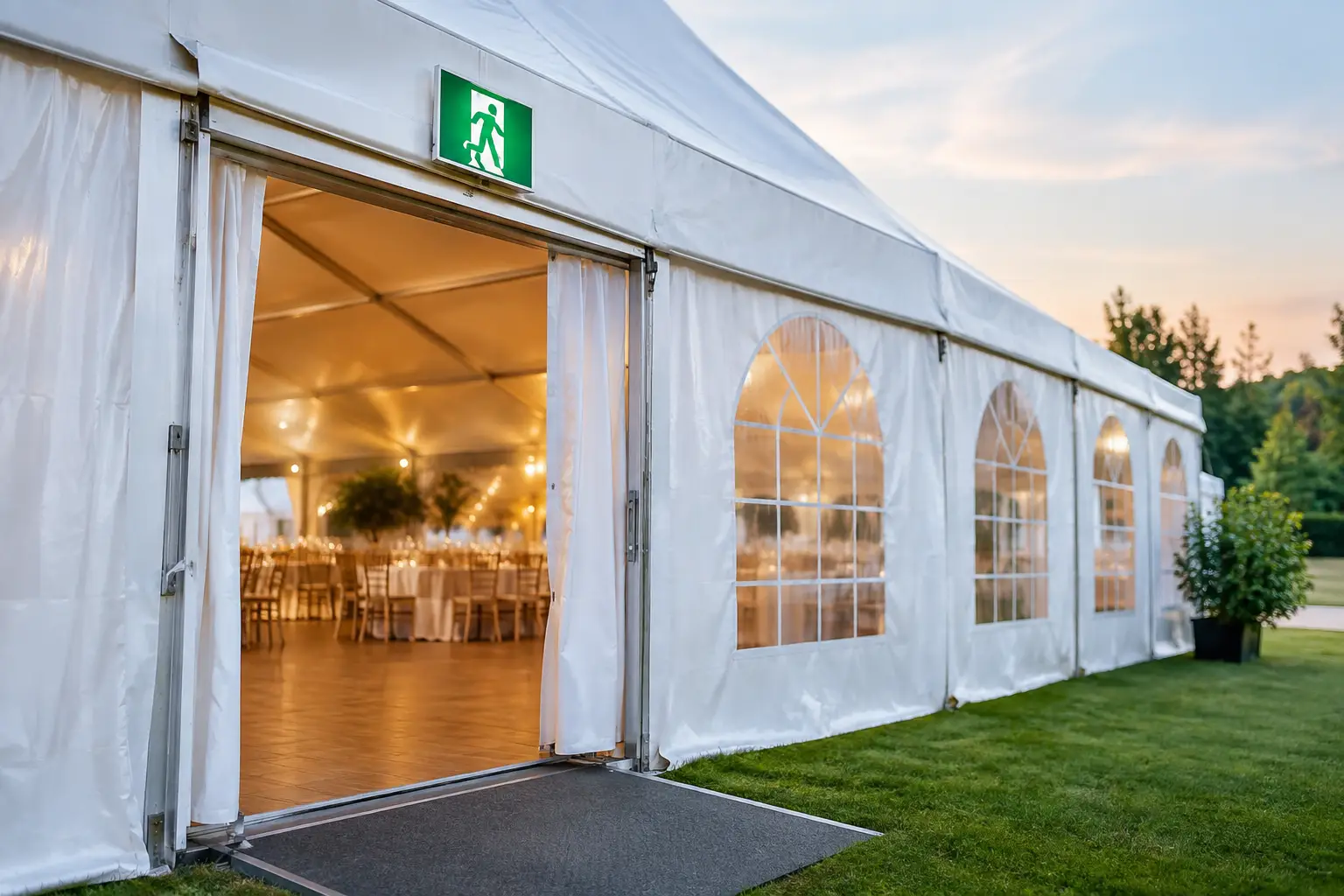
Emergency exits and access lanes must remain clear throughout the event, not merely at the initial inspection. Temporary fencing, food trucks, queues, stock cages and parked vehicles have a habit of creeping into the wrong place. Build regular checks into the operational schedule, especially before gates open and during peak attendance.
Crowd management should consider expected numbers, entry points, queue layouts, audience behaviour, alcohol service, weather shelter and the possibility of a rapid exit. Barriers are not decoration. Their placement affects circulation, pressure points and emergency movement. If an activation, headline set or giveaway is likely to draw a concentrated crowd, design that space for the reality of demand.
Fire safety is equally site-specific. Confirm extinguisher types and locations, access to hydrants where relevant, safe cooking areas, clearance around generators and rules for candles, pyrotechnics, smoke effects or open flames. Some venues prohibit certain effects outright. Others require additional approvals, fire wardens or isolation arrangements. Check before advertising a feature that cannot be delivered.
Brief crews and keep records live
The safest plans fail when the people doing the work have not been briefed. Hold a site induction before bump-in and before public access, covering site rules, emergency procedures, vehicle movements, work zones, reporting lines and relevant hazards. Specialists should also complete task-specific briefings for rigging, elevated work platforms, electrical work and other high-risk activities.
Keep documentation accessible and current: risk assessments, safe work method statements where required, licences, inspection records, engineering documents, incident logs and emergency contacts. This is not about creating a folder that nobody opens. It allows the team to verify what has changed, demonstrate due diligence and respond with facts when an inspector, venue manager or emergency service asks a question.
A capable production partner brings the equipment, crew and compliance mindset together. At Zero Three Event Hire, that means scoping the event properly, coordinating the right technical specialists and staying on site through operation and pack-down – because safety does not end when the first guest walks in.
The strongest event safety plan is the one your team can actually run at 6 am in the rain, during a schedule change, with a truck waiting at the gate. Give the operation clear ownership, realistic controls and enough time to do the work right. Then the audience can remember the moment, not the mishap.