A marquee can look perfectly calm at 10 am, then become the highest-risk structure on site when a southerly change hits after lunch. That is why marquee wind limits are not a number to glance at on a hire quote. They are an operating condition that affects the structure, the people beneath it, the event schedule and the decisions your team must make in real time.
For weddings, festivals, school events and public activations, the question is not simply, “Will the marquee stay up?” The question is whether it has been specified, anchored, monitored and managed for the weather conditions actually expected at your site. A capable marquee plan accounts for wind from the first site inspection through to pack-down – not once guests are already seated.
Why a Marquee Wind Rating Is Not a Universal Number
Every marquee has design limits, but a quoted wind speed on its own can be misleading. The permitted limit depends on the manufacturer’s engineering, the marquee model and span, its sidewall and roof configuration, the anchoring method, ground conditions, adjoining structures, and the direction of the wind.
A small frame marquee on open grass does not behave like a clearspan structure installed between buildings. Nor does an open-sided marquee behave exactly like the same structure once solid walls, doors, banners or temporary signage are fitted. Those additions can change how wind moves around and presses against the structure.
Wind readings also need context. Forecasts may refer to average wind, while the gusts that concern an event site can be considerably stronger. Conditions at a nearby weather station may not reflect an exposed oval, waterfront lawn, rooftop or laneway. In Melbourne especially, a warm, still morning is no guarantee of a quiet afternoon.
The practical rule is simple: use the approved limit for the exact installed configuration, not a generic figure found online or the rating of a different tent. Your supplier should be able to explain the structure’s operating limits in plain language and provide the relevant engineering and installation requirements where needed.
What Determines Safe Marquee Wind Limits?
Wind is only one part of the load a marquee must manage. Rainwater pooling, ground movement, uneven installation surfaces and poorly fitted accessories can all reduce the margin for error. A professional assessment looks at the complete structure rather than treating the canopy as a stand-alone item.
The structure and installed configuration
Clearspan marquees, pagodas, frame tents and pop-up units are built differently. Their frame geometry, fabric tension, leg spacing and connection points determine how they transfer forces into the ground. Extending a roof bay, adding a gable end, opening one side or installing sidewalls may change the approved setup and the associated wind plan.
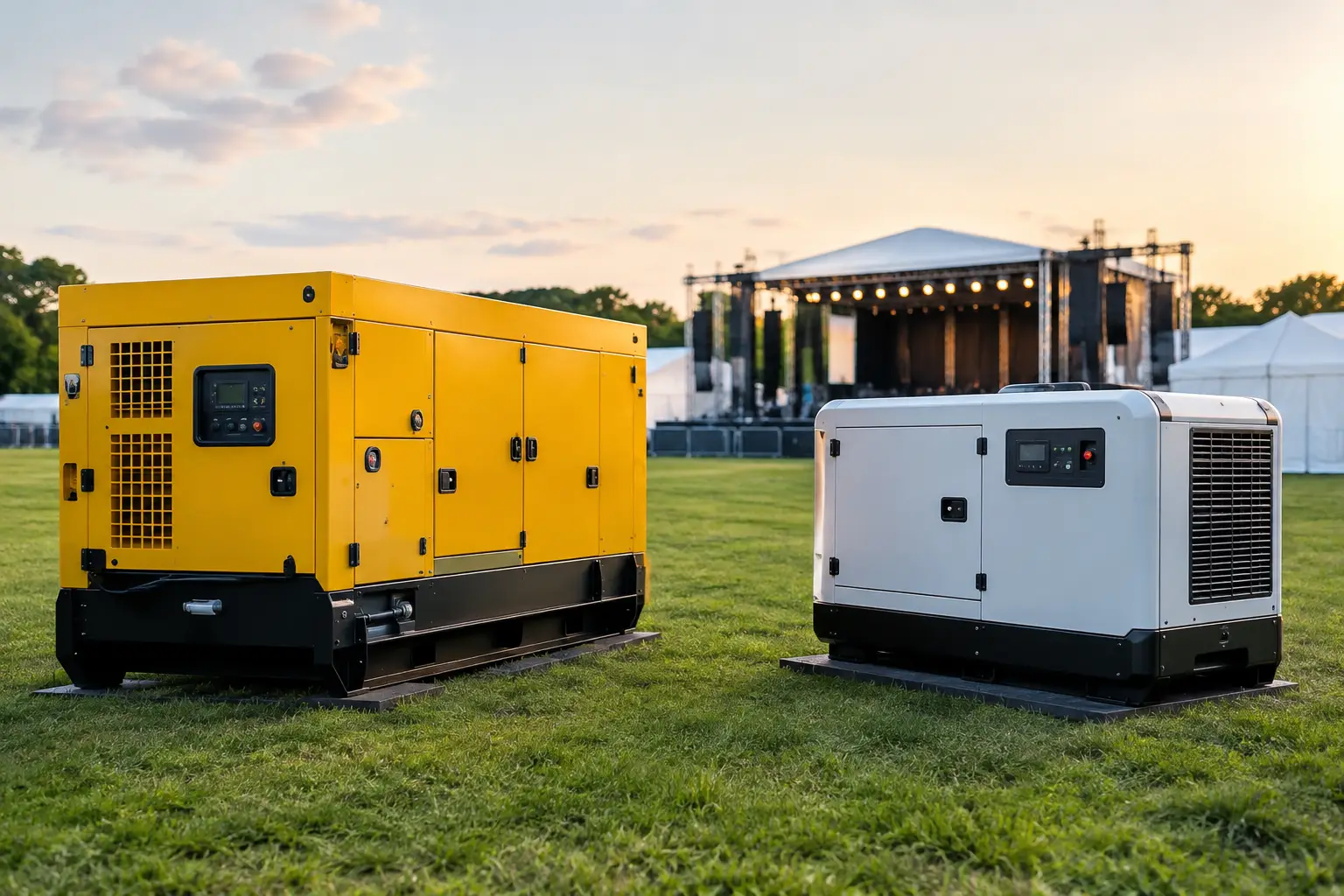
It also matters what sits inside and around the marquee. A stage roof, lighting truss, drape, temporary fencing, bar signage and large screens each need their own wind assessment. Never assume a marquee provides automatic wind protection for production equipment. Side-on wind can create new pressures, while an enclosed space may become uncomfortable or unsafe if ventilation and exit routes have not been considered.
Anchoring and ground conditions
The marquee is only as secure as its anchoring system. Ground stakes are often the preferred method when suitable soil depth and underground-service clearance are confirmed. On hardstand, ballast may be required instead. Ballast is not a matter of placing a few concrete blocks near the legs. The required weight, connection method, placement and structural capacity must match the engineered design.
Soft or waterlogged ground can reduce stake holding strength. Freshly laid turf, filled land, underground irrigation, asphalt, pavers and suspended slabs each require a different approach. A site plan must identify where anchors can go before equipment arrives, not after the crew has unloaded trucks.
This is one area where cutting corners creates an expensive problem. Unapproved stakes, improvised tie-downs, ute trays, bins, vehicles or loose weights are not replacements for a designed anchoring solution. They can damage the site, fail under load and leave the event organiser carrying unacceptable risk.
Exposure and local wind effects
Open paddocks, coastal sites and elevated venues are obvious exposure risks, but wind can also accelerate through gaps between buildings and around corners. A marquee placed beside a tall wall may experience turbulence rather than shelter. Trees may reduce wind in one direction, yet present a branch-fall risk in another.
A proper site inspection considers prevailing weather, access routes, drainage, trees, powerlines, public areas and emergency egress. It also considers what changes once the venue fills with vehicles, temporary structures and people.
Build a Wind Plan Before Bump-In
Weather management should be written into the event operation, with clear roles and decisions agreed before the first marquee bay is installed. It is far easier to pause a program, close sidewalls or clear an area when the process is planned and communicated.
Start with an event-specific forecast review in the days leading up to the event, then monitor conditions on site. For exposed or high-attendance events, a reliable on-site wind meter and a nominated person to record readings are sensible controls. That person must have authority to contact the event lead and trigger the agreed response.
Your wind plan should set out the action points for the installed structure. It should cover when to stop fit-out work, when to secure loose items, when to remove banners or décor, when guests should be moved from the marquee, and when the event needs to pause or relocate. These are operational thresholds, not decisions to debate in front of a crowd.
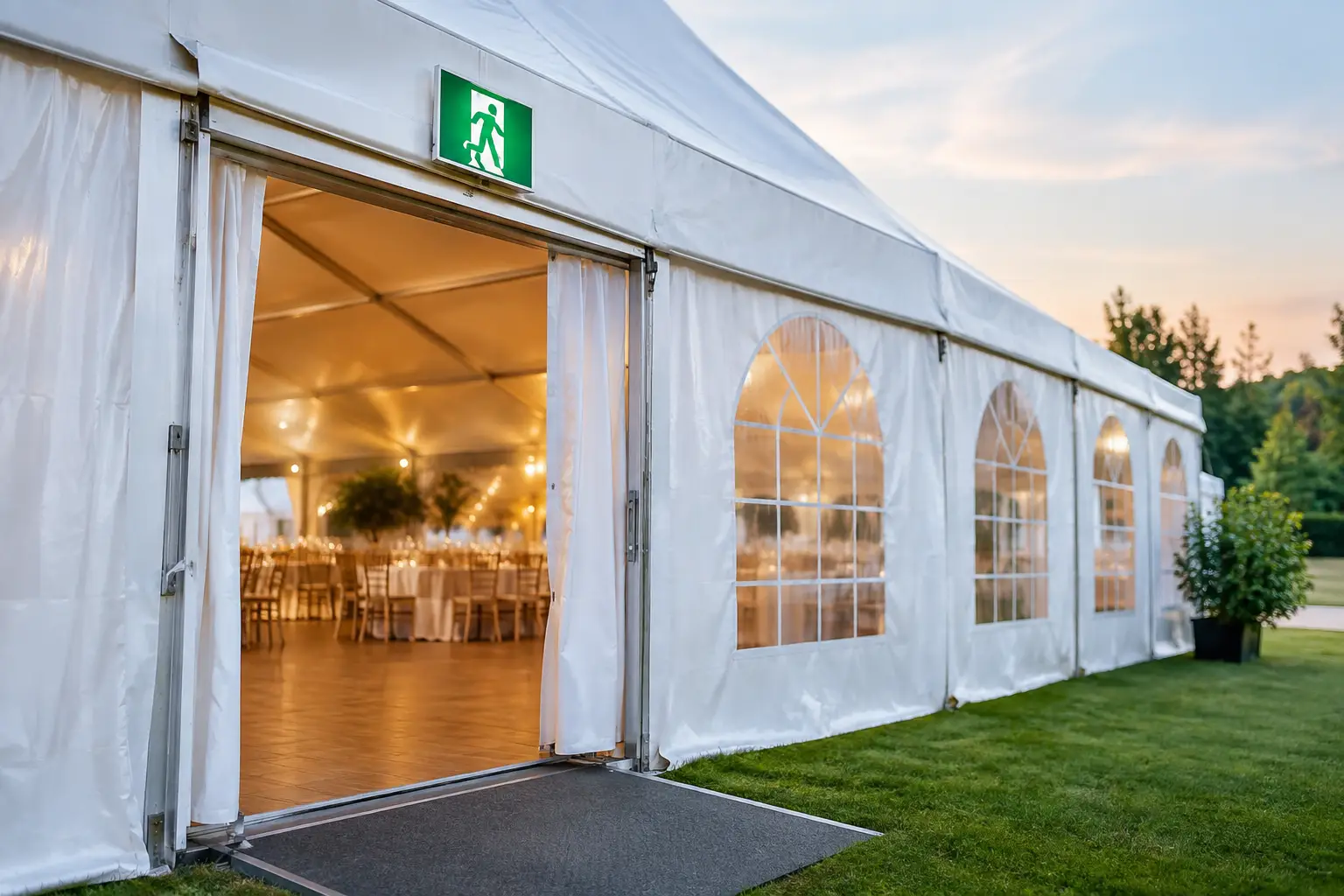
The plan also needs a communication chain. Venue management, security, crew chiefs, caterers, stage management and first-aid personnel should know who calls the decision and how guests will be directed. If a marquee is part of a public event, clear egress routes, accessible exits and a weather-safe assembly area are essential.
Sidewalls, Doors and Décor Need Active Management
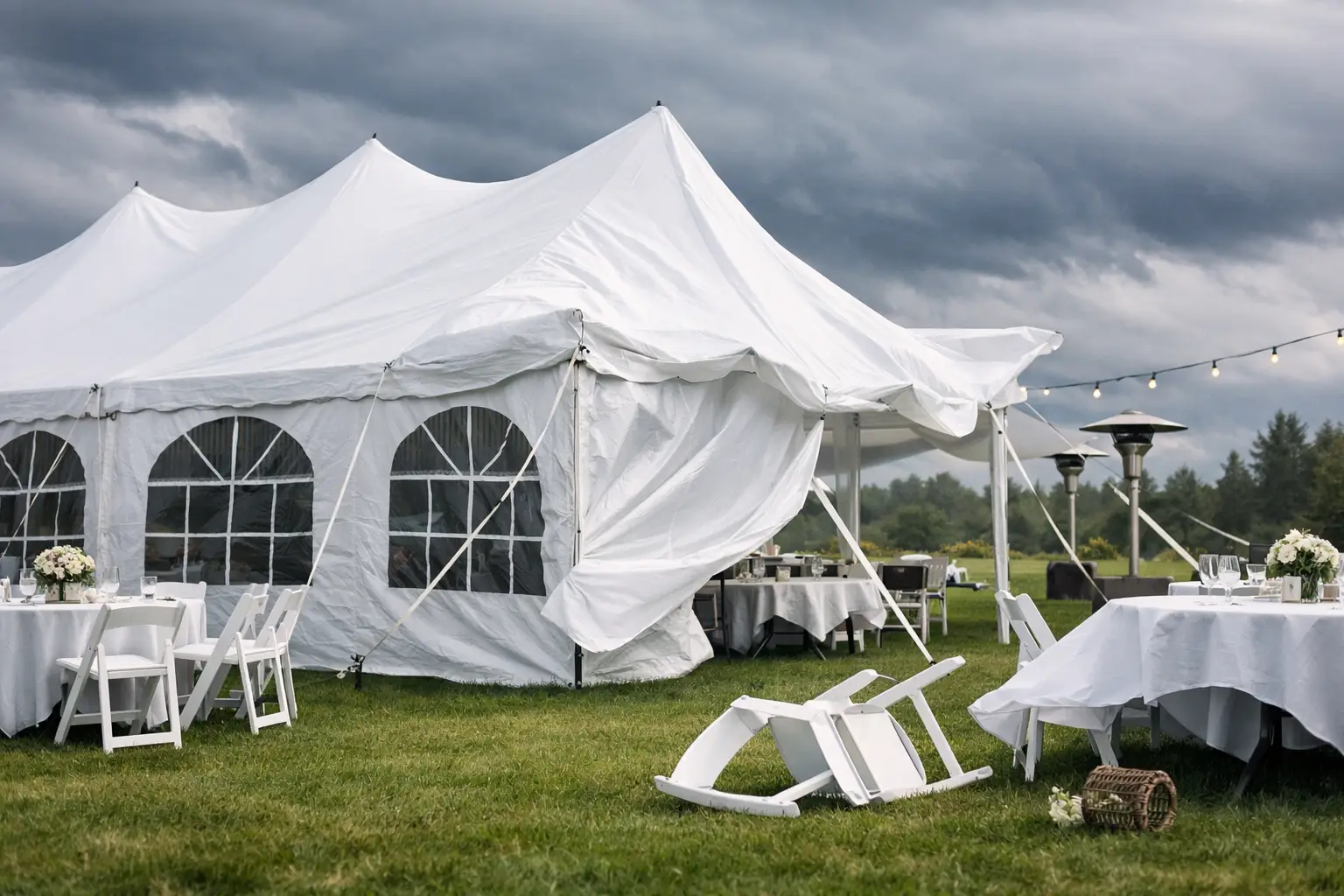
Sidewalls make an event more comfortable in rain and cool weather, but they are not a fit-and-forget accessory. Their position must align with the approved structure configuration and current conditions. A sudden gust front can turn an attractive enclosed dining space into a higher-wind-load setup.
Doors, curtain walls and clear panels need to be properly tensioned and secured. Loose fabric can whip, damage frames and create hazards around entrances. The same applies to hanging florals, festoon lighting, flags, menus, signage and lightweight furniture. If it can lift, swing or catch wind, it needs a proper fixing or a fast removal plan.
For larger events, separate the decorative brief from the structural brief. A stylist may have a strong visual concept, but every attachment to the marquee needs production approval. The goal is not to dilute the look. It is to deliver it without compromising the structure that protects the guests.
When Conditions Change During the Event
A safe response is rarely dramatic if the groundwork has been done. Crews secure the site, event staff communicate calmly, and guests move to a predetermined area if required. What causes disruption is waiting until the wind has already exceeded the agreed operating condition.
Do not ask untrained staff or guests to hold legs, pull fabric, add improvised weights or climb ladders in gusty weather. Keep people away from unstable structures and call the qualified supplier or site crew. If structural movement, damaged fabric, loose anchors or water pooling is identified, stop using the marquee until it has been inspected and cleared.
It may be tempting to continue because speeches are due, dinner is plated or ticket holders are at the gate. But the cost of a short program adjustment is insignificant beside an injury, property damage or an avoidable emergency response. A weather contingency is part of good event production, not an admission that the plan has failed.
Make Wind Readiness Part of the Quote
When comparing marquee proposals, ask what wind rating applies to the proposed configuration, how the structure will be anchored, whether site conditions have been assessed, and who is responsible for monitoring and responding during the event. Confirm whether engineering documentation, installation certification and crew support are included rather than assumed.
The cheapest dry-hire price can leave major work sitting with the organiser: service checks, ballast coordination, compliance paperwork, weather calls and emergency contact arrangements. For a backyard celebration, that may be manageable with a modest, correctly specified setup. For public events, corporate functions and production-heavy builds, it is usually safer to have one accountable team coordinating structure, power, staging and on-site operations.
At Zero Three Event Hire, marquee planning is treated as event infrastructure, not just a roof delivered to site. The right result starts with the ground, the forecast and the engineering, then stays actively managed until the last guest leaves.
Weather cannot be controlled. Your response to it can. Specify the right marquee, secure it correctly, give your team a clear authority line and make the call early when conditions demand it. That is how an outdoor event stays on its feet from brief to standing ovation.