The crowd has gone home, the final song has dropped and the lights are out. That is not the end of an event operation. When organisers ask, “who manages event pack down?”, the right answer is not simply “the people who hired the gear”. Pack-down needs a nominated lead, trained crews and a clear chain of responsibility from the moment bump-out starts until the venue is signed back over.
A poorly managed pack-down can turn a successful event into an expensive problem. Equipment gets left behind, loading docks become congested, power is disconnected in the wrong order, venue damage is discovered too late, and crew fatigue begins to affect judgement. For a wedding reception, that may mean a delayed venue exit. For a festival or public event, it can mean safety risks, missed curfews and a very unhappy site manager.
Who manages event pack down on a professional event?
The event producer or organiser remains accountable for the overall event. They set the schedule, approve the budget and make sure each supplier understands their obligations. But they should not be expected to direct the physical removal of staging, generators, AV, lighting, marquees and structural infrastructure while also managing venue requirements, contractors and final stakeholder questions.
That operational responsibility is usually held by the production supplier or a dedicated site manager. Where one full-service production partner has supplied and installed the infrastructure, that partner should manage the pack-down programme. They know what was installed, how it was powered, what needs engineering attention and which equipment must be removed in sequence.
At Zero Three Event Hire, this means the crew that delivers and operates the technical infrastructure remains accountable through pack-down. There is no handballing a complex stage, temporary power system or lighting rig to an unfamiliar labour crew at midnight. The team stays on site until equipment is safely removed, accounted for and the agreed handover is complete.
For larger events, responsibilities are shared without becoming unclear. The production manager coordinates the full bump-out. Department leads manage their own systems. The site or venue representative controls access, curfews and handover expectations. Security may manage vehicle gates and pedestrian exclusion zones. The organiser receives progress updates and makes decisions when programme changes affect cost or timing.
One person must own the pack-down plan
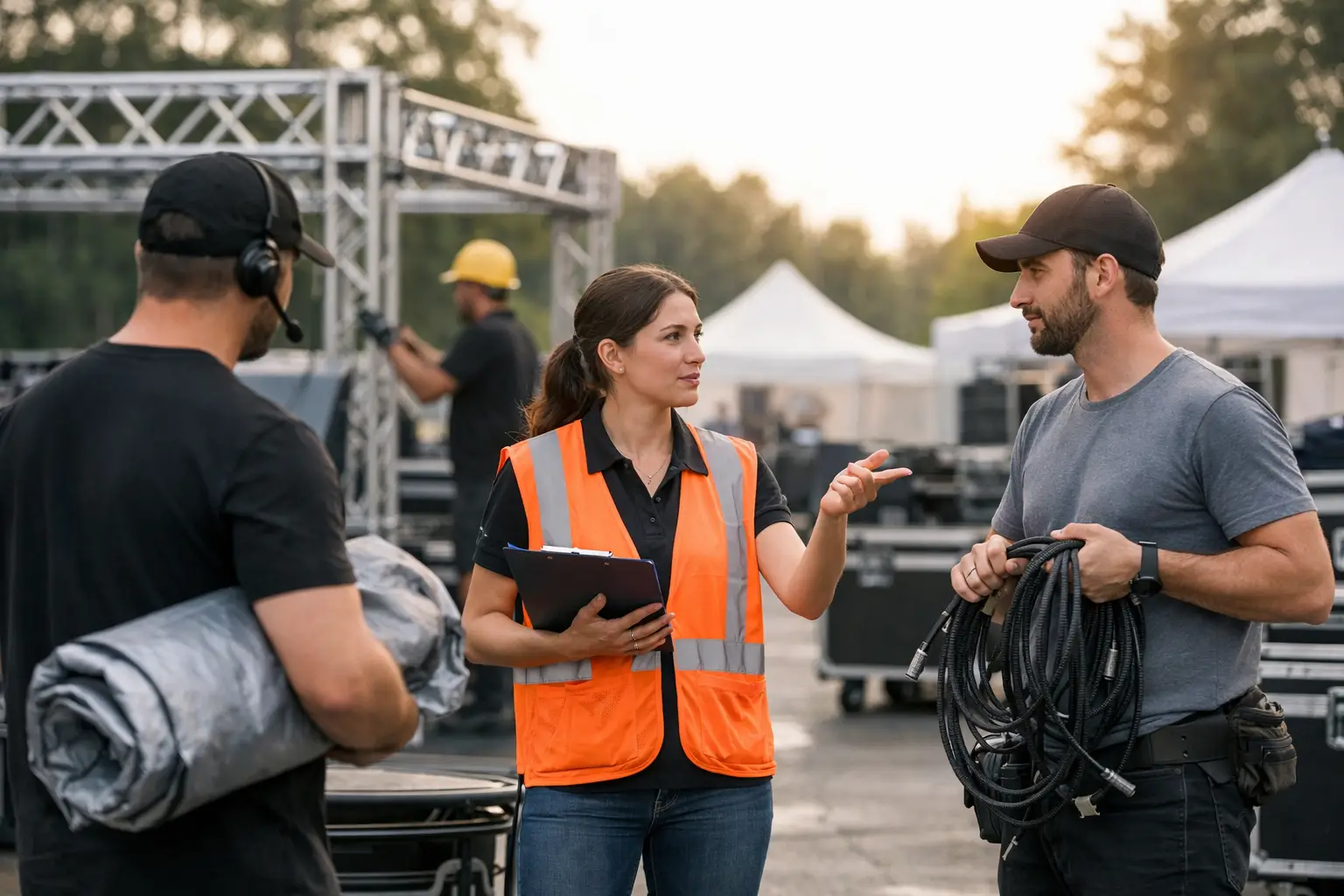
The most reliable events have a named pack-down coordinator. This person is the operational point of contact once the event finishes. They do not necessarily lift every case or drive every vehicle, but they control the sequence, communicate with all departments and stop work if a safety issue emerges.
Their job begins before guests arrive. During the planning stage, they confirm when the venue must be cleared, which access points can be used, whether noise restrictions apply, where trucks can wait and whether any equipment needs to remain live after the audience leaves. This last detail matters more than many clients realise. Emergency lighting, security systems, catering refrigeration, cleaning access and site security can all rely on power after the show has finished.
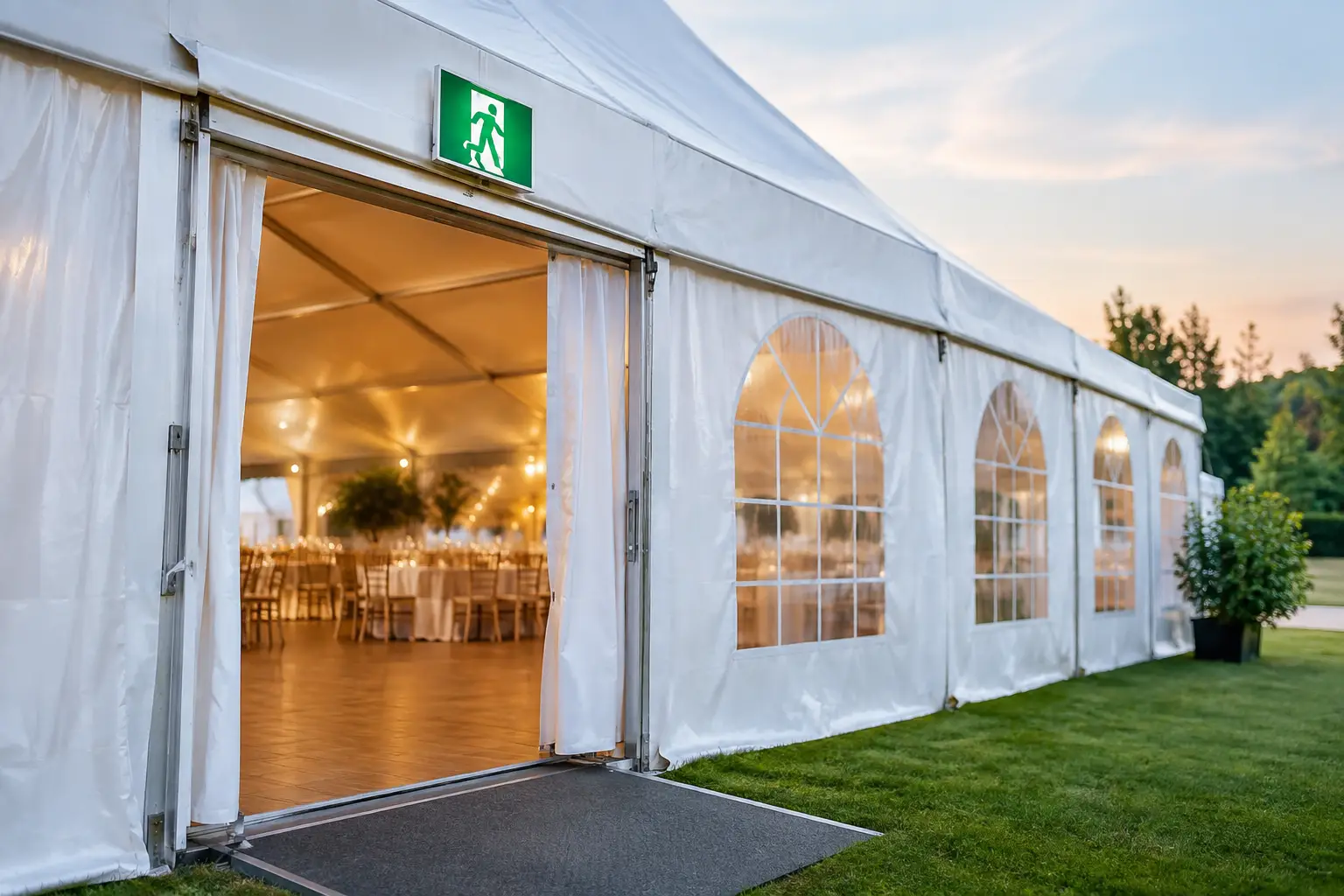
A clear pack-down plan also identifies the order in which infrastructure comes out. Temporary power is not the first item to disappear simply because it is easy to see. AV systems must be shut down correctly, equipment isolated, and any required services kept alive. A stage roof or truss structure cannot be dismantled while lighting, speakers or signage are still suspended from it. Marquees need controlled removal, especially in wind or wet conditions.
Without one person holding the full picture, each supplier can do their own job correctly and still create a site-wide problem.
What the production crew is responsible for
A professional production crew handles more than loading equipment back into trucks. Their responsibilities generally include safe shutdown, dismantling, equipment checks, loading, waste control within their scope and documentation of any issue found on site.
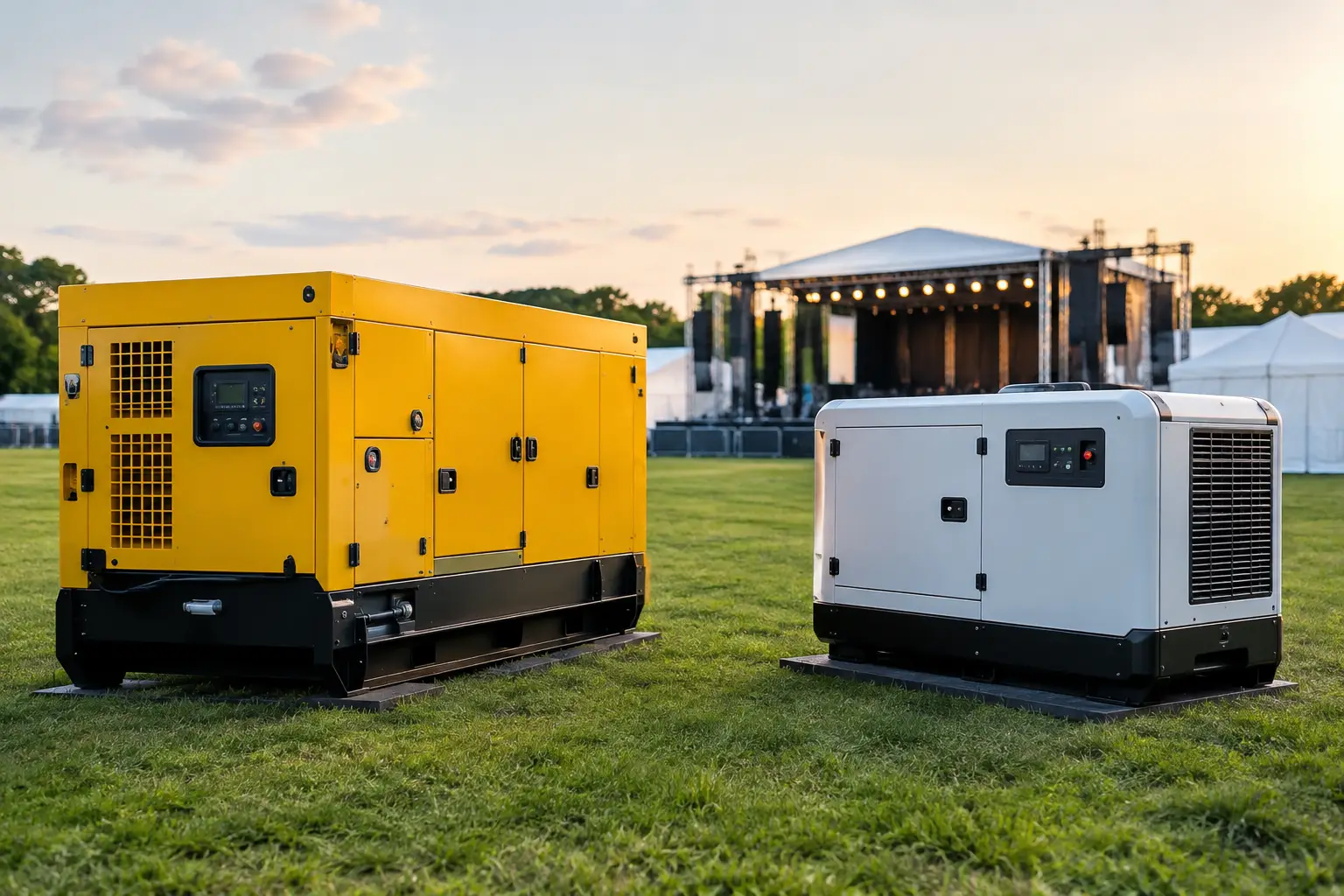
For technical systems, the process is methodical. Audio equipment is powered down and packed to prevent damage. Lighting fixtures are cooled before handling. Cable runs are lifted, coiled and counted. Generators are isolated only once downstream services are no longer needed. Staging, truss and structural elements are dismantled by competent crew using the correct methods and exclusion zones.
The crew should also inspect equipment as it comes down. A damaged cable, bent deck leg or water-affected speaker may not be obvious during a busy show, but it needs to be identified before it is loaded away or used at the next event. This protects both the supplier’s equipment and the client’s record of what happened on site.
Where temporary structures or engineered installations are involved, pack-down requires particular discipline. Structural components must be removed in the approved order, with consideration for load paths, wind conditions and the people working below. This is not a task for a general labourer with a ute and a good attitude. It needs trained technicians who understand the system they are dismantling.
The organiser’s role is oversight, not micromanagement
Event organisers should remain available during pack-down, especially when they are responsible for venue liaison, final approvals or supplier sign-off. They may need to confirm that all hired areas have been cleared, approve an extension if a site curfew is at risk, or document venue concerns before crews depart.
However, they should not be forced to chase five separate suppliers for updates at the end of a long event day. That fragmented approach is where loose ends multiply. One team assumes another team has removed the cable ramps. The furniture supplier leaves before the AV truck has cleared the loading bay. The generator is collected before cleaning crews are finished.
A single production partner reduces this friction. The organiser has one coordinator to contact, one agreed schedule and one team able to adjust the sequence when the real world does not follow the run sheet.
Pack-down responsibilities that must be agreed before event day
The question of who manages pack-down should be settled in the quote and event plan, not raised when guests are standing around waiting for taxis. Before confirming suppliers, make sure these responsibilities are clear:
- Who is the named pack-down coordinator and how can they be contacted after hours?
- Which supplier removes each item, including hired infrastructure, styling elements, waste and temporary fencing?
- What is the final venue handover time, and are there penalties for overrunning it?
- Which services must remain operational after the event, including power, emergency access and security lighting?
- Who checks the site for damage, rubbish, lost equipment and items left in back-of-house areas?
These details should sit alongside access plans, loading schedules and staffing requirements. If the event includes a public audience, the plan must also account for people still leaving the site. Pack-down should not begin in public areas while patrons, children or intoxicated guests are moving through them, unless the work zone is properly controlled.
Why cheap pack-down can become expensive
It is tempting to treat bump-out as a simple labour cost and appoint whoever is available at the end of the night. That can work for a small, uncomplicated setup with a few tables and basic decor. It is a different calculation when the event involves elevated stages, line arrays, temporary distribution boards, generators, truss, clearspan structures or a tight city loading dock.
The trade-off is straightforward. A dry-hire supplier may appear cheaper upfront, but the organiser then needs to coordinate collection times, crew capability, equipment handling and fault responsibility. A full-service provider costs more than a drop-off, yet it brings the people, equipment knowledge and operational ownership required to finish the job properly.
For corporate functions and weddings, that often protects the schedule and venue relationship. For festivals, sporting events and public activations, it can protect the entire site close-out process. The larger the infrastructure footprint, the less sense it makes to separate installation from dismantling.
A proper handover is the final production cue
Pack-down is complete only when the site is safe, equipment is removed or secured as agreed, and the venue or site representative has received the area back. Depending on the event, that may include a final walk-through, photographs of the cleared space, confirmation of power isolation and a record of any pre-existing or newly identified damage.
Not every venue requires formal paperwork, but every venue deserves a clear handover. It protects the organiser, the supplier and the relationship needed for the next event.
The best pack-down is usually the one nobody notices. Trucks move in at the right time, crews work to sequence, the venue wakes up looking as it should, and the organiser is not taking late-night calls about a missing cable ramp or a generator still running. From the first case unloaded to the last flight case loaded, that level of control is what turns an event finish into a professional close-out.